
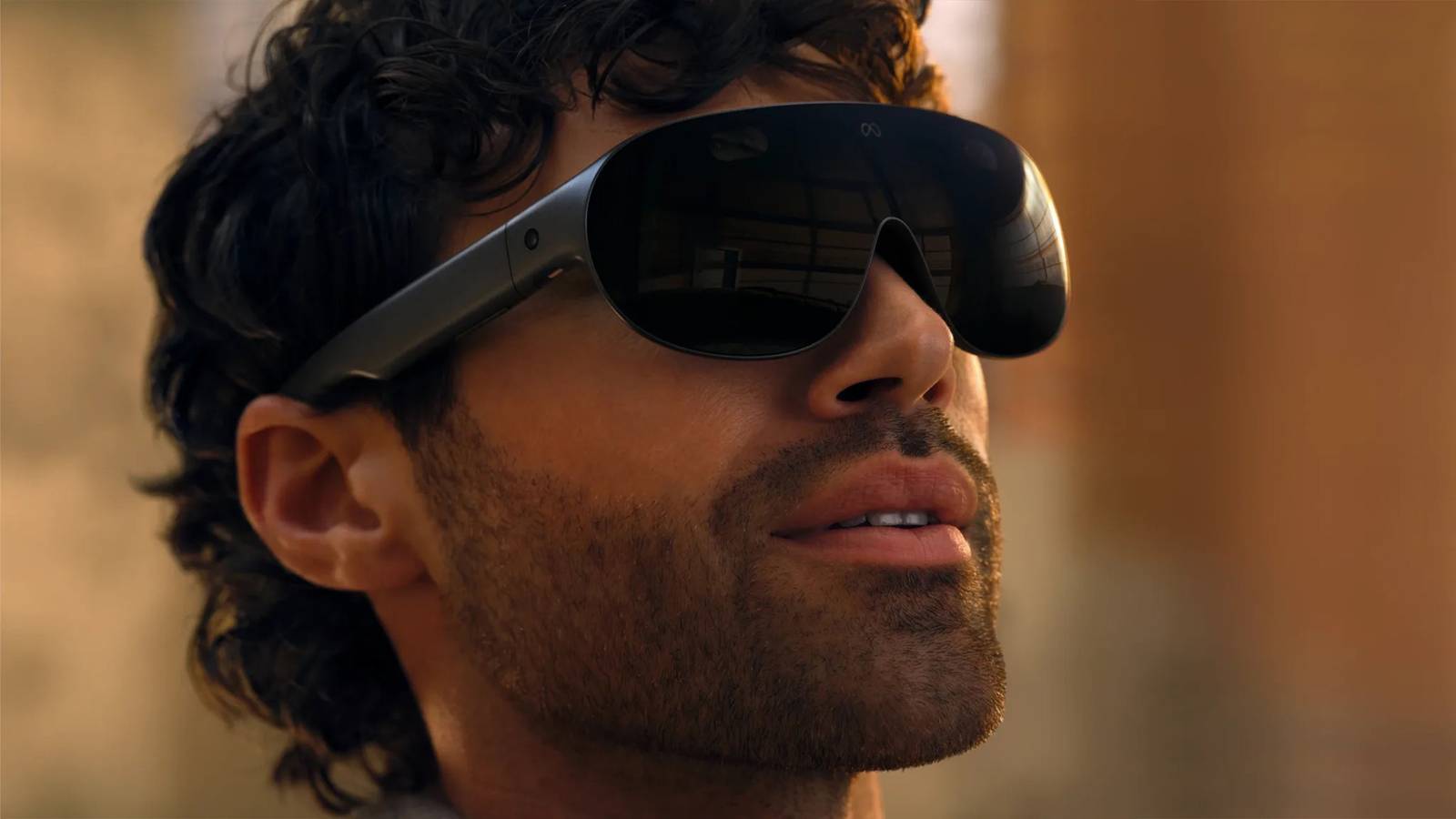
Published Sep 24, 2026, 11:14 AM EDT Jon is a seasoned journalist who has written definitive coverage of consumer tech at publications like Engadget, Android Authority, and BetaKit. He's an expert on making tech accessible ranging from mobile and PCs to emerging platforms like wearables. When he's not writing, he's going on adventures with ihis family and is an avid photographer. Meta has rethought its approach to virtual reality — and it's important news if you like the concept of VR eyewear that keeps you in touch with the outside world. The company has previewed Meta VR Glasses that are much easier to wear than headsets, albeit with a few sacrifices. The upcoming glasses are said to be five times lighter than the Meta Quest 3 (100g, or 3.5oz) by moving the computing power, battery, and 128GB of expandable storage to an external puck. That should make them far more comfortable for the full three hours of claimed battery life for video playback. The CPU-and-battery approach rules out using a third-party battery pack, but 45W fast charging over USB-C will help you get back to your virtual environment. The eyepieces are higher-resolution than some thanks to a 5K micro-OLED "Infinity Display" (2.5K per eye). The 70-degree field of view is relatively narrow, but a passthrough camera and open sides make sure you're aware of the physical realm. Meta even touts its glasses as the first IMAX Enhanced certified VR device, letting you watch movies from Disney+ in their intended aspect ratio. Certain movies, such as Avengers: Infinity War and Star Wars: A New Hope, will be available in "VR Enhanced" versions with 3D effects and spatial audio. TV streaming services like HBO Max, Paramount+, and Peacock also plan to make 3D content available. Like the Apple Vision Pro and Android XR glasses (such as XREAL's Project Aura), you use hand gestures to control the entire interface. You can create a desktop, watch videos on a giant virtual screen, and play games. Touch Plus controllers and gamepad support let you play existing Meta Quest and Xbox Cloud Gaming titles. A virtual keyboard and trackpad let you type on any desk, but you can also connect to a Mac or Windows PC to give yourself a floating external monitor. The Vision Pro similarities extend to video calls. You get a realistic "hologram" avatar that reflects your real expressions, whether or not the other callers are wearing Meta VR Glasses. They support any app, including third-party software like Zoom. A Snapdragon Reality Elite chip provides enough performance to drive the platform. Meta will release the VR Glasses in spring 2027 for $1,299. It hasn't said when the hardware will be available beyond U.S. audiences. Price and power aren't the only factors In some ways, the Meta VR Glasses and Apple Vision Pro couldn't be more different. Meta's wearable is really an extension of the VR-focused Quest experience with more powerful technology. Apple, in turn, concentrates on mixed reality. You wouldn't use the VR Glasses for heavy-duty work, just as you wouldn't use the Vision Pro primarily for gaming. They share much in common, however. Both are focused on general computing, not just entertainment, and rely on hand gestures to get around. They likewise rely on external pucks and even share some video content, such as 3D movies and live sports from leagues like the NBA. As you'll no doubt have guessed, the Meta VR Glasses should be much easier to wear with most of the components moved off your head. The Vision Pro headset carries everything except the battery and is heavier at up to 800g (28.2oz) — Apple redesigned the default strap to reduce the pressure on your face. If you're mainly interested in extended use, Meta clearly wins. There's no question that the Vision Pro is more capable. It has a laptop-class M5 chip instead of a mobile-scale Snapdragon, higher resolution 4K-per-eye displays, a wider 100-degree field of view, and a more advanced camera system. It's your choice if you want the best possible performance and are prepared to pay for it. That price is likely to be the deciding factor. At $3,699, the Vision Pro is nearly three times more expensive than the Meta VR Glasses. It's considerably easier to justify Meta's device unless you need what Apple has to offer. There's also a clearer future: while Apple is rumored to be shifting its attention to conventional smart glasses, Meta is still fully invested in virtual and mixed reality. You might go with Meta simply because a follow-up product is more likely.
Meta VR Glasses are here—how do they compare to Vision Pro?
Full Article
Original Source
Read the full article at Howtogeek →KhanList aggregates and links to publicly available news content. We do not host full articles from third-party sources. Always verify important information with original sources.