
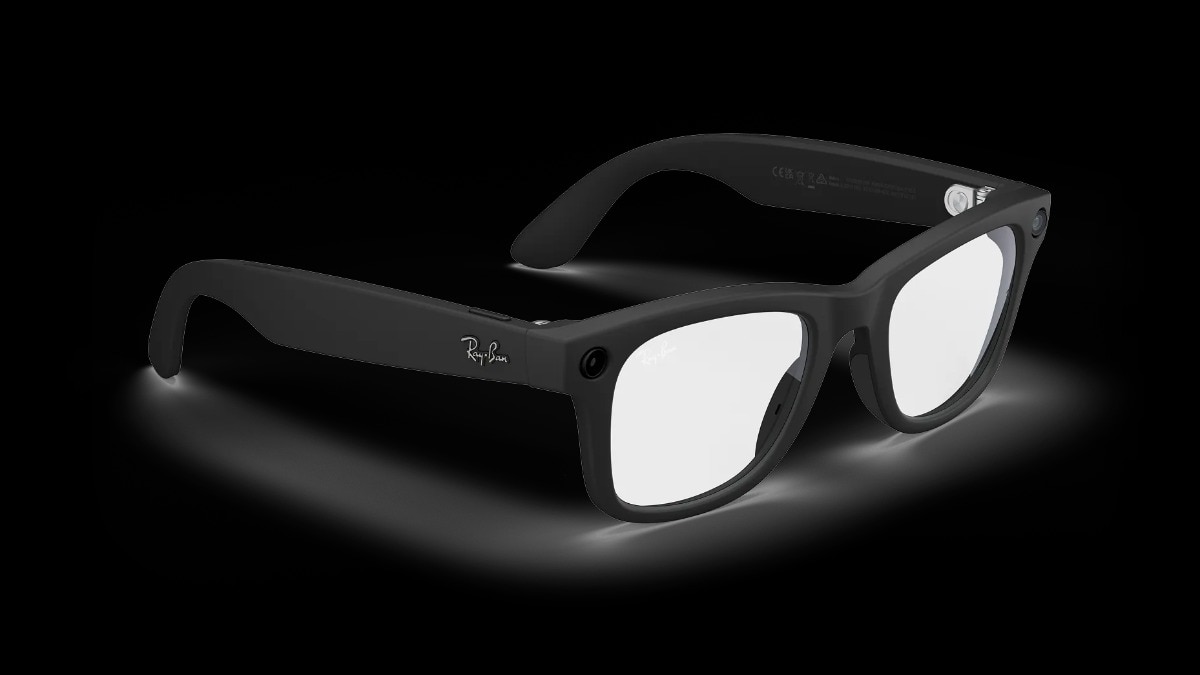
Meta is reportedly exploring a new antenna design that could make future smart glasses more capable, while also opening the door to other head-worn devices. Here is what we know so far.Meta's patent reportedly moves antennas from the temples to the lower frame. (Image credit: Meta)Meta is reportedly working on a new way to make future smart glasses more capable without making them look like a tiny computer strapped to your face. A newly detailed patent reveals an antenna architecture that moves wireless antennas away from the temples and places them along the lower rim of the glasses.The patent was highlighted by Patently Apple in a post on X. It covers a range of head-worn devices, including artificial reality glasses, VR headsets, aviation goggles and even night-vision goggles.Why Meta wants to move the antennasThe problem Meta is trying to solve is fairly simple: there is not much space inside a pair of smart glasses. Cameras, processors, sensors, speakers, radios and antennas all have to squeeze into a frame that still needs to be comfortable enough to wear.Traditionally, some of that hardware can end up around the temples, close to the wearer's ears and head. Meta's proposed design moves the antennas down instead, placing them underneath the lenses while keeping other electronics towards the upper portion of the frame. According to the patent, this could help reduce interference between components and also move the antennas farther away from the wearer's head. That could potentially improve signal quality and allow the system to achieve similar wireless performance while using less power.The patent also describes using two antennas, one under each lens, connected to a radio positioned higher up in the frame, potentially around the nose bridge. Keeping the two antennas separated and their electrical connections similar in length could help them work more efficiently in MIMO setups, where multiple antennas are used together to improve wireless performance. The antennas could also be hidden inside an over-moulded layer made from RF-transparent material. In simple terms, Meta wants the antenna to sit inside the frame, protected from the wearer and from physical damage, while still allowing wireless signals to pass through.Could this have a military use?This is where the patent gets particularly interesting. Meta is not limiting the architecture to consumer smart glasses. The patent specifically includes night-vision goggles and aviation goggles among the possible devices that could use antennas placed along the lower rim. It also describes keeping those antennas away from cameras, processors, depth sensors and IMUs.That does not mean Meta is preparing to launch military smart glasses. A patent is not a product announcement. But the inclusion of night-vision and aviation goggles does show that Meta's thinking around wearable wireless technology extends beyond the Ray-Ban-style smart glasses we see today.- EndsPublished On: Aug 18, 2026 14:32 IST
Meta patent reveals new antenna design for smart glasses, night-vision goggles and more
Full Article
Original Source
Read the full article at Indiatoday →KhanList aggregates and links to publicly available news content. We do not host full articles from third-party sources. Always verify important information with original sources.