
Published on 12 November 2026 - 11:13 GMT+1•Updated 11:16 German Chancellor Friedrich Merz has urged Brussels to stand firm on the EU's carbon market reforms and reject further changes to its second phase, signalling Berlin's opposition to reopening a hard-fought political compromise on carbon pricing, according to a letter seen by Euronews. ADVERTISEMENT ADVERTISEMENT "It is extraordinarily important that the EU ensures investment certainty in emissions trading," reads the letter. The intervention comes as the European Parliament and EU governments negotiate the European Commission's July 17 proposal to align the Emissions Trading System (ETS) with the bloc's 2040 climate target. The reform has become increasingly contentious, with several EU countries seeking to weaken or even scrap parts of the system, blaming carbon pricing for high electricity costs. Merz warned that businesses need predictable carbon prices to make long-term investment decisions, and that uncertainty risks undermining investment in Europe's energy and industrial sectors. His stance contrasts with that of his own Economy and Energy Minister, Katherina Reiche, who has pushed to relax carbon rules and extend free emissions allowances for industry. The ETS, the EU's carbon market, requires power generators and energy-intensive industries to pay for their greenhouse gas emissions. However, some heavy industries receive free allowances to help them cope with the costs of decarbonisation and international competition. Merz called on Commission President Ursula von der Leyen to conclude the ongoing reform swiftly, citing competitiveness concerns without weakening the carbon market. "European companies in the energy and industrial sectors have built their business models on the expectation of reliable CO2 price signals," the letter says. He argued that the impact of carbon pricing on electricity bills should be addressed through existing compensation mechanisms rather than changes to the ETS itself. These mechanisms allow governments to offset indirect carbon costs faced by electricity-intensive industries, helping to protect European manufacturing. Merz rejects further changes to ETS2 Merz took an even firmer line on ETS2, the EU's second carbon market, which is due to take effect in 2028 and will extend carbon pricing to fuels used in road transport and heating buildings. He argued that the compromise reached in early 2026 to delay its introduction until 2028, alongside measures to stabilise prices, should be sufficient to keep costs under control. The German Chancellor rejected any further adjustments and insisted that negotiations on ETS1 and ETS2 must remain separate. His position could put Berlin at odds with governments seeking further concessions on ETS2, particularly those concerned about the political and social impact of higher fuel and heating costs on households. Several member states have called for additional delays or changes to ETS2's price-stabilisation mechanism, which allows more emissions allowances to enter the market if carbon prices rise too sharply. Berlin draws a red line on carbon pricing Merz's intervention comes amid mounting pressure on the EU to soften its climate policies in response to concerns over industrial competitiveness and household energy bills. While acknowledging that industry needs protection from high electricity costs, the Chancellor wants that support delivered through compensation mechanisms rather than by weakening the carbon price signal that underpins the ETS. His letter amounts to a warning against allowing political pressure over energy costs to trigger a broader retreat from the EU's carbon market. Reacting to the letter, Linda Kalcher, executive director of the think tank Strategic Partnerships, said Merz's direct intervention "carries real weight". “His letter sends an unmistakable signal: a robust ETS is vital for industrial competitiveness and future investment. So I expect Germany — and him — to step up and lead to help broker an agreement in December,” Kalcher said. After the European Parliament votes in plenary in mid-December, political talks among the EU co-legislators will start.
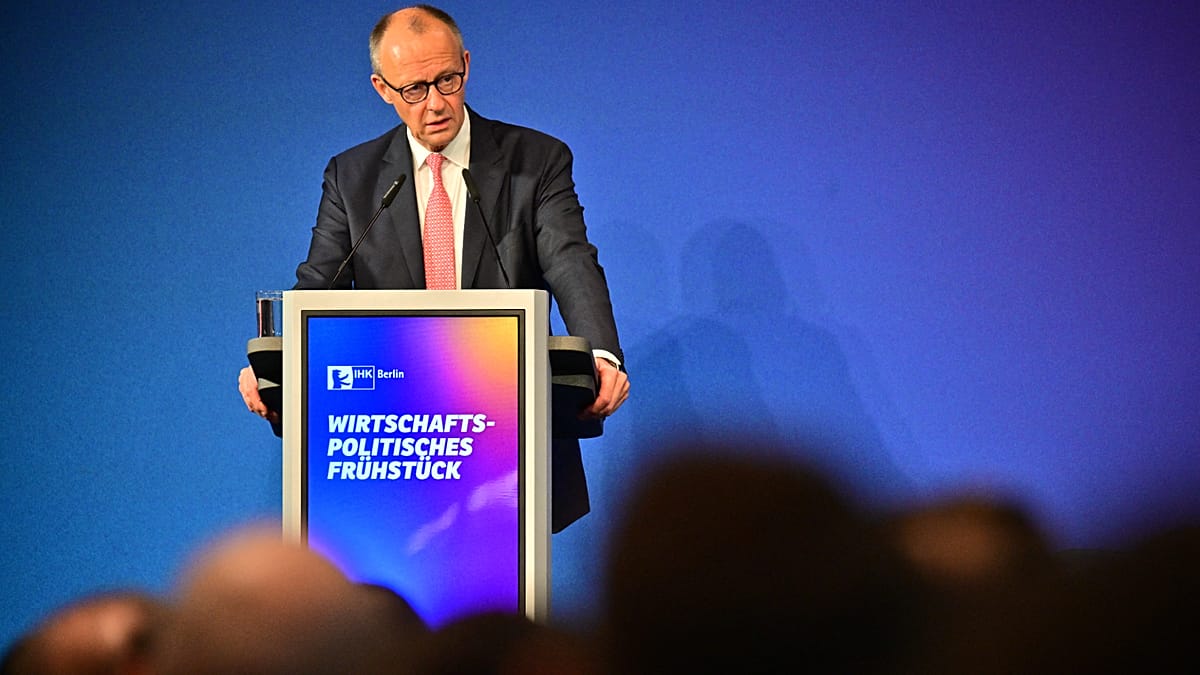
Merz urges EU to stand firm on carbon market reforms despite growing opposition
Full Article
Original Source
Read the full article at Euronews →KhanList aggregates and links to publicly available news content. We do not host full articles from third-party sources. Always verify important information with original sources.