
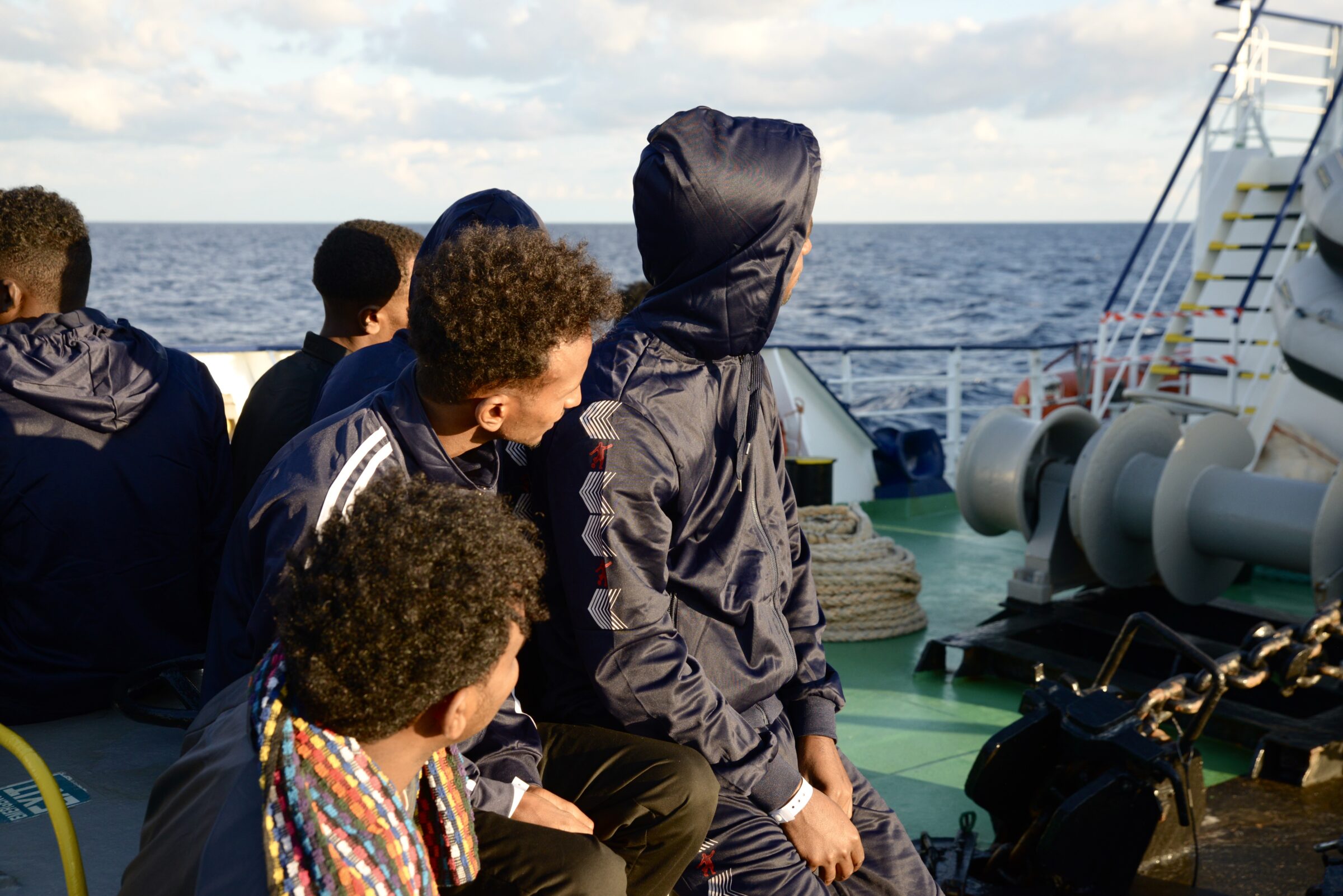
Search-and-rescue NGO efforts to conduct life-saving work in the Mediterranean face continuous derailment by European authorities hoping to stop migrants reaching EU soil – and drowning thousands in the process. Since Friedrich Merz took over as German chancellor in May 2025, all funding to national search-and-rescue organisations has stopped. The conservative leader has faced accusations from other EU leaders that the German NGO vessels prevalent across the central Mediterranean’s deadly zone of migrant crossings have acted as a ‘pull factor’, attracting migration to the EU. Current foreign affairs minister Johann Wadephul went so far as to allege that sea rescue organisations are “enabling people-smuggling gangs to carry out their business” in 2023. “Of course we know that people don’t travel into the Mediterranean because there are NGOs [there]. They are escaping famine, conflict, violence, some people are even trapped in Libya,” said Sofia [the charity’s workers use first names only], communications coordinator on board German charity SOS Humanity’s mothership. After rescuing 28 people adrift in an overcrowded dinghy last week, the humanitarian NGO has now in total rescued 5,213 people since August 2022. A third of those were children. SOS Humanity were part of a former funding pool that split €2m from Germany’s federal budget for humanitarian aid between search-and-rescue organisations. Despite growing fuel costs, and increasing legal costs from administrative barriers and port detentions by the Italian government, search-and-rescue groups are now dealing with an astronomical gap in their budget. This has also been compounded since Giorgia Meloni’s far-right Italian government came into power in 2022. Rescue charities operating in the central Mediterranean have subsequently been subject to decree 1/2023, requiring them to navigate directly towards the assigned port of safety following a rescue at sea - in other words, preventing more than one rescue operation at a time. Search and rescue NGOs have had to increasingly rely on volunteers like Tommaso, a cook onboard SOS Humanity, pictured teaching survivors Italian (Source: Gaia Neiman, EUobserver) Italy’s assigned ports are usually days away from where the rescue took place, with the extra navigation due to distant ports causing SOS Humanity to sail an additional 24,745 km and 62 days in 2025 alone. The exacerbated costs of fuel has caused the group to have to severely reduce its operations for 2027. Costly ops, and an alarming human cost This comes at a time when their work has become more important than ever.
Merz, Meloni and the EU: How political attacks on rescue charities are leaving migrants to drown
Full Article
Original Source
Read the full article at Euobserver →KhanList aggregates and links to publicly available news content. We do not host full articles from third-party sources. Always verify important information with original sources.