
Friedrich Merz has signalled he will block the EU’s seven-year budget unless there is a deal on financial aid for Ukraine, triggering accusations of “typical blackmail” from some other European leaders and setting the stage for stormy talks later this month.The German chancellor’s intervention has angered leaders in central Europe who are net beneficiaries of EU funds but do not want to take part in an upcoming funding round to support Ukraine’s war effort.“What the chancellor is doing is typical blackmail, and I will not give in to it,” Slovakia’s Russia-friendly prime minister, Robert Fico, told reporters in Bratislava.He was speaking alongside his Czech counterpart, Andrej Babiš, whose populist government also rejects taking part in a future loan for Ukraine. “I do not know why he is saying it,” Babiš said, referring to Merz’s position.Merz wants EU leaders to discuss Ukraine’s financing needs at a summit in Dublin on Friday. “We must continue to support Ukraine in its fight to defend itself. This is in our shared vital interest,” he wrote in a letter, seen by the Guardian, to the European Council president, António Costa, who will chair the meeting. “And yet, bilateral assistance to Ukraine is distributed unevenly and carried mostly by only a few member states.”The EU last year agreed to lend Ukraine €90bn, which was intended to cover two-thirds of its military and civilian costs for 2026 and 2027. But since then, Russia’s relentless bombardment has heaped more costs on Kyiv, prompting President Volodymyr Zelenskyy to call for €70bn to fill a budget shortfall.The EU has endorsed Zelenskyy’s figures and pledged to find €45bn, with Ukraine’s other allies, such as the UK and Canada, expected to provide the rest.Merz last year led an effort to use Russia’s €210bn sovereign wealth frozen in the EU, but the plan was scuppered by opposition led by Belgium, which hosts most of the funds at Brussels.The €90bn loan was the fallback plan. Hungary, Slovakia and Czechia, which opted out of that loan, have indicated they will stay out of the next round. Those three member states have now been joined by Bulgaria, following the election of Moscow-friendly prime minister Rumen Radev last April.The issue of Ukraine’s financing is now ricocheting into tortuous negotiations on the EU budget for 2028-34. Germany, the largest net contributor, wants steep cuts in the proposed budget, while opposing generous EU funding for member states that refuse to chip in to Ukraine’s financial needs.In his letter Merz writes that “a collective commitment … without exception” is an “essential pre-requisite” for resolving Ukraine’s funding shortfall and “discussing any further matters, particularly those with financial implications”.He also states that all member states need to contribute to a “sound” financial perspective for Ukraine from 2028 in the context of the EU’s next seven-year budget, known as the multiannual financial framework.skip past newsletter promotionafter newsletter promotionA German government official said: “Financial support for Ukraine of all EU member states is essential in order to successfully complete the MFF.”Berlin is also seeking to switch the decision-making process on funding Ukraine to a qualified-majority vote, rather than unanimity, in order to prevent one government from blocking EU decisions.The letter reflects growing exasperation from the EU’s northern member states that are Ukraine’s most generous backers over smaller contributions from other EU member states in central and southern Europe.The task of finding an agreement on the budget falls to Costa, a former Portuguese prime minister. He wants a deal by the end of the year, before elections in France, Poland and Italy in 2027 that are likely to complicate the task.A spokesperson for Costa confirmed receipt of the letter without commenting on details. “President Costa will make time for interventions on Ukraine at the informal European Council in Dublin this week,” the spokesperson said, adding that Ukraine finance would be discussed at a special summit dedicated to the EU budget on 26-27 November.
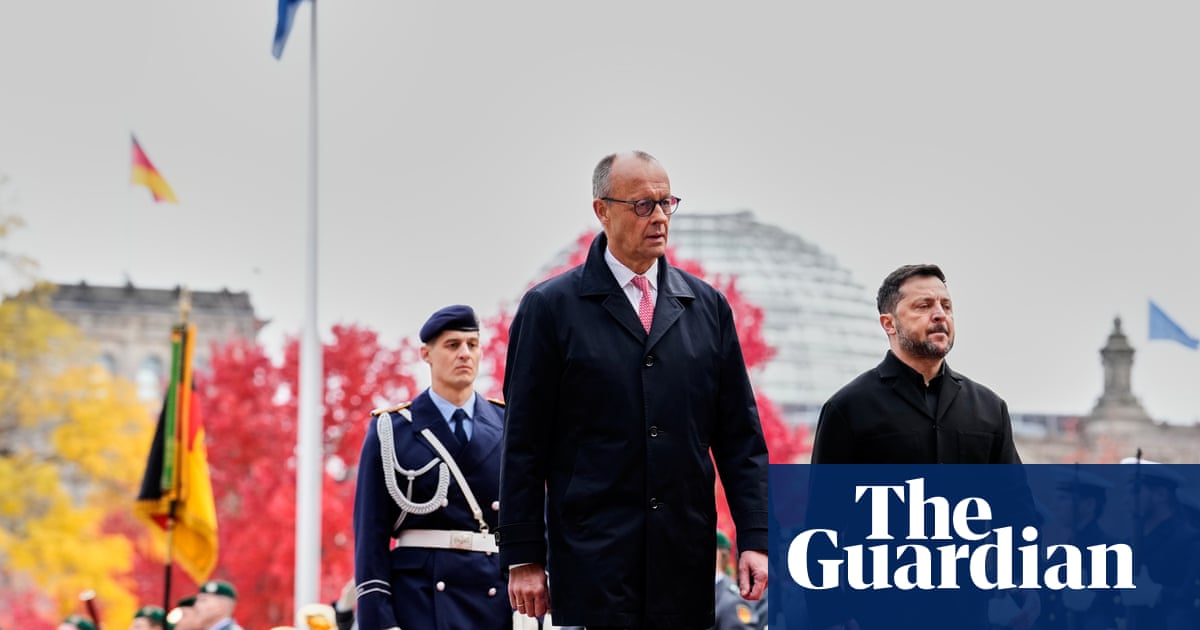
Merz accused of ‘blackmail’ by Slovak PM after demand for Ukraine aid in EU budget
Full Article
Original Source
Read the full article at Theguardian →KhanList aggregates and links to publicly available news content. We do not host full articles from third-party sources. Always verify important information with original sources.