
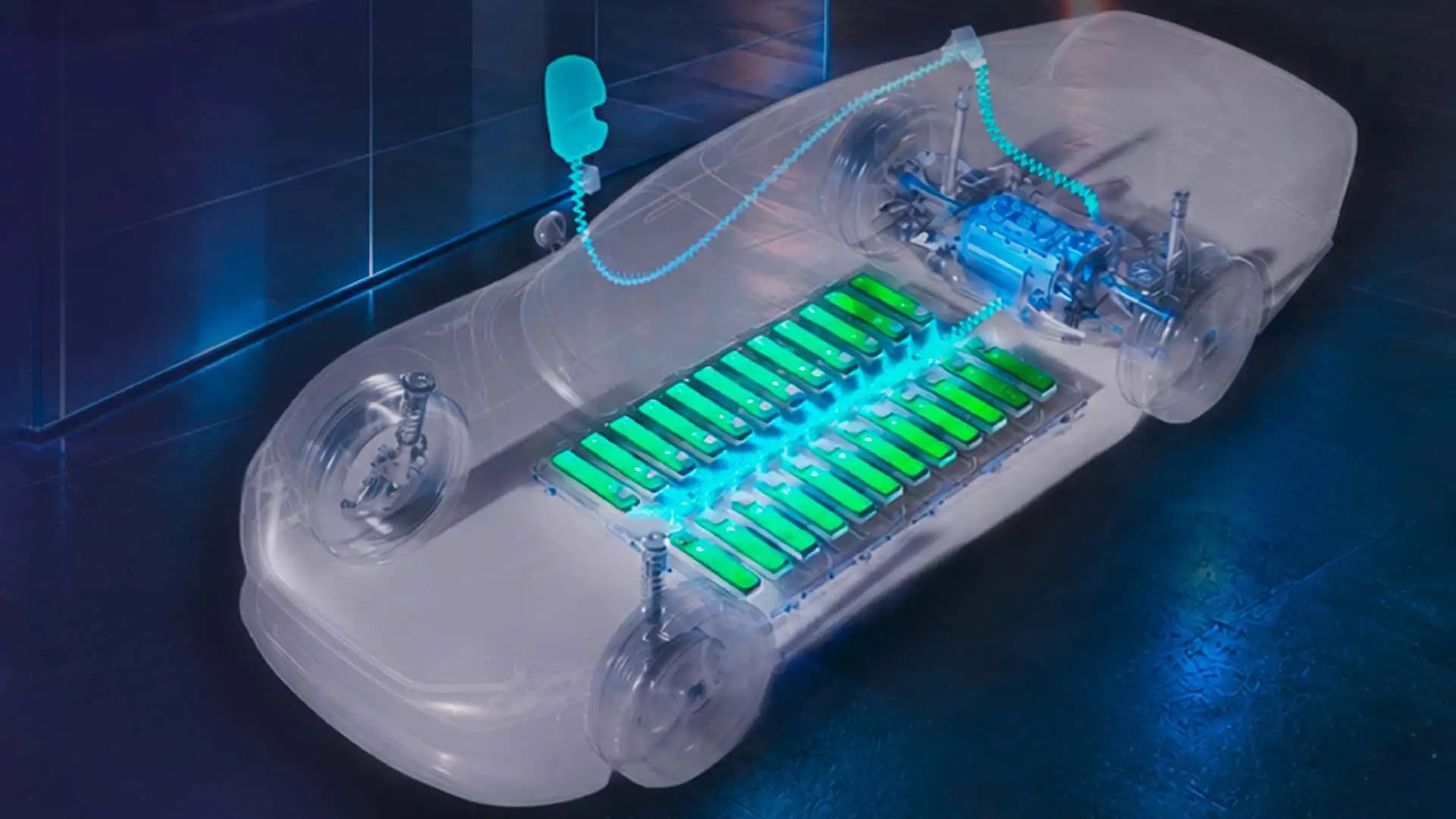
Mercedes-Benz is developing an electric vehicle architecture designed to keep the traction inverter supplied with 800 volts even as the battery discharges. The system uses small power converters that manage individual cells or groups of cells, allowing the vehicle to maintain a stable high-voltage supply as the battery’s charge level changes. In a conventional EV, cells connected in series determine the pack’s voltage, which falls as the battery discharges. Weaker or aging cells can also limit the performance of the entire pack. Mercedes’ approach would give the vehicle more control over how individual cells contribute while allowing the automaker to rethink which components it needs for charging and propulsion. Microconverters take the load off weaker cells Mercedes’ design distributes power conversion across multiple devices, each capable of delivering up to 3 kilowatts. These units, which the company calls Power Converters, are connected in parallel and coordinate how energy moves from individual cells or cell groups to the vehicle’s high-voltage system. The control system can reduce the load on weaker cells while the converters work together to maintain a stable direct-current supply. That gives the vehicle a way to manage differences between cells within the same pack. At the same time, the converters regulate the voltage delivered to the inverter as the pack discharges. A fixed voltage could simplify the powertrain The traction inverter converts direct current into alternating current for the electric motor. With a steady 800-volt input, Mercedes could optimize the inverter for a fixed voltage and improve its efficiency. A common input voltage could also make it easier to use the same powertrain components across different drivetrain designs. The converters could also handle the power conversion normally performed by a separate onboard charger. When an EV plugs into an AC charging point, that charger converts alternating current into the direct current the battery needs. Shifting that job to the microconverters could let Mercedes remove the standalone unit, freeing up space, cutting weight, and lowering production costs. Charging features could move to software Mercedes’ architecture can integrate AC, DC, and bidirectional charging functions into the converter hardware. With the relevant electronics already installed, software could govern features such as maximum charging power or enable the vehicle to send electricity back out through a compatible charging setup. That could give Mercedes the option to activate certain features through over-the-air updates. Bidirectional charging, for example, could be enabled later on vehicles equipped with the hardware to support it. The design also raises a service question. Putting more power electronics at the battery means technicians could have to contend with a more complex assembly when a fault occurs. How much repair work that would entail remains unclear. The production impact would therefore depend partly on how Mercedes packages those converters and makes them accessible for service. Get the latest in engineering, tech, space & science - delivered daily to your inbox.Atharva is a full-time content writer with a post-graduate degree in media & amp; entertainment and a graduate degree in electronics & telecommunications. He has written in the sports and technology domains respectively. In his leisure time, Atharva loves learning about digital marketing and watching soccer matches. His main goal behind joining Interesting Engineering is to learn more about how the recent technological advancements are helping human beings on both societal and individual levels in their daily lives.
Mercedes plans 800-volt EV system using 3 kW converters to boost efficiency
Full Article
Original Source
Read the full article at Interestingengineering →KhanList aggregates and links to publicly available news content. We do not host full articles from third-party sources. Always verify important information with original sources.