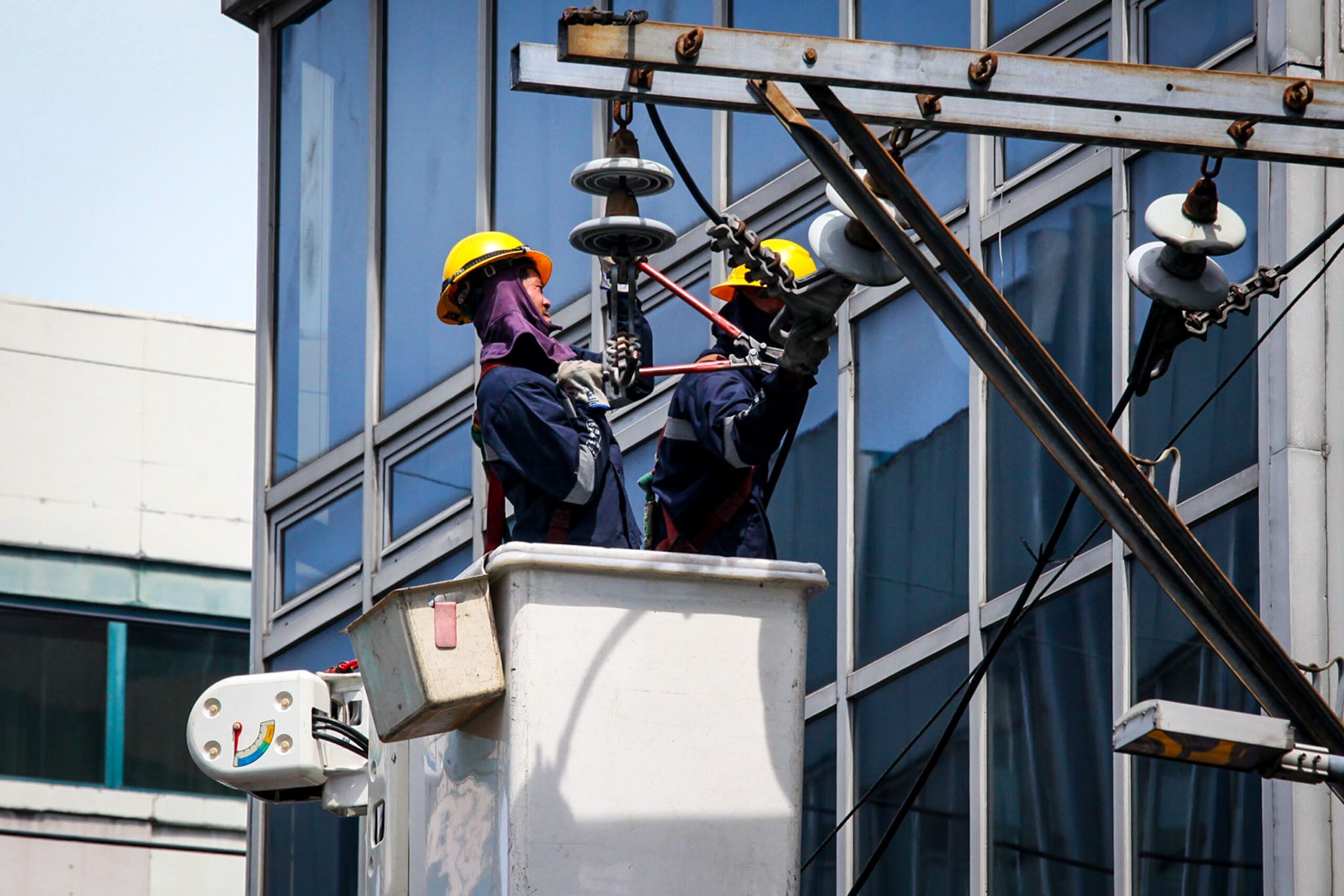
Electricity provider linemen repair a power line in Manila on July 15, 2026. Rappler 'We’re looking at the impact of removal of system loss, whether total or phased in, whether just the nontechnical, whether there’s a lowering of the cap,' says ERC chair Francis Juan MANILA, Philippines – Meralco could be made to absorb more system loss costs, although regulators say some expenses needed to cut those losses may still end up reflecting in the rates consumers pay. Energy Regulatory Commission (ERC) chair Francis Juan said the regulator is studying everything from a complete removal of system loss recovery, a phased approach, eliminating only nontechnical losses, or simply lowering the existing caps that determine how much utilities may pass on to customers. “We’re looking at the impact of removal of system loss, whether total or phased in, whether just the nontechnical, whether there’s a lowering of the cap,” Juan said when asked by Rappler specifically how Meralco would be affected by measures to reduce system loss. But moving the burden away from consumers and onto distribution utilities doesn’t automatically make the underlying losses disappear. Because of this, Juan said the ERC would have to consider the financial viability of Meralco and all other distribution utilities. If system loss is shifted from being a pass-through charge to a cost that utilities themselves have to bear, the regulator may also have to change the way their rates are calculated to recognize additional capital expenditures and other expenses needed to reduce those losses. “If you will shift the cost, the burden to the utilities from the existing regulatory framework, where it is purely a pass-through to them, then you will have to also adjust certain things in terms of the rate-making methodologies for the distribution utilities so that they can adequately confront this cost and be able to operate more efficiently,” Juan said. That leaves the government trying to strike a balance between giving utilities a stronger financial incentive to cut losses and avoiding a situation where distributors lack the money to make the investments needed to do so. Energy Secretary Sharon Garin, however, has been clear that legitimate consumers should not continue paying for avoidable losses. “Consumers should not be made to shoulder costs that can and should be addressed through greater efficiency and accountability,” Garin said. Garin has ordered distribution utilities, including Meralco, to submit proposals on how they can minimize or eliminate system loss in their own areas. Consumers could also get more immediate relief even before the larger system loss issue is settled. The ERC has separately proposed removing the 12% value-added tax on system loss charges. Juan said the ERC hopes to finalize that resolution by the first week of September, subject to public consultation and coordination with the Bureau of Internal Revenue. For now, however, there is no final decision. In a separate ambush interview, Juan reiterated that he was still meeting with representatives from Meralco and other distribution utilities to hash out a workable strategy. Pressed on whether he agreed with Meralco’s claim that they would be operating on a loss if asked to absorb system losses entirely, Juan smiled but kept his position to himself. Meralco also has a long-pending rate reset, where the ERC determines the revenues and rates the utility is allowed to collect. Juan said the commission had hoped to take up the case in August, but staff are still completing their evaluation of the utility’s extensive submissions, with deliberations possibly slipping to September. He told Rappler, however, that any potential rate adjustments arising from changes to system loss rules would not yet be included in this reset. NEA: Most co-ops to operate at a loss if made to absorb nontechnical losses Meanwhile, electric cooperatives could face the steepest consequences if they are suddenly required to absorb all system loss costs, with the National Electrification Administration (NEA) warning that dozens could be pushed into financial losses without government support. NEA estimates that removing just 25% of recoverable nontechnical losses could leave 62 of the country’s 121 electric cooperatives suffering financial losses. A 50% removal could affect 71 cooperatives, while outright elimination could leave as many as 89 in the red. The concern is particularly acute because part of system loss cannot simply be eliminated. Technical losses naturally occur as electricity passes through lines, transformers, and other equipment and, as NEA put it, are governed by the “law of physics.” Nontechnical losses, on the other hand, include electricity that is stolen or otherwise consumed without being properly recorded or paid for. To help cooperatives shoulder the transition, NEA is proposing loans to finance better metering and other measures needed to bring losses down. It estimates it would need P3.5 billion in loan funds for a 25% reduction in recoverable nontechnical losses, P5.5 billion for a 50% cut, and P10 billion if recovery is eliminated entirely. NEA stressed that the assistance would not be a subsidy, but financing that cooperatives would have to repay. The agency argues that investments can produce results. Zamboanga City Electric Cooperative, for instance, brought its system loss rate down from around 20% in January to roughly 13% in July following interventions that included improvements in metering and collections, a model NEA is considering for other struggling cooperatives. – Rappler.com
Meralco may absorb system loss, but ERC says its rates may need adjusting
Full Article
Original Source
Read the full article at Rappler →KhanList aggregates and links to publicly available news content. We do not host full articles from third-party sources. Always verify important information with original sources.