
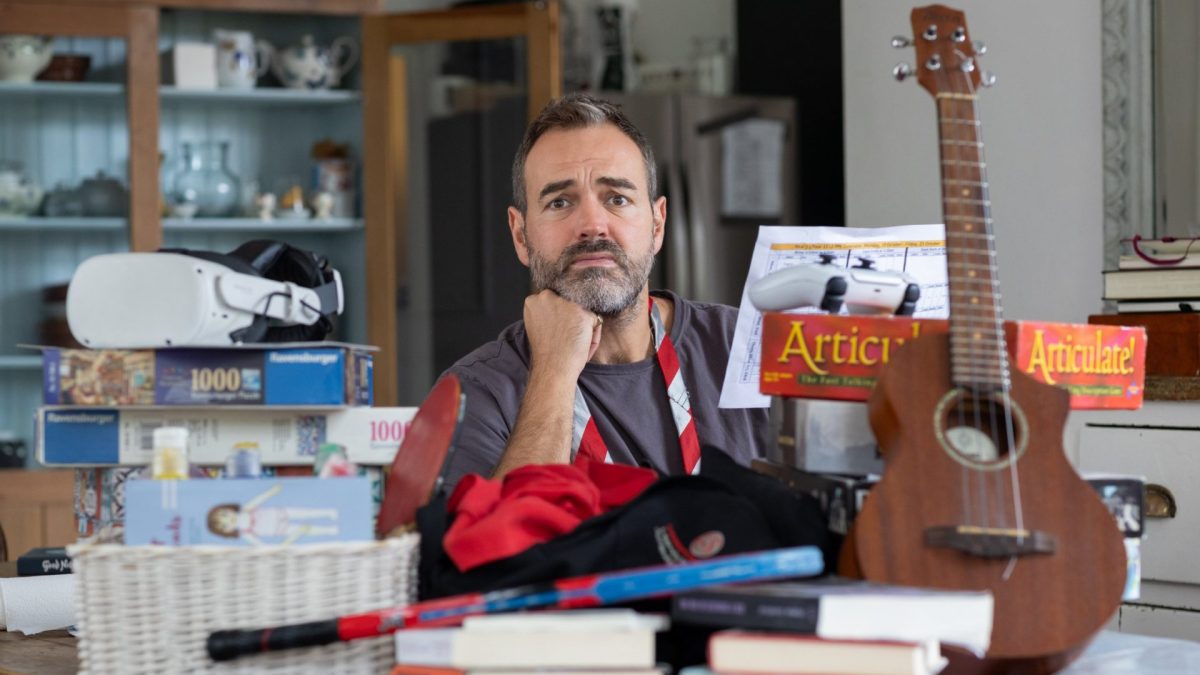
Alex Trippier is a relationship-couples coach, host of the podcast Be a Happier Parent and a father of three. In his new column for The i Paper, Alex shares his thoughts on fatherhood, marriage and the stereotypes that harm both. In 80s Hollywood, producers had discovered a seemingly irresistible comedy premise: what happens when you put a man… wait for it… in charge of children? There was Mr. Mom in 1983. Three Men and a Baby followed in 1987. Then came Mrs Doubtfire, Kindergarten Cop, Big Daddy, Daddy Day Care and The Pacifier. It made for some very funny films. It also helped create an idea of fatherhood that would cause a lot of conflict in my marriage, and for many of the couples I now work with. I thought I was a brilliantly spontaneous, fun, adventurous dad. My wife thought I was just very good at ignoring all the boring stuff that actually kept our children fed, clothed and healthy. Shorts With my “Let’s go exploring”, “Let’s get on the wrong bus and see where we end up” and “Let’s go out and play in the rain”, I genuinely thought I’d cracked fatherhood. While everyone else seemed to be talking about how exhausting young children were, I couldn’t understand what they meant. The brilliant thing about having three kids was that life became more interesting. Even a mundane trip to the supermarket became an adventure. My wife seemed determined to take the whole thing much more seriously. She was thinking about whether we’d packed spare clothes, whether they’d eaten properly, whose shoes no longer fit, whether there was enough milk for breakfast, and when the dentist appointment was. This mismatch between the genders, which sociologist Allison Daminger calls the “superhero mom” and the “bumbler dad”, appears in almost every couple I work with as a coach. When the same two characters keep turning up in completely different relationships, it starts to look less like personality and more like something we’ve all been taught. And we have been taught. Films, TV and commercials have been telling us for decades that the best we can expect from dad is that he’s fun. But stereotypes that appear, on the surface, to mock men have actually permitted men to expect less of themselves; left women carrying more and caused enormous damage to relationships. The details of the father-discovers-parenting films changed with each premier, but the journey was remarkably similar. The men in these films started out seeing children as an inconvenience, something that got in the way of their work, their freedom or their adult lives. Then, through the accident of actually having to spend time with them, they discovered something extraordinary: children could be fun. They could bring joy and meaning into your life. Caring for them might even be more important than work. This discovery was enough to transform them into good men. Mrs Doubtfire was different. He just had to transform into a woman to become a responsible parent. But I was streets ahead of these men! I already knew my children were fun. I actively wanted to spend time with them. I didn’t feel out of my depth changing nappies and was aware that children needed food. Oh, and I definitely wasn’t a workaholic. Why couldn’t my wife see that I was smashing it? Movie Dads being comically bad with their children hasn’t gone anywhere. I loved the Inside Out franchise. Their portrayal of difficult emotions, particularly sadness, has helped me talk to my own kids about their feelings. But check out Riley’s dad. His interior world characters are too busy swigging beer and watching hockey to pay any attention to his daughter’s emotions, leaving his wife to carry the emotional burden. In Jon Ronson’s new book, The Castle: Adventures in a World of Unravelling Men, he follows a series of men struggling to keep up with shifting ideas of masculinity. The only man he interviews who he finds to be thriving in 2026 is an actor who plays doofus dads in adverts. Ronson becomes fascinated by the rise of this stock character. An advertising historian he speaks to offers a theory: as retail changed and women increasingly held the household purse strings, it stopped making commercial sense to make women the butt of the joke. But every comedy needs one. Enter, The Hapless Man. ‘My wife was thinking about whether we’d packed spare clothes, whether they’d eaten properly, whose shoes no longer fit’ (Photo: Teri Pengilley) In Britain, it started relatively gently. Think of the OXO family. Dad wasn’t explicitly deficient, but it was Mum who understood the children’s needs, managed the home and measured the emotional temperature of the family. Dad was just another one of the kids to be looked after. Over time, advertising dads became steadily more inept. Fast forward to 2019 and an advert for Philadelphia cheese showed two dads so distracted by food that they failed to notice their babies moving away from them on a restaurant conveyor belt. But what’s the problem? They’re just jokes. For domestic equality expert Laura Danger the problem with “Sitcom Syndrome” is that “we don’t challenge domestic inequality because we’ve been taught to laugh at it”. For me and my wife, the problem was that the joke wasn’t really at my expense. Modern Family’s Phil Dunphy can be both incompetent and loveable because there is a hyper-competent woman standing behind him. On the face of it, the joke goes: “Men are stupid. Haha.” But look at it a bit deeper and it runs like this: “Dads are bad at a whole bunch of stuff they’ve always been told isn’t really worthy of their attention anyway.” Men: “Yeah, we’ll take that.” “And women are amazing at a whole category of work they’re repeatedly telling us they have no interest in owning alone.” Men: (Wiping our eyes with mirth) “So true!!!” That’s the trick. The hapless dad and the hyper-competent mum aren’t two different stereotypes. They’re the same stereotype. You can’t have one without the other. His freedom to remain oblivious depends on her ability to save the day. And this is the damaging dynamic I see playing out again and again in couples. But in a way, I’m grateful for those dad comedies. The father they replaced was hardly an ideal either. The older model was the patriarch: authoritarian, emotionally distant, responsible for his family largely through earning the money that supported them. The dads I grew up watching offered something different. They taught me that children weren’t simply another responsibility to be endured. They could be funny and interesting. You could get down on the floor with them. You could be silly. You could enjoy being a dad. I think I took something genuinely valuable from that. I brought a sense of fun and adventure to my parenting that might have been absent if I’d grown up watching a different kind of father. But we got stuck there. Our understanding of what children need from their fathers and what mums need from their partners has moved on. The screen model of fatherhood needs to move with it. We need dads on our screens who are spontaneous and adventurous but also responsible. Who are emotionally attuned to their children, rather than baffled by their feelings. Who don’t need a woman standing behind them to notice what needs doing next. I still want to be the dad who turns a trip to the supermarket into an adventure. I just also need to be the dad who books the appointments, notices when the shoes are getting too small and knows when something isn’t quite right in his child’s world. We don’t need to lose the fun dad. We just need to expect more of him.
Men, being a ‘fun dad’ could destroy your marriage
Full Article
Original Source
Read the full article at Inews →KhanList aggregates and links to publicly available news content. We do not host full articles from third-party sources. Always verify important information with original sources.