
This article appeared on our partner site, Independent PersianEight months after Donald Trump promised to protect protesters in Iran, the brutal killings continue. As more detainees from the national uprising of January 2026 are executed, information obtained by Independent Persian indicates that dozens more protesters are facing either final death sentences or charges such as “enmity against God” and “corruption on Earth”, which can carry the death penalty.Families of several prisoners say their loved ones have been denied access to lawyers of their choice and that, in some cases, confessions obtained under pressure and torture have become the primary evidence used to issue death sentences.Human rights activists in Iran and several released political prisoners have also told Independent Persian that the names made public represent only a fraction of those sentenced to death.According to these sources, interrogators and judicial officials have promised families that if they keep the case out of the media, there may be a chance of securing a reduced sentence. In other cases, independent lawyers have not been permitted to participate, while families have remained silent out of fear of increased pressure on the prisoner.Medical student Sepehr Amirzadeh faces execution on charges of “enmity against God” (Peshraw Cpiran)The January anti-government demonstrations were met with the most severe crackdown in the Islamic Republic's history, during which thousands of protesters were reportedly killed by security forces. When the protests erupted, Trump warned authorities against firing on demonstrators and portrayed himself as a defender of the Iranian people. But despite pledging his help, Iranians have been left to cope with economic hardship, destroyed homes and unemployment as well as the impact of the war launched in February. Earlier this week, Trump asked when the Iranian people would “rise up and fight”, in a sign of growing frustration over his inability to exit the conflict. One of the most recent cases is that of Mehrdad Takesh, 33, from Dizicheh, Isfahan, who has been sentenced to death twice on the charge of “enmity against God”. A source familiar with the matter told Independent Persian that Takesh was arrested on 14 January and was severely tortured in detention, causing both of his hands to be broken. His family had no precise information about his whereabouts for four months, until he eventually contacted them from Dastgerd Prison in Isfahan.The source stressed that, apart from confessions obtained from Mehrdad Takesh under torture, there is no other evidence to substantiate the charges against him. His family fears his execution could be carried out without prior notice. Prior to his arrest, Takesh ran a motorcycle repair shop in Dizicheh.Also in Isfahan, Sepehr Amirzadeh, a medical student in his early twenties, has been sentenced to death on the same charge. Security forces arrested Amirzadeh at his home on 15 January, and transferred him to Dastgerd Prison. Details surrounding the charge against the young student have yet to be disclosed. Originally from Ramhormoz in Khuzestan but a resident of Isfahan, Amirzadeh is a teacher and player of the ney-anban, a traditional Iranian bagpipe. His case is under review by the Supreme Court.In Mashhad, the Supreme Court has upheld a death sentence issued by a Revolutionary Court for the same charge. Rasoul Rezaei, a resident of Fariman, was arrested in the early hours of 10 January. He has been denied access to a lawyer of his choice, telephone calls and family visits.Independent Persian has also learned that at least 20 people detained during the Iranian national uprising in Mashhad are at risk of execution. Details have so far emerged about five of them: Mehdi Zarif, Mohammad Zanganeh, Ali Zaghi, Vahid Khedrikhah and Najmeh Amini.They were arrested during protests in Mashhad and Shandiz and face serious charges, including “enmity against God”. Reports indicate that they have been denied access to lawyers and family visits and subjected to torture and threats during interrogation.Najmeh Amini, 23, was arrested after she posted about the protests on her personal Instagram account (Supplied)Najmeh Amini, a 23-year-old accounting student, was arrested in Mashhad on 2 February and is currently being held in Vakilabad Prison on the charge of “enmity against God”. Her family says the initial reason for her arrest was several protest-related posts on her personal Instagram account. Officers beat and arrested her while she was shopping. Amini spent two days in security police custody, where sources say she was forced to confess. She has been denied access to a lawyer throughout her detention.Shamsi Khosravi, 44, from Saqqez, is held in Qarchak Prison in Varamin, on charges of “corruption on Earth” and “espionage for Israel”. According to human rights sources, Abolqasem Salavati, the judge presiding over Branch 15 of the Tehran Revolutionary Court, told her during a hearing that “no sentence other than death” awaited her. She was arrested on 5 March and held in enforced disappearance for two months without any means of contacting her family.Ali Rahimi Rigi, 31, from Lordegan, also faces charges of “enmity against God” and “corruption on Earth”. He was arrested on 30 January and initially held for around two weeks in solitary confinement at the Shahrekord Intelligence Department. Judicial authorities refused to accept the lawyer chosen by his family and appointed a court-assigned lawyer instead. At an online hearing, Rahimi Rigi rejected the court-appointed lawyer and requested access to his own representative, but proceedings continued.Mehdi Roshani, detained during the 6 January protests in Malekshahi, was held without any contact with the outside world for two months and tortured into making a forced confession that led to his death sentence. Roshani was released on bail in late May but was arrested again around two weeks later. A source familiar with the matter said his family is from an underprivileged background and has been pressured to remain silent.The Supreme Court has also upheld the death sentence of Benyamin Naghdi, a 26-year-old kickboxer and Muay Thai athlete. Naghdi was accused of igniting the contents of a fire extinguisher in Shiraz on 3 January to prevent officers from shooting at civilians. Naghdi was initially charged with “attempted murder”, but the charge was later upgraded to “enmity against God”, with the court ruling that the combined charges amounted to “corruption on Earth”.This comes despite the fact that prosecution had been dropped in parts of the case concerning “inflicting bodily harm on officers” and “carrying a bladed weapon”. His lawyer, Mostafa Nili, has said that following the rejection of their appeal by Branch 41 of the Supreme Court, the legal team will seek a retrial.Concerns have intensified as several death sentences have been carried out in recent weeks. On 7 August, the judiciary announced the execution of Shahram Sadeghi, who was detained during the January protests in Karaj. The judiciary accused him of carrying out “operational activities” on behalf of Israel and the United States, but its official report did not disclose details of the evidence supporting the charges or the process through which the sentence was issued and upheld. Arvin Kheirkhah was also executed at Shahroud Prison on 1 August, three days after being transferred to solitary confinement and despite his family gathering outside the prison the night before his execution.Vahid Khedrikhah, 32, is one of at least 20 detained protestors at risk of execution in Mashhad (Supplied)In Isfahan’s “Alikhani Square” case, 12 detainees were sentenced to death, with Erfan Esfandiyari, Gol-Mohammad Mohammadi, Abolfazl Sepahi and Amirhossein Safari already executed. On 3 August, the judiciary’s media outlet also reported the executions of Omid Behzad and Pouria Safvat.Saeed Madani, an Iranian sociologist and former political prisoner, said that four of the five defendants in a case related to the protests of 8 and 9 January were executed “solely for throwing stones from a rooftop at officers”. According to Madani, three of them were sentenced without a lawyer present.On Wednesday, 12 August, 32 countries and the European Union’s High Representative issued a joint statement condemning the Islamic Republic’s use of the death penalty against protesters, urging Iran to halt executions and release those who had been arbitrarily detained.In contrast, several Friday prayer leaders appointed by the Supreme Leader, including Hossein Mozaffari in Qazvin and Mehdi Ghoreishi in Urmia, have welcomed the executions. In their Friday sermons, they thanked the judiciary for what they described as giving protesters “the punishment they deserved” and called for the process to continue with “greater determination”.The main concern among the families who spoke to Independent Persian is not only that existing sentences will be upheld, but that they could be carried out suddenly and in secret. Human rights activists argue that a lack of clarity over the number of death sentences, forced confessions obtained under torture, the denial of independent lawyers, and the silence of families hoping publicity-free cases might save their children all mean that the true scale of the post-January protest executions remains deeply unclear.According to information received, its scope is far wider than the names that have so far reached the media.Reviewed by Tooba Khokhar and Celine Assaf
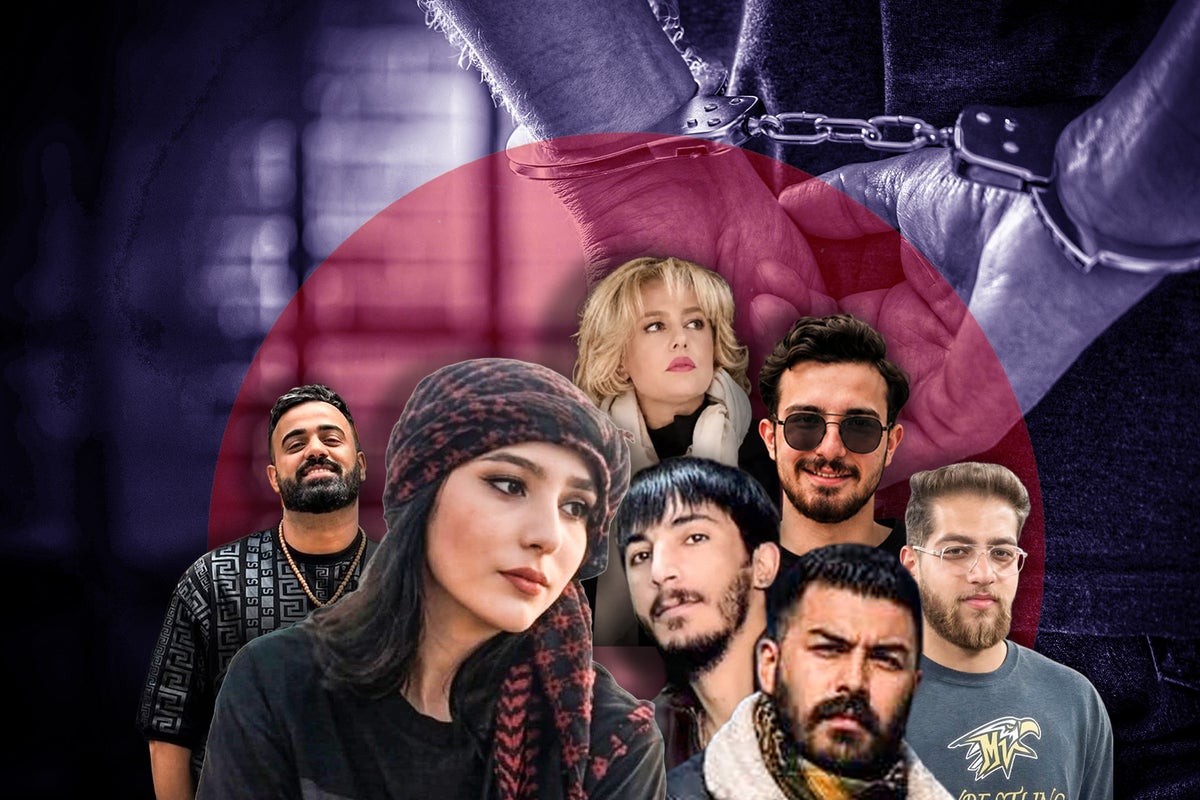
Meet the young Iranian protestors facing execution
Full Article
Original Source
Read the full article at Independent →KhanList aggregates and links to publicly available news content. We do not host full articles from third-party sources. Always verify important information with original sources.