
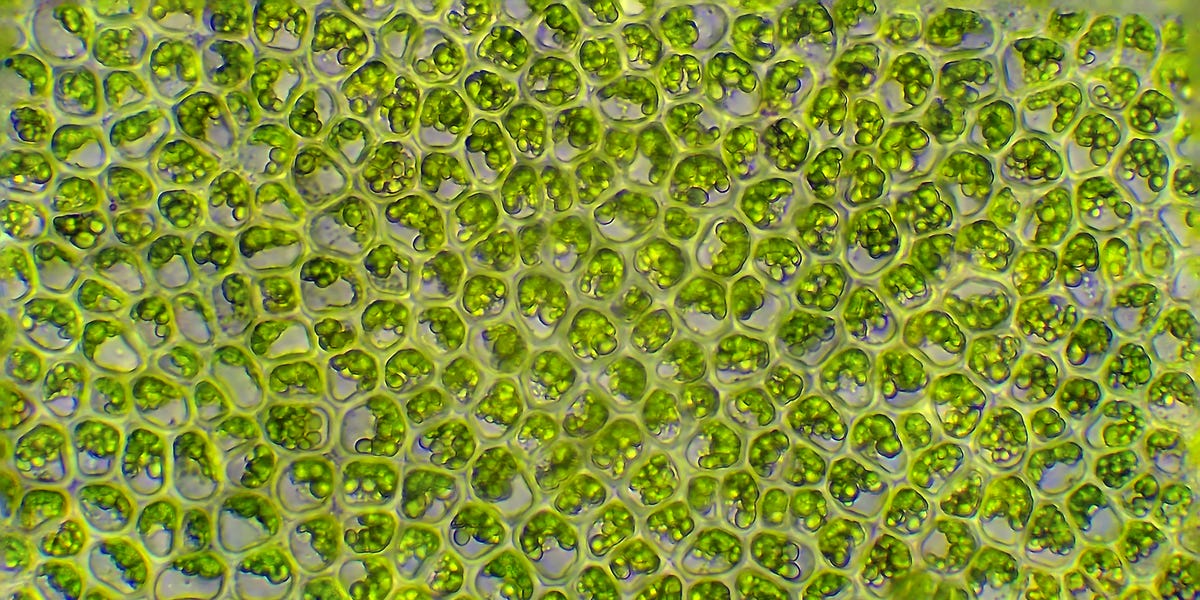
3 min readAlmost all of the major events that changed the trajectory of life on Earth had impossibly tiny beginnings, and the rise of plant life is no exception. Some 1.5 billion years ago, a eukaryotic cell engulfed a cyanobacterium, which eventually evolved into the chloroplast, the specialized organelle that drives photosynthesis in algae and plants. Other eukaryotic cells, of course, took a very different path, giving rise to all animals and, ultimately, the mammalian cells that make up you and me.Despite the vast evolutionary gulf between them (the two lineages diverged in the middle of the Proterozoic Eon), a new study published in the journal Nature Communications suggests that the cells derived from red algae and mammals still have the capacity to acquire genetic material through a process known as “horizontal gene transfer.”Obviously, most gene transfers in nature move from parents to offspring (fittingly named “vertical gene transfer”), but sometimes cells will acquire traits from other individuals, strains, or even entire species. This is seen most commonly in bacteria that share antibiotic resistance genes, or ARGs, creating troublesome antimicrobial-resistant (or drug-resistant) superbugs in the process. However, other fascinating examples exist, including a parasitic worm that can control its host by swapping genes. In their new study, a team of scientists led by researchers at the University of Tokyo explored whether a similar process could take place between cells separated by more than a billion years of evolution, resulting in what the researchers call “planimal” cells.“We wanted to understand whether entire chromosomes could cross the enormous evolutionary divide between algae and animals and whether animal cells could stably maintain and pass on such foreign genetic material to their daughter cells,” University of Tokyo biologist Sachihiro Matsunaga, senior author of the study, said in a press statement. “These questions are fundamental to understanding how genetic material can move across species boundaries and contribute to evolution.”To investigate this possibility, the authors relied on cells derived from the red alga Cyanidioschyzon merolae, along with mammal cells originating from a hamster. Mirroring the primordial event that gave rise to plant life, the researchers allowed the mammalian cell to engulf the alga, after which—surprisingly—cell fusion produced stable hybrid cells. Armed with advanced imaging and genome sequencing, Matsunaga and his team could track how well host mammalian cells retained this algal DNA over subsequent generations. They found that 16.3 million algal base pairs and intact chromosome sequences from all 20 algal chromosomes were retained, and the algal DNA remained detectable through 155 cell generations.“Plants and animals cannot reproduce with each other, so their chromosomes are never combined through mating. Yet, we have succeeded in creating hybrid chromosomes containing genetic material from both an alga and a mammal,” Matsunaga said. “This demonstrates that even the vast evolutionary divide between plants and animals can be crossed at the level of chromosomes, without reproduction.”The key to the planimal cells’ survival was the epigenetic “gatekeeping” ability of the host cell to essentially silence incorporated foreign DNA. The authors estimate that roughly 96 percent of the algal protein-coding genes were basically offline, but it’s possible that future studies could detect how to flip this gene switch to “on.”“Our ultimate goal is to activate these biological pathways and give animal cells some of the unique abilities of plants and algae,” Matsunaga added. “Imagine animal cells that could sustain photosynthesis for long periods, producing oxygen while using carbon dioxide to make useful organic compounds.”Darren lives in Portland, has a cat, and writes/edits about sci-fi and how our world works. You can find his previous stuff at Gizmodo and Paste if you look hard enough.
Meet the Planimal: Half Hamster Cell, Half Algae, 100% Weird
Full Article
Original Source
Read the full article at Popularmechanics →KhanList aggregates and links to publicly available news content. We do not host full articles from third-party sources. Always verify important information with original sources.