
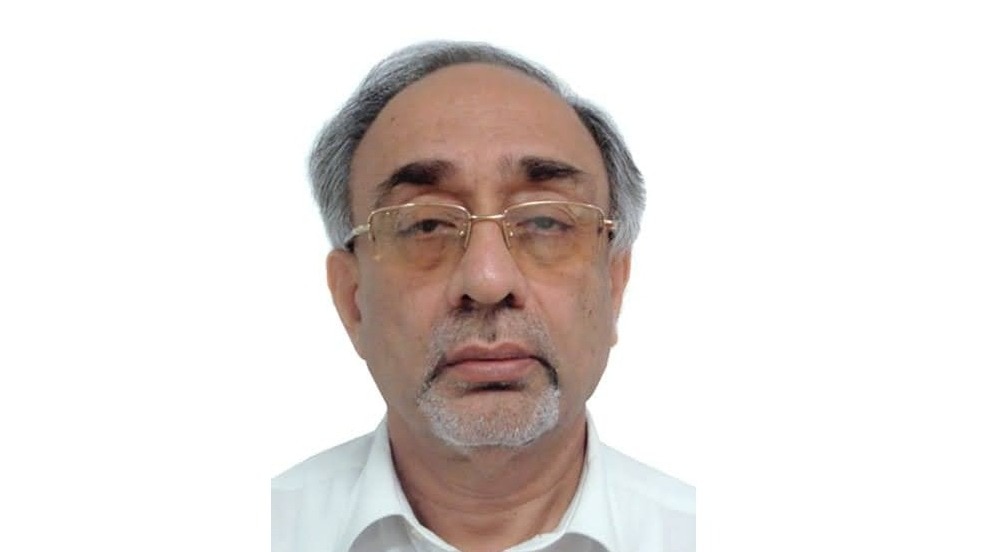
Satish Kumar Kaura's journey began at IIT Kanpur, where he graduated in electrical engineering in 1966. After pursuing a master's in electronics in Canada, he returned to India and founded Samtel. In 2006, Samtel partnered with HAL to develop indigenous display systems for military aircraft, including the Sukhoi-30MKI and LCA.When the story of India’s IITs is told, the conversation often turns to the founders of technology companies, scientists who changed their fields and engineers who built institutions. But there are alumni whose work is embedded in the country’s industrial history, even if their names are less familiar.Satish Kumar Kaura is one of them.Kaura, an IIT Kanpur graduate from the class of 1966, moved to Canada for a master’s degree in electronics at Carleton University, he gained some work experience in North America. He had that zeal, so he chose to come back.In 1973, he founded the Samtel Group. A year later, he established Teletube Electronics to manufacture television picture tubes. Coming from a non-business family and have zero understanding of industrial functioning, Kaura focused on solving the right problem, he innovated something the Indian market was finding it very difficult to prdouce as required.That decision came at a time when electronics manufacturing in India was largely shaped by public-sector enterprises and imports. He has also served on the Review Committee of DRDO and been part of the Scientific Advisory Council to the Prime Minister of India.THE BET ON THE TELEVISION SCREENSatish Kumar Kaura was born into a middle-class family. His father worked at an ordnance factory, and Kaura did not come from an industrial or business family.The turn for the Kaura family came when he first cleared the IIT Kanpur entrance exam and took the admission in engineering, where he studied electrical engineering and graduated in 1966.He was among the early batches of an institute that was then helping establish a new model of technical education in independent India.The first business was picture tubes.Kaura went on to establish Samtel India in 1981 and Samtel Color in 1986. The latter was built through technical and commercial collaborations with Mitsubishi Electric and Sumitomo Corporation.The company eventually became a significant player in India’s picture-tube industry, with an installed capacity of 10 million tubes a year.Then television changed.Colour television expanded rapidly in India around the 1982 Asian Games, creating a new market for domestic manufacturers. Samtel expanded with it. The group grew into a large display manufacturing business, with operations extending beyond television.But the technology that had built the company was also approaching its end.Cathode-ray-tube televisions eventually gave way to flat-panel displays. For a company built around picture tubes, this was not a minor change in consumer preference. It threatened the core of the business.Kaura had another option.He could follow the technology into another market.FROM LIVING ROOMS TO THE COCKPITThe expertise Samtel had developed in display technology found a new application in avionics.Samtel moved into military and aerospace displays, developing products for cockpit and other defence applications. In 2006, it entered into a joint venture with Hindustan Aeronautics Limited, creating Samtel HAL Display Systems.The partnership was described at the time as the first public-private partnership in Indian defence avionics. Its initial mandate included the development and manufacture of multi-function displays and head-up displays for programmes including India's most advanced aircraft of that time, the Su-30MKI, LCA and IJT.That transition is perhaps the most important part of Kaura’s story.He had started with a technology used to bring television into Indian homes. Decades later, the same broad area of expertise, electronic displays, was being applied to military aircraft.Samtel Avionics says the group is now focused on defence avionics, with joint ventures involving HAL and Thales. Its products include cockpit displays, multi-function displays and other avionics systems.The company has also marked milestones in the supply of indigenous multi-function displays for the Su-30MKI.In 2017, Samtel HAL handed over its 1,000th MFD to HAL, with the displays intended for India’s Su-30 fleet.THE RECOGNITIONS CAME, BUT THE NAME STAYED QUIETKaura’s contribution did not go unnoticed by the institutions that followed his work.In 1989, IIT Kanpur instituted its Distinguished Alumnus Award. Kaura was its first recipient, recognised for excellence in entrepreneurship.In 2004, the Government of India awarded him the Padma Shri for his contribution to the industrial sector. He was also elected a Fellow of the Indian National Academy of Engineering.His recognitions included the WWF Care for Nature Award, the Uttar Pradesh Transformational Leadership Award, the Society for Information Display’s Special Recognition Award and the Electronics For You Group Lifetime Achievement Award.He also served in industry and policy forums, including the Confederation of Indian Industry, the Electronic Industries Association of India, the DRDO Review Committee and the Prime Minister’s Scientific Advisory Council.Yet Kaura remains less known outside the circles of electronics, industry and defence.Kaura’s career began with a decision to manufacture a component India was importing. He built a business around television displays, expanded when colour television created demand, and then confronted the decline of the technology on which the business had been built.Instead of stopping there, he carried the expertise into avionics.The journey from Teletube Electronics in 1974 to Samtel HAL Display Systems in 2006 is, in many ways, a record of India’s own electronics journey: from import dependence, to consumer manufacturing, to indigenous defence technology.- EndsPublished By: Rishab ChauhanPublished On: Aug 31, 2026 14:08 IST
Meet the IITian who built Rs 1,200-crore electronics empire from scratch
Full Article
Original Source
Read the full article at Indiatoday →KhanList aggregates and links to publicly available news content. We do not host full articles from third-party sources. Always verify important information with original sources.