
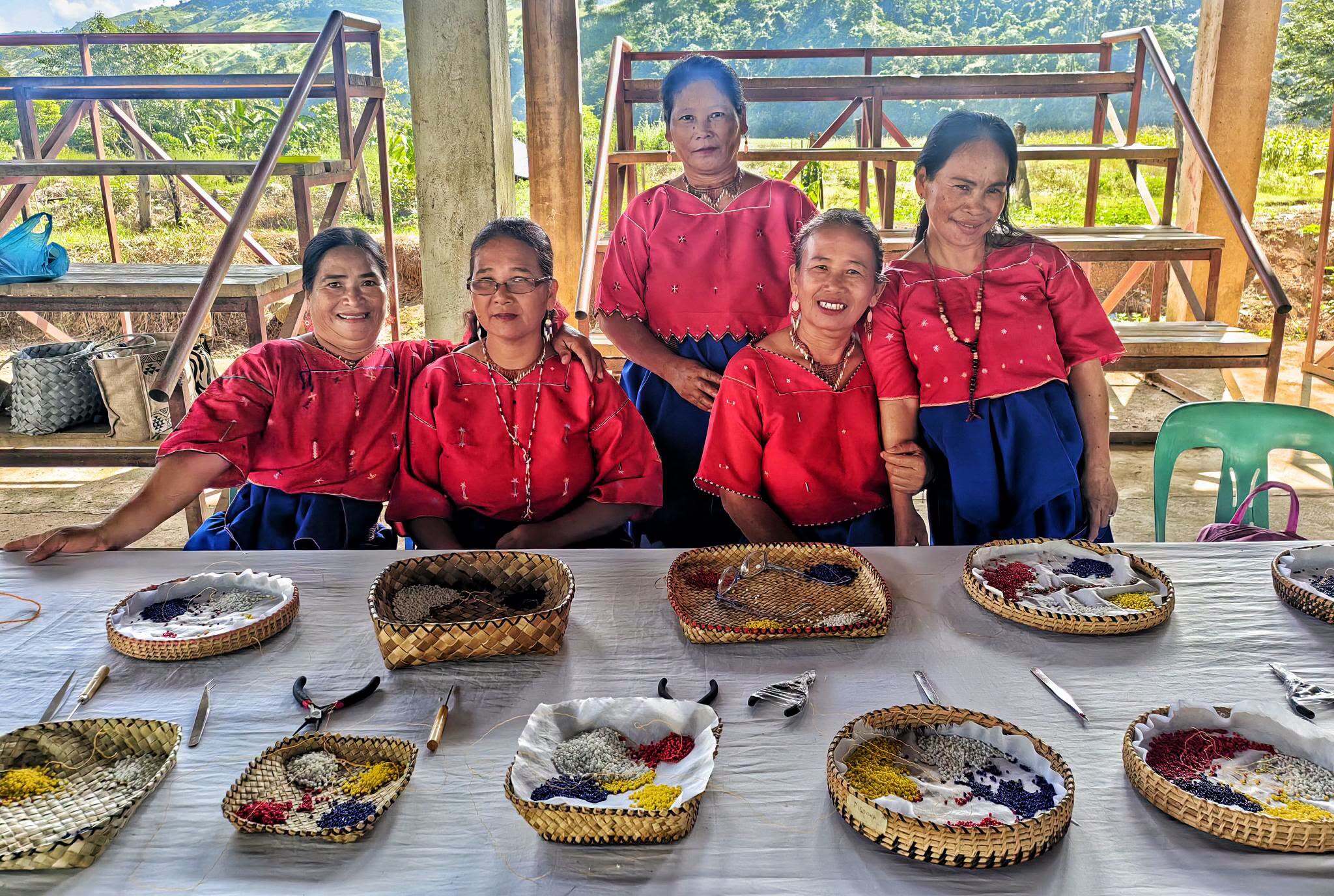
ARTISANS. Tourists can learn the basics of bead making from the Bugkalot bead creators themselves. Marky Ramone Go/Rappler A journey into Nagtipunan, Quirino shows how the Bugkalot people left their fierce headhunting past behind to become a community centered around faith and bayanihan The true essence of travel lies in engaging with local communities and their cultural heritage, as highlighted by the Lakbay Likha program in Quirino and Nueva Vizcaya. The Bugkalot indigenous peoples, through cultural demonstrations and workshops, showcase their traditions and the impact of Christianity on their practices, including the abandonment of headhunting. Lakbay Likha aims to foster deeper connections between travelers and local artisans, promoting cultural learning and supporting community livelihoods through hands-on experiences. This is AI-generated. Read the article for full context. Report any errors. While travel often focuses on postcard landscapes, the true heart of a destination lies in the communities that have called it home for generations. Through the work of cultural bearers, these communities sustain the traditions, knowledge, and heritage passed down through the ages. Recognizing that travel can be more than sightseeing, the Department of Tourism (DOT) Region II and the Department of Trade and Industry (DTI) Region II developed Lakbay Likha. This tourism circuit in Quirino and Nueva Vizcaya brings visitors closer to local artisans, their crafts, and their communities through workshops and creative hubs where travelers can purchase local products and learn traditional skills. In Nagtipunan, Quirino, Lakbay Likha introduces visitors to the Bugkalot indigenous peoples — also referred to as the Egongot — offering a cultural insight that no well-shot landscape photograph can capture. Myra dela Cruz (right), also a Bugkalot, presents the traditional clothing of the community. Preserving traditions, livelihoods, beliefs As community members demonstrated traditional dances and chants, Myra dela Cruz, a Bugkalot member who has researched her own heritage, explained how customs continue to shape modern life in Nagtipunan. For the Bugkalot, cultural preservation is woven into daily survival and mutual support. “Bayanihan (community spirit) remains important to us, especially during occasions such as panhik (traditional courtship), weddings, and funerals,” Dela Cruz explained. This same spirit extends to seasonal hunting and fishing, where catches are divided among households so that other families can benefit. Agriculture remains the primary livelihood for Bugkalot families in Nagtipunan. Many cultivate corn as a cash crop, while upland rice is grown primarily for household consumption. Families also raise livestock like pigs and chickens for income. From headhunting to Christianity The introduction of Christianity brought significant changes to Bugkalot culture, most notably the abandonment of headhunting. Dela Cruz emphasized the role of Christian missionaries, particularly the New Tribes Mission led by Filipino missionary Florentino Santos (fondly called Apun Tino), who arrived in the 1950s. The transition did not happen overnight. In his own accounts, the late Apun Tino acknowledged that the last instances of headhunting occurred as recently as the 1990s. This timeline aligns with anthropologist Shu-Yuan Yang’s 2011 study, “Headhunting, Christianity, and History among the Bugkalot (Ilongot) of Northern Luzon, Philippines,” which notes that headhunting persisted in isolated areas for decades after Christian conversion began. “Christianity played a major role in changing practices that the community came to regard as bad,” Dela Cruz explained, noting the sacrifices of early missionaries. “But the good traditions and rituals remained.” The transformation eventually became internally driven. Bugkalot converts actively spread their faith across Kabugkalotan (their ancestral homeland), with many becoming pastors and missionaries to other indigenous groups in the Philippines. For Dela Cruz, keeping Bugkalot traditions alive begins at home, passed from parents to children. Traditional dances, like the Tagëm, and customary attire are showcased during community gatherings, giving younger generations a firsthand look at their living heritage. However, true preservation goes beyond performance. Deeper engagement regarding language, oral histories, and ancestral knowledge is vital as younger generations navigate changing lifestyles and beliefs. This is also what the Lakbay Likha program hopes to bring into its tourism circuits: experiences that go beyond visiting places and buying souvenirs, by giving travelers opportunities to learn directly from local artisans and take part in the creative practices of the communities they visit. A Bugkalot artisan shows the colorful materials used to craft the intricate beadwork. By supporting local SMEs, community-based artisans, and creators, the program aims to make these encounters part of the travel experience while creating opportunities for the people behind the crafts. In Nagtipunan, cultural learning was paired with a bead-making tutorial led by Bugkalot women who demonstrated the craft themselves. Guests were also able to buy many of their creations such as intricate bead accessories like beaded necklaces, bracelets, and more. Some of the beadworks created by the members of the Bugkalot community. A memorable highlight of the visit occurred just prior to departure when a community member explained that the Bugkalot have a specific chant for bidding goodbye. Instructing the visitors to walk away, she promised to sing as they left. As the vehicles pulled away, she stood waving with a microphone in hand, sending them off with the traditional chant. It served as a fitting conclusion to an itinerary centered on learning about a culture. The experience left visitors with a deeper appreciation for Bugkalot traditions, the people keeping them alive, and the important role that community encounters play in travel. – Rappler.com How does this make you feel? Loading
Meet the Bugkalot in Nagtipunan, Quirino
Full Article
Original Source
Read the full article at Rappler →KhanList aggregates and links to publicly available news content. We do not host full articles from third-party sources. Always verify important information with original sources.