
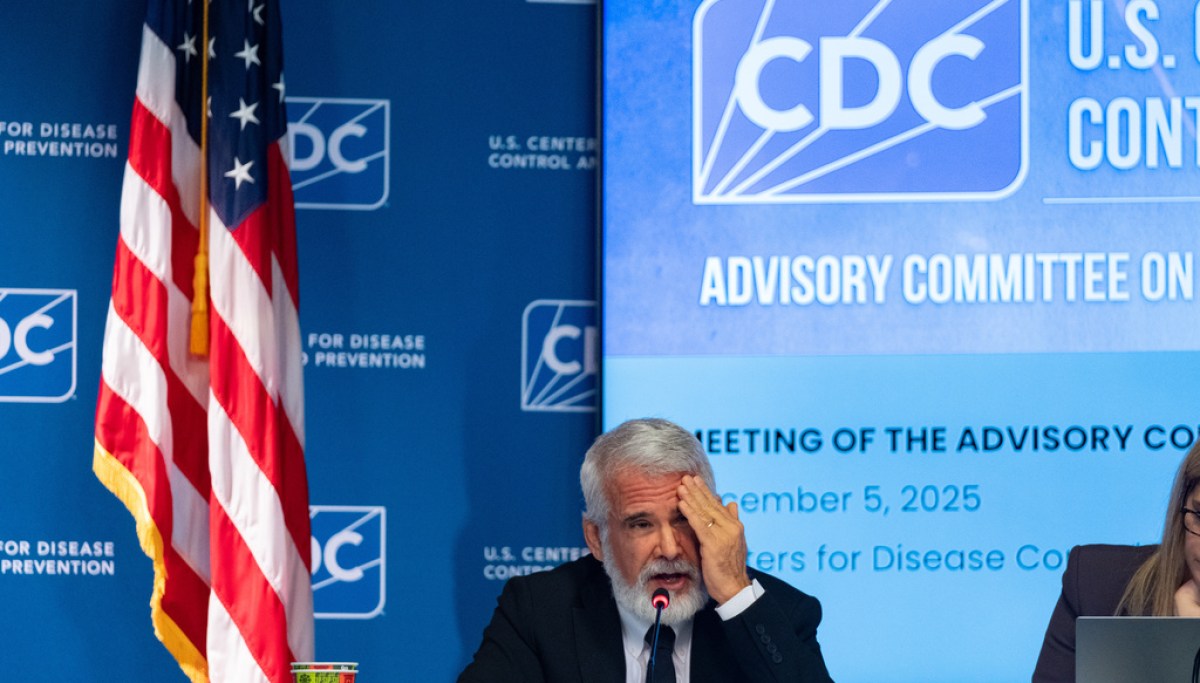
Several major medical organizations are calling on people to protect themselves against flu, COVID-19, and RSV this fall with updated vaccines despite the lack of guidance from the Trump administration health agencies.The new recommendations from doctors’ groups through the Vaccine Integrity Project, led by the American Medical Association, come as the Centers for Disease Control and Prevention has not made any pronouncement on vaccines for the 2026-27 respiratory virus season.The CDC’s immunization recommendations have been effectively paused since March, when a federal district court in Massachusetts invalidated Health and Human Services Secretary Robert F. Kennedy Jr.’s move last year to replace all members of the agency’s vaccine advisory panel with those more in line with his skepticism of the vaccine policy status quo. But since the court order, there have been no meetings of the Advisory Committee on Immunization Practices to make recommendations for the upcoming respiratory virus season, prompting the medical societies to fill in the void.Dr. Bruce Gellin, board chair of the Vaccine Integrity Project, told the press ahead of Wednesday’s announcement that, despite the ACIP’s mission of evaluating vaccine evidence, “the federal government is not fulfilling that responsibility.”“But the need for that work has not disappeared,” Gellin said. “Influenza, SARS-CoV-2, and the RSV viruses will circulate again this fall and winter. Clinicians will still have patients to care for.”According to CDC data from last respiratory virus season, there were an estimated 390,000 influenza-related hospitalizations and 24,000 deaths. RSV caused at least 3 million outpatient visits, 170,000 hospitalizations, and as many as 25,000 deaths, per the CDC.And although COVID-19 has become less severe, estimates for hospitalizations last year range between 140,000 and 240,000 and death estimates range between 15,000 and 42,000.“We cannot allow the breakdown of the federal process to create a vacuum in evidence-based vaccine guidance,” Gellin said. In addition to the AMA, the organizations included in the VIP endeavor include the American Academy of Family Medicine, the Infectious Disease Society of America, the American Academy of Pediatrics, and the American College of Obstetricians and Gynecologists. The groups collectively recommend all adults over 19 receive the updated COVID-19 vaccine and all people over 6 months of age get the influenza vaccine. The CDC did not recommend the COVID-19 for all adults last year.The new medical guidance also strongly recommends COVID-19 vaccines for those more susceptible to severe disease, including seniors over age 65, pregnant women, and infants between 6 and 23 months.For RSV, or respiratory syncytial virus, the groups advise all adults age 75 or older and those between 50 and 74 at an increased risk to get a one-time vaccine. Pregnant women are advised to get the RSV vaccine September of 2026 and March 2027 between 32 and 36 weeks gestation.Dr. Sandra Fryhofer, AMA president-elect, told reporters the effort was organized because there has been “a lot of confusion and chaos regarding vaccine recommendations.” President Donald Trump, left, shakes the hand of Health and Human Services Secretary Robert F. Kennedy Jr. during a meeting to sign an executive order about vaccines, Monday, Aug. 10, 2026, in the Oval Office of the White House in Washington. (AP Photo/Jacquelyn Martin) In addition to the dearth of guidance from CDC about the impending respiratory virus season, President Donald Trump in August signed an executive order in an attempt to circumvent the court’s blocking of ACIP’s recommendation to cut the childhood vaccine schedule to 11 diseases from 18.Critics of the executive order and the Trump administration’s vaccine policy more broadly argue that they have made parents uncertain of which vaccines are most important to protect themselves and their children.“Physicians need evidence-based vaccine guidance we can trust, so we can confidently advise our patients,” Fryhofer said. “And patients need and deserve vaccine recommendations that are clear, credible, and based on the best available scientific evidence, so they can make informed decisions for themselves and for their families.”With the stated intention of replicating the work traditionally done through public ACIP meetings, the medical associations published their safety and efficacy review findings for the vaccines on Wednesday in the Journal of the American Medical Association, showing all three immunizations lowered the risk of hospitalization and severe disease.Gellin said the group’s objective in making the supporting evidence as accessible as possible is “so that clinicians, researchers, the public, and journalists can examine it themselves.” Dr. Ronald Nahass, president of the Infectious Disease Society of America, told reporters that the groups were “speaking with one voice relative to the vaccinations” in the hopes of “acknowledging the challenges of the lack of trust and the lack of clarity.” “I think the point is to make sure the medical community, which we’re here representing, is uniform in our effort to bring clarity and to restore that trust,” Nahass said. Public opinion polling suggests that Americans are confident in the safety of vaccines with long track records, such as the vaccines for measles, mumps, rubella, and polio. But Americans are more skeptical of flu and COVID vaccines. A February poll from the health policy group KFF found 83% of Americans were at least somewhat confident in the safety of the polio and MMR vaccines for children. Less than half of respondents said they had a similar degree of confidence in COVID-19 vaccines for children, and only 65% were at least somewhat confident about the flu vaccine.Dr. Andrew Racine, president of the American Academy of Pediatrics, referenced polling on the favorability of vaccines generally, as well as other opinion polls showing that Americans trust their doctors most to give medical advice.FACT CHECK: TRUMP CLAIMS NO AUTISM CASES AMONG UNVACCINATED AMISH CHILDRENHe said pediatricians and adult medicine physicians “are very much accustomed to answering people’s questions” and strengthen doctor-patient trust by “building on those relationships that continue over time.”“I think that’s an enormous advantage that the medical community has over some other sources of information that’s less reliable to the American public,” Racine said.
Medical societies recommend vaccination for flu season while Trump CDC is silent
Full Article
Original Source
Read the full article at Washingtonexaminer →KhanList aggregates and links to publicly available news content. We do not host full articles from third-party sources. Always verify important information with original sources.