
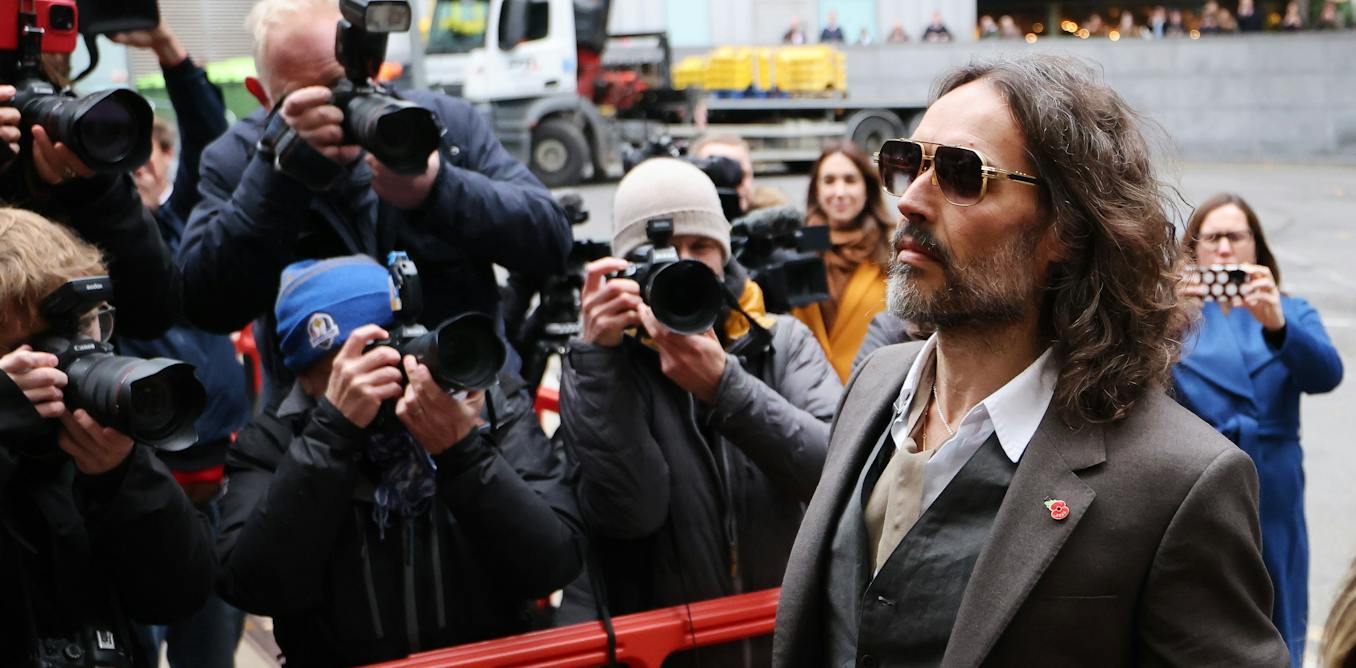
After years of caution, journalists can now exchange the word “alleged” for “convicted” when describing Russell Brand as a sexual predator. Following a four-week trial, where six women testified in detail, the former comedian was jailed for ten years and six months for one count of rape and three counts of sexual assault. He was cleared of two further counts of rape and one of attempted indecent assault. When sentencing Brand, Justice Joel Bennathan emphasised the women’s courage for coming forward. Four victim impact statements were read to the court, one of them by the victim herself, before Brand was sentenced. All four women discussed the deep and lasting impact of their assaults, highlighting the role of the media in their trauma. Complainant three stated how difficult it was to see Brand for years “being celebrated for his disgusting behaviour against women, like it was all a joke”. She also described how seeing the news coverage of the story caused her to have the only panic attack of her life. Read more: Russell Brand: why it is so difficult for people to come forward with sexual assault allegations Complainant four said she suffered heavy anxiety watching the coverage. And complainant five said she was “unprepared for the level of publicity”, adding: “It has been extremely distressing to relive what happened and see it discussed so widely.” Complainant six, who was working for Channel 4 at the time she was attacked, stated she reported her sexual assault to the broadcaster, which had recruited Brand to work on a project. But she said of her complaint: “It was brushed under the carpet by senior management.” The trial is an example of the role media can play in uplifting the career of powerful people like Brand. This is both through platforming celebrities in “puff” articles and TV segments, as well as in their failure to act on reports of unprofessional and illegal behaviour. Yet it was the investigative reporting by Channel 4 and The Times and The Sunday Times in 2023 that the Metropolitan Police credit for starting an investigation into Brand. In fact, most of the high-profile cases of sexual violence that have gone to trial in the UK and US have included journalistic exposés. Uncovering the sexual violence of high-profile people is time-consuming and risky for news organisations. Chief news correspondent for The Sunday Times Rosamund Urwin and investigations correspondent for The Times Charlotte Wace said they worked on the Brand story for nearly four years before publishing. They contacted more than 500 sources in the process. The media was not on trial in the Brand case – though sometimes it may have felt that way. Since the trial, they have discussed how surprised they were that Brand’s defence team centred their news reporting throughout the proceedings. “Our reporting, while important as the catalyst for some of them, wasn’t on trial,” Urwin later said in a TV interview. The attempts to undermine the news reporting even seeped out of the courtroom. Urwin was confronted by Brand’s barrister Ian Winter KC on the day the verdicts were returned. She introduced herself – because the barrister had mentioned her reporting frequently in court. He reportedly replied: “I hope you’re pleased with yourself”. Urwin responded: “I’m pleased justice has been done”, to which Winter is said to have retorted: “Well, it wasn’t. You f***** it … Congratulations.” Winter has now referred himself to regulator the Bar Standards Board. Threats and intimidation Women accusing a high-profile man can face anger, either online or in person. Brand’s father Ron even said after the sentencing that his son is the real victim – not the women accusing him. Journalists also face contempt through threats of “strategic litigation against public participation” or Slapps – lawsuits that are increasingly being used to suppress reporting in the UK and US. And it doesn’t stop at Slapps. TV personality and author David Walliams recently attempted to block a joint ITV News and Guardian investigation that includes several women alleging sexual misconduct. Two accusers say they were 15 years old when they met Walliams. He filed an injunction, which was dismissed by the high court, meaning he could then be named. Walliams denies the allegations against him. In 2020, the actor Johnny Depp tried and failed to sue The Sun newspaper for reporting he was a “wife beater” (although he was successful in a US case against his former wife Amber Heard). In 2003, Jeffery Epstein successfully used threats to pressure Vanity Fair magazine to water down its coverage of him. And in 2017, disgraced film producer Harvey Weinstein allegedly managed to stop NBC from publishing an investigation into his sexual misconduct. The probe was eventually published by The New Yorker. But despite instances like these, powerful celebrities like Brand can hide in plain sight for years with the help of news media organisations. The relationship can be mutually beneficial. Celebrities are legitimised and hyped through regular attention – and in return, news outlets get clicks and views. This relationship can sour if news organisations invest in the lengthy and complicated process of uncovering sexual crimes. In the process, it’s still the accusers, often victims of sexual crimes, who endure years of anxiety and scrutiny.
Media ultimately exposed Russell Brand – but his fame and celebrity added to victims’ trauma
Full Article
Original Source
Read the full article at Theconversation →KhanList aggregates and links to publicly available news content. We do not host full articles from third-party sources. Always verify important information with original sources.