
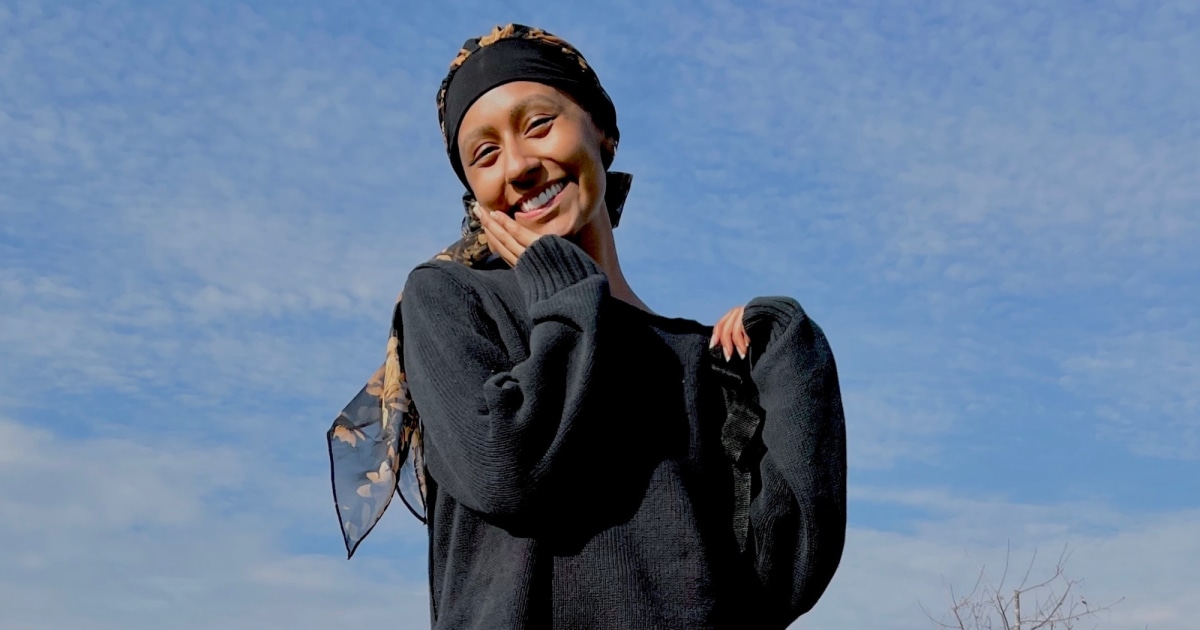
Ananya Bashyam had just started her first job out of college when her vision went completely black one morning.It was September of 2021 and she’d been in the job, a high school biology teacher in Houston with Teach for America, for just a few weeks. “New city, new job, lots of life transitions,” Bashyam tells TODAY.com.That morning, she’d woken up and lost her vision as soon as she stood up from bed. It wasn’t the first time it had happened, but this time, “my vision stayed black unless I sat back down,” she recalls. “And I was feeling really dizzy, so (that was) pretty concerning.”Her urine had also turned dark brown, and she had started feeling “really ill,” like she was coming down with the flu, says Bashyam who grew up in Flower Mound, Texas. She went to work anyway, she says, and just continued to feel worse and worse.That weekend, she finally went to urgent care. There, her lab work came back “super weird,” she says. Her blood cell counts were a little bit low, but the doctors were more concerned about her liver numbers, which were strikingly high. “Their first thought was she’s in liver failure,” Bashyam says.She was rushed to a local ER and stayed in the hospital for the next two weeks under the assumption that she had a serious liver issue. But, while her liver numbers slowly improved, her blood cell counts gradually got worse.It was a hazy and tough time for her, she says.“I honestly don’t even remember most of it because I was so out of it,” Bashyam reflects. “I was getting blood transfusion after blood transfusion, and I was just slipping in and out of really high fevers.”Her doctors ultimately called in additional specialists, who then ordered a blood marrow biopsy, which revealed the true cause of her scary symptoms.At 22, She Was Diagnosed With LeukemiaAmid all these new life changes, Bashyam was diagnosed with B-cell acute lymphoblastic lymphoma.This is a fast-growing, aggressive type of bone marrow cancer that is more common in children, Dr. Musa Yilmaz, an associate professor in the department of leukemia at MD Anderson Cancer Center, tells TODAY.com. “And if it goes untreated, it’s a deadly disease,” he says.Thanks to advances in treatment over the last decade, “We are able to cure substantial amount of patients with this disease, but the treatment process is not easy,” says Yilmaz, who is also Bashyam’s doctor.For Bashyam, treatment was unusually extensive and challenging because she experienced multiple relapses.Her first round of chemotherapy started just days after getting to MD Anderson, she says, and the treatment lasted about four to five months. “I feel like every complication you imagine with like the chemotherapy happened within those four months,” including multiple infections due to being so immunocompromised, she recalls. “There’s not much you can do when you’re at, like, single digit platelets and zero white blood cells.”After four cycles of chemotherapy, Bashyam switched to four cycles of a new medication: a targeted immunotherapy called blinatumomab. It targets two specific sites on the body’s own T-cells, which are part of the immune system, and uses them to “bring the cancer cell into the proximity of the T-cells,” and activate the T-cells, Yilmaz explains. In this way, the drug uses your own immune system to target cancer cells.The drug “changed the landscape” of treating this type of cancer, he says, but it does require a substantial commitment from the patient. “It’s a 24/7 infusion,” Bashyam says, which meant it was connected to her at all times and she needed to carry it around with her.But it was worth it: After about a year of treatment, she was in remission.A Stem Cell Transplant and ‘Brutal’ RecoveryOnce in remission, Bashyam was cleared to go back to teaching, “which was really fun,” she says. Unfortunately, after only six months of teaching and just eight months after stopping the blinatumomab, a bone marrow biopsy revealed that her cancer had returned in early 2023.Her medical team decided to try CAR T-cell therapy, a treatment that uses the patient’s own immune cells to make an immunotherapy drug designed to fight the cancer cells.While it helped, “it didn’t get rid of the disease altogether,” Bashyam says. “After that, the only thing to do past that point was a stem cell transplant.”It was a daunting prospect. But on the bright side, she says, her younger brother ended up being a perfect donor match. “He’s like my best friend in the whole world,” she says, “so it was kind of beautiful that he was able to do that for me,” she says.And that June, the stem cell transplant went ahead. Beforehand, she underwent full body radiation and high dose chemotherapy to wipe out her own immune system. So the day of the actual transplant felt a little “anticlimactic,” she laughs. But soon after, the “really brutal” recovery began, Bashyam says, which included graft-versus-host disease, causing excruciatingly painful gastrointestinal complications.After about a six-week stay in the hospital, she was able to start moving forward, and slowly regained her strength. She was planning to take the rest of the year off to recover.Yet again, however, the cancer had other plans. Just two months after the stem cell transplant, Bashyam’s disease relapsed a second time.“Relapses in this disease are not common,” Yilmaz says, and facing another one with even fewer choices for treatment on the table left Bashyam feeling scared.Before the stem cell transplant, she says, it had been framed to her as the last option — and it hadn’t worked. Her doctors ultimately decided to put her back on blinatumomab, the immunotherapy she’d tried after chemo. Just a few months later, she was back in remission again. And, in the fall of 2024, she started medical school in Chicago.Mental, Emotional Toll of a Cancer Diagnosis in Young AdulthoodBashyam managed to attend med school while continuously hooked up to the immunotherapy drug for four weeks at a time, taking it with her to classes in a Baggu or Lululemon bag. She got creative about sleeping positions and leaned into spin classes “because I could just hook the bag onto the handlebar of the bike.”She stayed on the medication until the end of her first year of med school, when her doctor decided she’d been in remission long enough. And she’s been off it since then, over a year now, with no signs relapse so far.Now in her third year, Bashyam is getting her childhood vaccinations all over again, and reflecting on all she’s been through.Of course, there’s never a “good” time to have cancer. But dealing with the diagnosis and challenging ups and downs of the treatment process was especially hard at this time in her life, Bashyam says. “It’s just an exceptionally strange, sad age to get diagnosed at because you’re just supposed to be starting your next chapter of life,” she says, “and everyone I knew was moving forward and building their adult lives, and I just felt stuck in one place.”Fighting the disease “just becomes your entire life,” she says, adding that the physical changes took a toll on her self-esteem as well. “All the steroids make your face really big, and then the rest of my body looked like a twig,” she says. “If I looked in the mirror, I couldn’t recognize myself.”“The Kind of Doctor I Want to Be”Bashyam had always wanted to go to med school, but seeing the darker, sadder realities of what healthcare sometimes requires had her questioning whether she was really cut out for it.“I had so many traumatic memories in the hospital,” she says. “I didn’t know that I wanted to spend the rest of my life working in a hospital.”It was the kindness and support of those around her, particularly her medical team, that helped her through, she says. For example, she recalls the doctor who brought her a cake and birthday card on the day of her stem cell transplant, a “rebirth” tradition for patients that Bashyam had wanted to partake in but couldn’t put together in the rough days before her transplant.“That was really beautiful,” she recalls. “I was like, this is the kind of doctor like I want to be.”And she started sharing her experience on TikTok, with a mix of vulnerable dark humor and simply showing the realities of being a young cancer survivor balancing her health with her med school training and social life.Today, Bashyam is still in remission and getting biopsies regularly. She knows that cancer will be a part of her life for a long time. But she’s learned to celebrate her victories even the ones that might seem small, whether it’s her first hairs growing back after chemo or delivering a placenta by herself for the first time.For Yilmaz, Bashyam’s story is a powerful reminder that not all cancer journeys are straightforward. “This is like a marathon, a lot of ups and downs,” he says. And to see her reaching her goals — in the medical field, no less — should be a sign of hope for patients facing a similarly challenging road, he adds.
Med Student Recalls ‘Concerning’ First Signs of Leukemia Before Her Diagnosis at 22
Full Article
Original Source
Read the full article at Today →KhanList aggregates and links to publicly available news content. We do not host full articles from third-party sources. Always verify important information with original sources.