
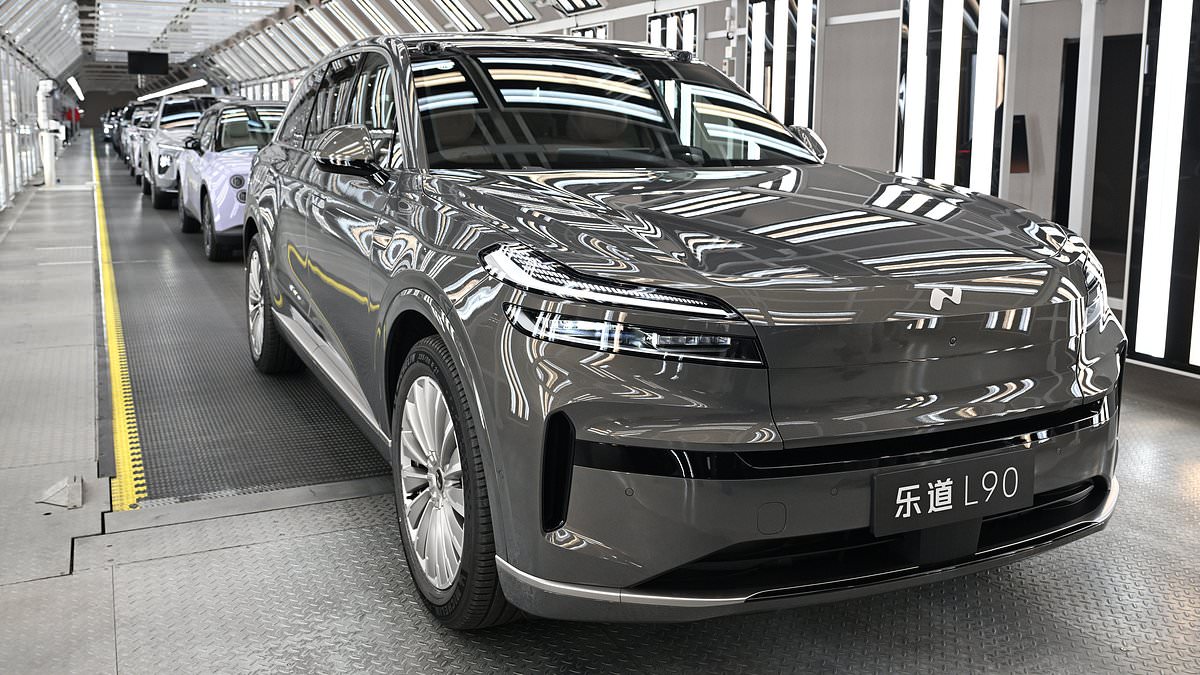
As sales of Chinese cars in Britain soar, mechanics have voiced concerns about the long-term repairability of electric vehicles arriving from the Far East.Four in five independent garages say they are not confident about their capacity to repair EVs from newer brands entering the UK once they fall out of their warranty periods.Half of the businesses surveyed reported having 'significant concerns' about the repairability of these vehicles, according to ClickMechanic. Andrew Jervis, co-founder of the online platform, which connects drivers with reputable garages in their area, said: 'What I'd ask buyers to think about is what happens when the car needs a repair in three or five years.'Can a local garage get the right parts? How long might you be without the car?'That will vary by make and model, especially as newer brands build up their UK parts networks. If the correct parts are hard to source, there's a risk of your car being off the road for days, weeks or even months.'His warning comes as more than one in five new cars registered in the UK in October were Chinese-made, with the Jaecoo 7 SUV – also known as the 'Temu Range Rover' – topping the model charts for a second consecutive month.Drivers have snapped up almost 338,000 vehicles from Chinese brands in the first ten months of the year, accounting for 18 per cent of all registrations. A poll of 200 independent garages across Britain found that four in five had concerns about sourcing parts to repair EVs from China once they get older and fall out of warrantyAsked about their concerns regarding repairing EVs in general, rather than just those made by Chinese manufacturers, three in five mechanics cited battery life or replacement costs, while half raised issues with declining ranges with age.The repairability of these vehicles has already caused headaches for owners in Britain.A study by Carwow earlier this year found that some motor insurance providers were refusing to cover some Chinese models.Reasons quoted by insurers for why they have been hesitant to underwrite Chinese models are in regard to the speed at which they can be fixed Ageas said most of its customers drive models that are over eight years old. Therefore, due to the infancy of Chinese brands, these cars were not within their typical cover bracket.Tom Quirke, chief underwriting officer at Ageas, told us in February: 'Many of these brands are new to the market and therefore are not yet in Ageas’s target market. However, we do have a process to add new models to our list of acceptable vehicles when appropriate.'Meanwhile, LV= General Insurance, owned by Allianz, said it wasn’t covering models including the Xpeng G6, BYD Seal U, and Skywell BE11 because they were still evaluating the insurance risks associated with these vehicles.Yet Iain Reid from Carwow, who undertook the investigation, said the problem does not lie with Chinese cars but the UK insurance industry 'struggling to keep pace with a rapidly changing market'. ClickMechanic polled 200 independent garages for the research. Affordability driving Chinese car demand A separate ClickMechanic poll of 2,000 UK adults revealed that it's largely the affordability of Chinese cars that's driving the market.Asked which option they would choose if price, specification and features were on par for a Chinese-made EV and one built in Europe, just 6.3 per cent said they would choose the former.The study also revealed that Britons are being swayed by the attractive pricing of Chinese cars.Responding to another question, two in five said they would consider buying an EV from a Chinese-owned manufacturer, or would buy one again.The latest figures from the motor industry trade body show that three Chinese models – the Jaecoo 5, BYD Seal and Leapmotor B10 – all made October's top ten best-selling electric cars list last month.Yet none of these are what you'd call cheap.The Jaecoo and Leapmotor cost from £27,500 and £30,000 respectively, while the BYD is more expensive than a Tesla Model 3, starting at more than £45,000.Jervis added: 'I understand why UK drivers are turning to Chinese EVs. When household budgets are stretched, getting more range or better equipment for your money is a good reason to look beyond familiar brands.' Andrew Jervis, CEO of ClickMechanic, says that if parts for ageing Chinese EVs are hard to source, there's a risk of cars being off the road for days, weeks or even monthsHowever, that growth could be curtailed if the Prime Minister follows the EU's lead and imposes tariffs on Chinese electric cars.Andy Burnham and Business Secretary Jonathan Reynolds are reportedly considering new levies amid concerns in Brussels that Beijing is using the UK as a 'back door' for state-subsidised vehicles entering Europe.Britain remains one of the few major markets without significant tariffs on Chinese EVs, while the US market is effectively closed and the EU imposes duties of up to 45 per cent.The Government has so far resisted such measures to avoid damaging relations with China, with imports proving hugely popular among British buyers and Chinese companies planning significant investments in the UK.Yet some Chinese brands are already planning to steer around the possibility of tariffs.Join the discussionShould British drivers risk buying cheaper Chinese EVs of they become more difficult to repair as they get older?What's your view?In a recent interview with UK journalists, Chery Automobile chairman Yin Tongyue detailed the company's ambition to 'be a British brand', a move that could potentially shield it from any future levies.Speaking at a roundtable conference, he said: 'In the future, I really want to have products designed in the UK, engineered in the UK and produced in the UK, to sell worldwide.'Mr Yin's comments come as the company prepares to open a new R&D centre in Bedfordshire, allowing it to tune vehicles specifically for British roads and drivers.It has also launched a nationwide Super Parts Hub network comprising eight regional distribution centres supplying genuine Jaecoo and Omoda components, following complaints from customers about long repair delays. ClickMechanic has warned that similar issues could become problematic for older models from other Chinese manufacturers in the future.Chery is also exploring a number of routes to begin vehicle production in Britain.It already has a long-established manufacturing partnership with Jaguar Land Rover dating back to 2012 and, earlier this year, signed a Memorandum of Understanding with Nissan to build cars for UK customers at the country's largest vehicle plant in Sunderland.ClickMechanic's research also highlighted regional and demographic differences in willingness to own a Chinese EV.In the capital, more than 18 per cent said they would choose a Chinese-made EV over one produced in Europe.London was also the most open region overall, with 61.3 per cent willing to consider a Chinese-owned EV, compared with 42 per cent across the UK and 36.2 per cent in the South West.Younger drivers are far more open to these new brands too.Half of 18 to 34-year-olds said they would consider a Chinese-owned EV or buy one again, compared with a third of those aged 55 and over.
Mechanics raise concerns about long-term repairability of Chinese EVs
Full Article
Original Source
Read the full article at Dailymail →KhanList aggregates and links to publicly available news content. We do not host full articles from third-party sources. Always verify important information with original sources.