
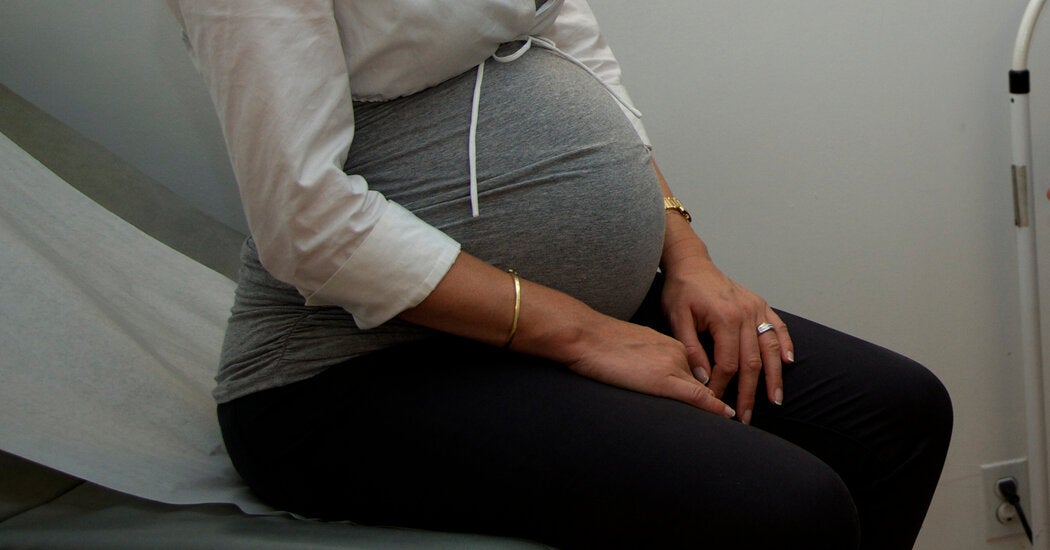
AdvertisementSKIP ADVERTISEMENTA new analysis underscores the severe consequences of a measles infection during pregnancy, including hospitalization and pregnancy loss.Credit...Deidre Schoo for The New York TimesNov. 16, 2026, 3:11 p.m. ETAt least 13 babies have been born infected with measles in the United States past two years, as the highly contagious virus has surged across the country, scientists at the Centers for Disease Control and Prevention reported on Monday.Their preliminary analysis, published in the New England Journal of Medicine Evidence, is the first to document how common congenital measles has become nationwide. The authors also identified 112 pregnant women infected with measles in 2025 and 2026, most of whom were unvaccinated. Nearly one-quarter were hospitalized for complications unrelated to labor, such as pneumonia and respiratory failure. One was admitted to the intensive care unit. Some also delivered preterm, and two lost their pregnancies.“This is much worse than we thought,” said Michael Osterholm, a public health expert at the University of Minnesota.Measles is especially dangerous for pregnant women, whose immune systems are temporarily weakened. They are more likely to develop severe complications and 10 times as likely to die from measles.Doctors know relatively little about how being exposed to measles in utero affects children because, until recently, cases of congenital measles were exceedingly rare in the United States. Even before vaccines were available, it was nearly unheard-of for an adult woman to become infected because almost every American had measles during childhood.“There are a lot of holes in our knowledge,” Dr. Adam Ratner, a member of the committee on infectious diseases at the American Academy of Pediatrics, said, adding, “We’ve been lucky enough for the past several decades not to have to think about this.”Researchers are now racing to understand the long-term consequences of these infections as the virus spreads across the country. This year, there have been more than 5,000 measles cases nationwide and 10 deaths reported by state health officials. This week, international health officials are expected to announce that the United States has lost its measles-elimination status.“This is what happens when we when we get to the point of losing measles-elimination status,” Dr. Ratner said. “We start seeing these rare things more often.”Several outside experts said they found it unusual that the C.D.C. scientists published in an outside journal, rather than in the agency’s own scientific journal. But they noted conflicts within the agency over how to respond to the nation’s measles crisis. This fall, the C.D.C. prevented its scientists from sending out an urgent alert on measles in pregnancy, The Washington Post reported. Under the leadership of Health Secretary Robert F. Kennedy, Jr., the agency has also publicly challenged two measles deaths reported by state officials in Pennsylvania.In “normal times,” said Dr. David Kimberlin, a pediatric infectious disease expert at the University of Alabama at Birmingham, a report like this would have been published in the C.D.C.’s journal. “But we’re not in normal times,” he added.“There’s been a reluctance to accept that measles causes severe infections and death,” Dr. Ratner said.The Department of Health and Human Services did not respond to a request for comment by the time of publication.As cases of congenital measles have become more common, doctors have started to piece together a concerning picture of the condition.Dr. Michelle Barton-Forbes, a pediatric infectious disease doctor who worked at the center of a large measles outbreak in Canada last year, was one of the first physicians to document recent cases of congenital measles in North America. One of the primary risks she identified was a neurological complication called subacute sclerosing panencephalitis, which can affect a child up to a decade after an initial infection. It is almost always fatal.While this is considered a rare complication of measles, affecting roughly 1 in 100,000 of those infected, babies are at a much higher risk than older children or adults. Some researchers have estimated that one in 158 infants develop SSPE after an infection. This is because their immune systems are too weak to stop the virus before it can “sneak into the brain,” Dr. Barton-Forbes said. In infants, the neurological complication may also develop much sooner; it has been reported in babies just a few months old, she said.Dr. Barton-Forbes said she planned to follow the patients she diagnosed with congenital measles to see how many went on to develop SSPE. She also planned to monitor how many developed other infections as a result of “immune amnesia.” This complication — which occurs when a measles infection wipes out the immune system’s memory and leaves it more vulnerable to other illnesses — may become more common as large measles outbreaks become the new norm.Unfortunately, Dr. Kimberlin said, “congenital measles is one that we’re probably going to be learning more about.”Teddy Rosenbluth is a Times reporter covering health news, with a special focus on medical misinformation.Related ContentAdvertisementSKIP ADVERTISEMENT
Measles Is Sickening More Pregnant Women and Newborns, Alarming Doctors
Full Article
Original Source
Read the full article at Nytimes →KhanList aggregates and links to publicly available news content. We do not host full articles from third-party sources. Always verify important information with original sources.