
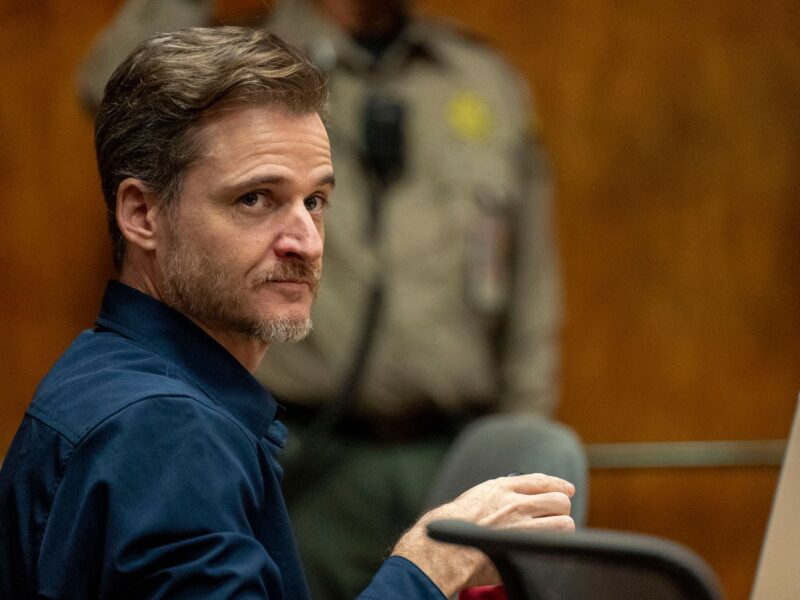
An Oahu judge indicated that he'll question jurors about a livestream comment claiming they were contacted by a juror during the trial in April.HONOLULU (CN) — Two jurors went on camera after convicting Gerhardt Konig of attacking his wife on an Oahu cliffside trail. On Friday, those interviews became the centerpiece of a fight over whether the Maui anesthesiologist should get a new trial.Oahu First Circuit Judge Paul Wong spent much of a lengthy hearing pressing both sides on how much a judge can consider what a juror says after a verdict has been returned.“If we’re not going to set aside a verdict after learning it wasn’t unanimous, I don’t know when we would,” Wong told Konig’s attorney, Thomas Otake.A jury convicted Konig, 47, in April of attempted manslaughter based on extreme mental or emotional disturbance, rejecting the second-degree attempted murder charge prosecutors originally brought.Prosecutors said Konig tried to push his wife, Arielle Konig, off a cliff on the Pali Puka Trail in March 2025, then tried to stab her with a syringe and struck her twice with a rock. Konig testified that his wife attacked him first and that he acted in self-defense.Konig’s May motion for a new trial leans heavily on what the jury foreperson and a second juror told reporters after the verdict.The foreperson said in one televised interview “the intent to kill is improbable to us based on the evidence presented.” A second juror, referred to in court filings only as Juror No. 3, said he didn’t know if Konig “was trying to kill his wife” but that his conduct had “the capacity to kill” her.Otake argued those statements are not the kind of private, internal deliberations that a rule barring inquiry into jurors’ mental processes is meant to protect. They’re objective results, he said, akin to a jury’s numerical vote.“That’s not the mental process,” Otake told the judge. “That’s the objective result.”Deputy Prosecuting Attorney Joel Garner countered that the jurors were describing how they reached their verdict, which he said is precisely what the rule is designed to keep out of the courtroom.“If you don’t believe in the secrecy of deliberations, you don’t believe in jury trials,” Garner said. “It’s as simple as that.”Konig’s motion also points to a comment posted to a YouTube livestream of the trial while the jury was still deliberating: “I’ve been texting with one of the jurors, and they’re going for count three, attempted manslaughter.”The comment named the eventual verdict and used “count” language that echoed how the foreperson later described the verdict form, even though the verdict form had not yet been made public. Otake called that too specific to dismiss as a lucky guess.Garner dismissed the comment as an anonymous, unverified claim that falls far short of the kind of confirmed juror contact that has justified new trials in other cases, where the contact was reported by the juror and investigated by the FBI.“What we have is an anonymous internet comment,” Garner said. “That can’t automatically trigger a new trial. That’s not the law.”Before arguments began, Otake called Irwin Keliipuleole, an investigator with the Department of the Prosecuting Attorney, who had tried to interview the foreperson, seeking to establish that she stood behind everything in her affidavit and everything she told the media. Garner objected on hearsay grounds. After several minutes of discussion, Wong allowed the testimony, saying it went to what the court could properly weigh in resolving the motion.Keliipuleole testified that the foreperson told him she felt uncomfortable being contacted and said she had been ordered by the judge to speak with the media.Wong did not say how he’ll rule on the new trial motion, but appeared prepared to bring jurors back in for questioning over the livestream claims, regardless of how he ultimately resolves the broader dispute over the jurors’ media interviews.“The court will have jurors come in and ask if there was outside contact during jury deliberations,” Wong said. “If the answer is yes, I need to probe further. And I understand this is objectionable to both parties, but I think this is required of the court.”If Wong grants a new trial, Konig could not be retried on the attempted murder charge — Hawaii law treats a manslaughter verdict as an implied acquittal on the greater offense.If he denies it, Konig’s long-delayed sentencing, for which prosecutors are seeking the maximum 20 years, would move forward on a date yet to be set.Subscribe to our free newslettersOur weekly newsletter Closing Arguments offers the latest about ongoing trials, major litigation and rulings in courthouses around the U.S. and the world, while the monthly Under the Lights dishes the legal dirt from Hollywood, sports, Big Tech and the arts.Additional Reads
Maui doctor convicted in wife’s attempted murder lobbies for new trial
Full Article
Original Source
Read the full article at Courthousenews →KhanList aggregates and links to publicly available news content. We do not host full articles from third-party sources. Always verify important information with original sources.