
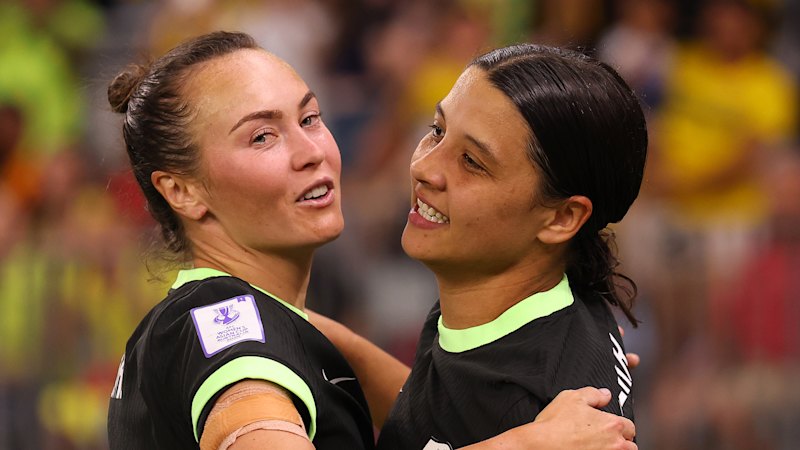
November 12, 2026 — 6:58pmThe Matildas have been assigned a daunting rematch with Asian Cup champions Japan as they set their sights on qualifying for Los Angeles 2028, which could also be the team’s final appearance at an Olympic Games.The draw for next year’s Asian Olympic qualifiers was conducted on Thursday afternoon in Malaysia, with Joe Montemurro’s side landing in Group A, which also features Chinese Taipei and Uzbekistan.Caitlin Foord and Sam Kerr.Getty ImagesBut they copped the worst of two possible outcomes from pot one, setting up another clash with the fearsome Nadeshiko, who outclassed the Matildas 1-0 in the AFC Women’s Asian Cup final in Sydney earlier this year to all but shut the door on this generation’s hopes of a major trophy.It has been over a decade since the Matildas defeated Japan in a competitive fixture – but that could be what is required of Sam Kerr and her teammates to book their spot at the next Olympics, or at least do so the easy way.Only the top team from the two groups in Asian qualifying will clinch a direct berth at LA28, while the second-placed teams will face each other in a play-off, with the winner to then square off against Argentina for the last remaining berth.In that instance, Group B’s runners-up are likely to be either North Korea, South Korea or China - all of whom have caused problems for the Matildas in recent years.ASIAN OLYMPIC QUALIFYING GROUPSGROUP A: Australia (15), Chinese Taipei (38), Uzbekistan (51)GROUP B: North Korea (12), South Korea (17), China (18), Philippines (39)*FIFA ranking in parenthesesThe Matildas will return to action later this month with a two-match friendly series against Colombia, with their bid to reach the Olympics to begin in April.Heightening the stakes is the possibility that 2028 could be the last time the Matildas grace the Olympic stage.FIFA is reportedly petitioning the International Olympic Committee to restrict the women’s football tournament to under-23s players, bringing it in line with men’s football, which made that change in 1992 - and then, four years later, allowed countries to name a maximum of three overage players each.The earliest this could happen is at the 2032 Olympic Games in Brisbane.Women’s football at the Olympics has been open-aged since it was introduced to the program in 1996, and as such, has long been regarded as a highlight of the calendar, with medals considered to be far more prestigious than in men’s football.However, the development of the women’s game and introduction of more tournaments - particularly FIFA’s new Club World Cup for women, which will take place for the first time in January 2028 - has created more fixture congestion, with changes to Olympic eligibility an obvious way to alleviate this problem.No formal proposals to this end have been tabled, according to a report in the Guardian last week, and any such move could face serious opposition from players, supporters and possibly the IOC, given the commercial importance of the sport to the Olympics.News, results and expert analysis from the weekend of sport sent every Monday. Sign up for our Sport newsletter.From our partners
Matildas to face fearsome Japan in Olympic qualifying mission
Full Article
Original Source
Read the full article at Smh →KhanList aggregates and links to publicly available news content. We do not host full articles from third-party sources. Always verify important information with original sources.