
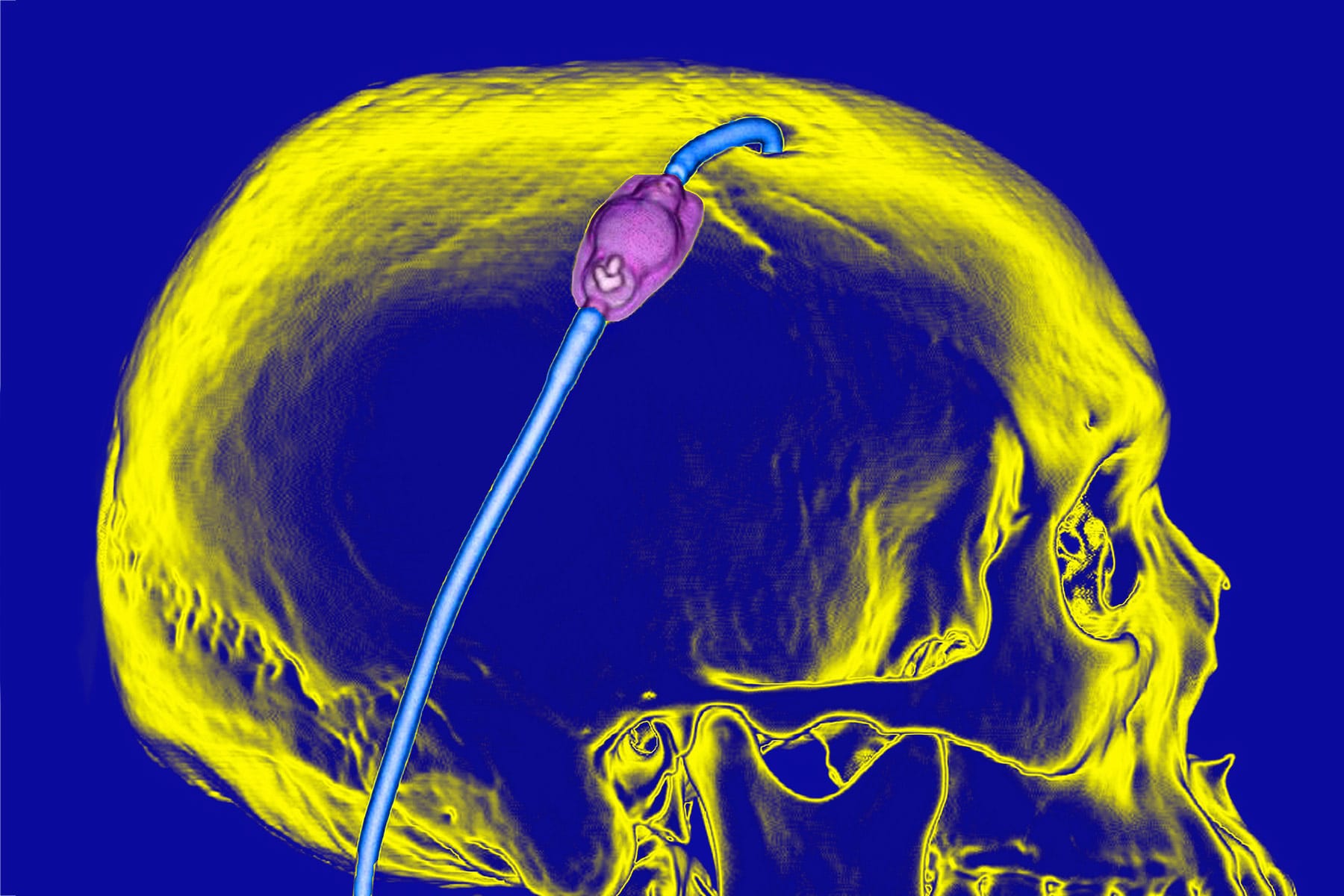
Key TakeawaysPreserving a ventriculoperitoneal (VP) shunt during breast cancer surgery may be feasible when the tumor is close to the catheter and shunt dependence precludes removal. This case demonstrated that careful preoperative imaging, multidisciplinary planning, avoidance of energy devices near the catheter, and meticulous sharp dissection allowed the shunt to be preserved during mastectomy without damage or subsequent complications.The case report by Hirofumi Terakawa, MD, PhD, and colleagues at Kanazawa University in Kanazawa, Japan, described the surgical management of breast cancer located close to a VP shunt on the affected side.The Patient and Her HistoryA 58-year-old woman was referred for evaluation of a right breast mass detected on ultrasonography screening. Seven years earlier, she had experienced a subarachnoid hemorrhage caused by a ruptured cerebral aneurysm, complicated by communicating hydrocephalus. A right-sided programmable-valve VP shunt was placed at that time.The distal catheter was routed through the right side of the neck and along the right sternal border. No shunt revision had been performed since the initial placement. The patient remained shunt-dependent and could no longer undergo mammography. Consequently, her breast cancer screening had lapsed after shunt placement.Her medical, family, social, substance use, travel, and allergy histories were otherwise unremarkable.Findings and DiagnosisOn admission, physical examination revealed a palpable mass in the right breast. Breast ultrasonography showed a 35-mm irregular hypoechoic mass in the upper inner quadrant. A CT scan showed an enhancing right breast tumor and enlarged right axillary lymph nodes without distant metastases.MRI showed that the medial edge of the tumor was approximately 20 mm from the catheter. x-ray of the skull was performed before and after MRI to ensure the pressure setting and stability of the shunt valve.Core needle biopsy of the breast mass showed invasive ductal carcinoma. Fine-needle aspiration cytology of the axillary lymph node was positive for metastasis. The clinical diagnosis was cT2N1M0, stage IIB breast cancer.The patient underwent right total mastectomy with axillary lymph node dissection. The catheter was preserved without damage.Adjuvant chemotherapy and postmastectomy radiotherapy (PMRT) were subsequently administered without complications. At follow-up, there was no evidence of tumor recurrence.Discussion“We successfully treated a patient with breast cancer ipsilateral to a VP shunt by total mastectomy with shunt preservation, followed by uneventful PMRT. Careful preoperative assessment of the tumor-catheter relationship, a prespecified intraoperative contingency plan agreed with neurosurgery, meticulous surgical technique avoiding thermal and mechanical injury, strict aseptic technique to prevent meningitis, and multidisciplinary planning of PMRT are essential to safely combine oncologic and neurosurgical objectives in this rare clinical setting,” the authors wrote.This story was translated from Univadis Germany.
Mastectomy Preserves Ventriculoperitoneal Shunt in Woman
Full Article
Original Source
Read the full article at Medscape →KhanList aggregates and links to publicly available news content. We do not host full articles from third-party sources. Always verify important information with original sources.