
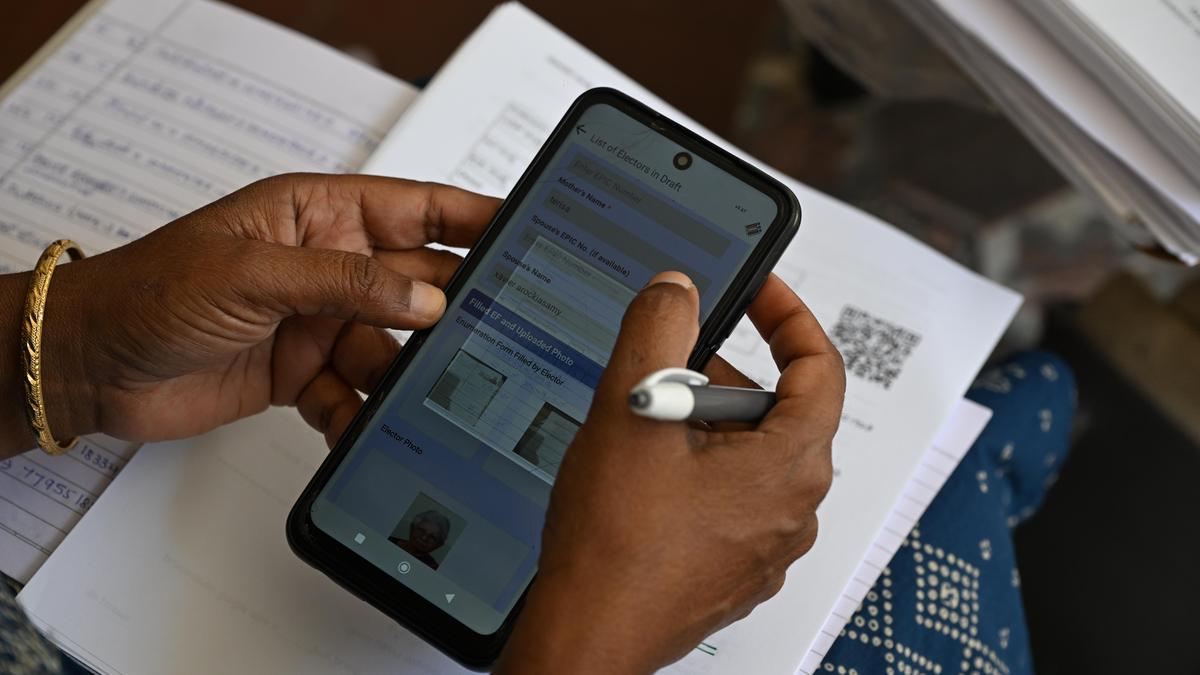
On May 27, the Supreme Court held that the Special Intensive Revision (SIR) of electoral rolls neither stands in direct conflict with the Representation of the People Act, 1950 and the Registration of Electors Rules, 1960. The judgment, authored by Chief Justice of India Surya Kant, concluded the exercise did not detract from the “constitutional imperative of free and fair elections”.The Bench traced the ECI’s statutory authority to Section 21(3) of the Representation of the People Act, which empowers the poll body to order a special revision of electoral rolls for any constituency at any time, provided reasons are recorded in writing. It further invoked Article 324 of the Constitution, which vests the Commission with superintendence, direction, and control over the nation’s electoral process, placing the SIR firmly within the ambit of Part XV of the Constitution.While Chief Justice Kant’s specifically pertained to the pilot SIR in Bihar, the verdict gave a judicial imprimatur to subsequent phases of the exercise across other States.The court summarised the mandate of the SIR into two core objectives — to ensure the inclusion of all eligible electors in the electoral roll, and the exclusion of all ineligible ones. The verdict stemmed from petitions filed across the political spectrum challenging the June 24, 2025 order of the ECI initiating the Bihar revision. Petitioners argued that the exercise was vitiated by a series of deep-seated procedural infirmities imposing an onerous evidentiary burden upon voters and excessively delegating critical powers without adequate safeguards, standardised criteria, or mechanisms for oversight.The court acknowledged that the SIR, as initially designed, raised “legitimate concerns regarding documentation, transparency, and access”. However, it reasoned that incremental judicial interventions had progressively infused the process with safeguards.“The proportionality of a measure must ultimately be assessed not in the abstract, but in the manner in which it is implemented,” the court observed.The Bench emphasised that a judicial enquiry should be limited to whether the conditions imposed were so onerous or exclusionary in design as to effectively negate the right to vote.Yet, the ground realities of the SIR’s implementation across multiple States in subsequent months have raised widespread public concern over systemic disenfranchisement and a lack of due process. Over 13 crore voters have been excluded nationwide. According to ECI’s own affidavit, over 37 lakh of the 38 lakh appeals remain pending adjudication across 19 Tribunals set up under earlier directives by the Supreme Court. In West Bengal alone, where approximately 27 lakh electors were purged due to alleged ‘logical discrepancies’, over 22 lakh voters have filed appeals challenging their deletion. As of September, the 19 tribunals have decided only 1,26,194 appeals.The scale of backlog has prompted the ECI to seek court permission to increase the number of Tribunals from 19 to 42. Allegations have surfaced of unauthorised filing of 16 lakh appeals against inclusion of voters in West Bengal without the knowledge or authorisation of the two Election Commissioners and the West Bengal Chief Electoral Officer.In Uttar Pradesh SIR, Indian National Congress MP Tanuj Punia brought claims of widespread fraud regarding Form 7 before the court. Form 7 is a statutory mechanism under the 1960 Rules, intended for bona fide objections to the inclusion of names in the electoral roll on grounds of death or permanent shifting of residence. The court has promised to examine his concerns.In the ongoing Delhi SIR, the Supreme Court observed that the ouster of over 33 lakh voters due to ‘logical discrepancies’ and ‘no mapping’ prima facie point to “machine-generated” deletion notices issued without any application of mind. The draft roll in Delhi have fewer electors than those who voted in 2025 in one-third of Delhi’s seats.Recent investigative media reports compound these problems by alleging internal dissent within the ECI and the bypassing of statutory mandates.Following these revelations, a press note from the “full” ECI announced a special re-enrollment drive in 20 States where the SIR had concluded. Prasenjit Bose, petitioner in the West Bengal SIR case and chairperson of the West Bengal Pradesh Congress Committee’s SIR Committee, characterised the move as an “attempt to project normalcy” and an “admission of the complete failure of the SIR exercise”, calling for an immediate halt to ongoing revisions.Even as the May 27 judgment validated the legal framework of the SIR, it had also urged “constitutional sensitivity”.“Citizenship is a matter of profound consequence, engaging both individual rights and the integrity of the polity. The process of electoral revision must, therefore, be conducted with care, fairness, and due regard to the limits of institutional competence,” the court had said.The court had promised in the early days of the SIR hearings that it would not allow a single eligible voter to be excluded from the rolls. eom
Mass deletions, internal dissent allegations challenge Supreme Court-backed SIR
Full Article
Original Source
Read the full article at Thehindu →KhanList aggregates and links to publicly available news content. We do not host full articles from third-party sources. Always verify important information with original sources.