MONTGOMERY, Md. (CN) — A Maryland synagogue sued Montgomery County, Maryland, Thursday, arguing its new regulation prohibiting firearm possession near places of worship runs afoul of three constitutional amendments.“Montgomery County’s law prevents our client from defending its members from the threat of anti-Semitic attacks and from fulfilling their religious obligations,” National Civil Liberties Alliance attorney Jacob Huebert, representing the synagogue, said in a statement. “It brazenly violates the First Amendment, the Second Amendment and the Fourteenth Amendment, and the courts should swiftly strike it down.”Silver Springs Jewish Center, one of Maryland’s oldest Orthodox synagogues, filed the lawsuit after the county council approved an expedited measure on July 21 that, among other things, prohibits the possession of firearms within 100 yards of places of worship.“Talmudic and later religious sources command Jews to proactively provide their own security and the security of other Jews,” the synagogue said in its motion for a preliminary injunction. “And, due to the threat environment that the synagogue and its members face, they consider it a religious obligation to ensure that at least some of the members carry firearms.”The county council enacted the regulation to comply with a state Supreme Court ruling on firearm regulations enacted in 2021 and 2022. Under Maryland law, localities are prohibited from enacting firearm regulations, except for regulations pertaining to minors, law enforcement, or regulations concerning the possession of firearms within 100 yards of a park, church, school, public building and other place of public assembly.The Supreme Court of Maryland ruled in April the county had previously exceeded its authority in adopting regulations concerning possession within 100 yards of hospitals, community health centers, long-term facilities, childcare facilities and government buildings, which the court said could are not places of public assembly. In the same ruling, the court greenlit the county’s regulations on possession near parks, places of worship, schools, libraries, recreational facilities, multipurpose exhibition facilities, polling places, courthouses and legislative assembly.In January, the Fourth Circuit upheld many of Maryland’s state-level gun carry laws for places including public parks and forests, trains, hospitals, bars, museums and casinos. However, the court did hold the state’s prohibition on carrying guns on private property held open to the public is unconstitutional.The U.S. Supreme Court has since weighed in on possession bans on private property in Hawaii. In a 6-3 opinion, the majority held Hawaii’s law requiring gun owners to get permission to carry on private property violates the Second Amendment. The synagogue argues the county’s ordinance is even more restrictive.In its motion for a preliminary injunction enjoining the county from enforcing the regulation, the synagogue claims the regulation violates its congregation’s Second Amendment right to bear arms and their rights under the Free Exercise Clause and the Establishment Clause of the First Amendment and the Equal Protection Clause of the Fourteenth Amendment.The synagogue lodges a typical Second Amendment claim, arguing the regulation fails to pass the test the Supreme Court created in N.Y. State Rifle & Pistol Ass’n, Inc. v. Bruen, which requires the government to provide a historical analogues.“The only historical laws banning firearms in places of worship that governments have cited as purported analogues have been scattered statutes enacted long after the founding era and after ratification of the Fourteenth Amendment,” the synagogue said. “A few scattered laws, all different from each other and enacted well after the Founding era, are not the ‘well-established and representative’ analogues that* Bruen* requires."Next, the synagogue argues the regulation burdens the congregations’ sincere religious practice in violation of the First Amendment.“Plaintiffs sincerely believe that Jewish law commands them to defend themselves and their fellow Jews, and that Jewish law generally requires them to fulfill this and other commandments personally, rather than by hiring others to do it for them,” the synagogue said.The synagogue created a volunteer security team following the Oct. 7, 2023, terrorist attacks on Israel, which they argue have increased anti-Semitic activity. The synagogue claims a member of the congregation was attacked outside of the building in 2024 and that in June an unknown individual attempted to enter the synagogue in the early morning. The synagogue argues the regulation also violates the Establishment Clause of the First Amendment, which protects the autonomy of religious institutions.Finally, the synagogue brings claims under the Fourteenth Amendment’s Equal Protection Clause.“By singling out religious institutions and their attendees, and not similarly treating secular groups in similar numbers and similar circumstances, the ban discriminates on the basis of religious belief and practice,” the synagogue said.The regulation also clarified the county’s definition of ghost guns —firearms lacking serial numbers — to comply with the state Supreme Court’s ruling. Members of the county council did not respond to a request for comment.“It boggles the mind in the current anti-Semitic climate that the county would deny a synagogue the ability to defend worshippers as it sees fit,” National Civil Liberties Alliance President Mark Chenoweth said in a statement. “Such interference in the internal management of a place of worship violates the First Amendment, too.”Subscribe to our free newslettersOur weekly newsletter Closing Arguments offers the latest about ongoing trials, major litigation and rulings in courthouses around the U.S. and the world, while the monthly Under the Lights dishes the legal dirt from Hollywood, sports, Big Tech and the arts.Additional Reads
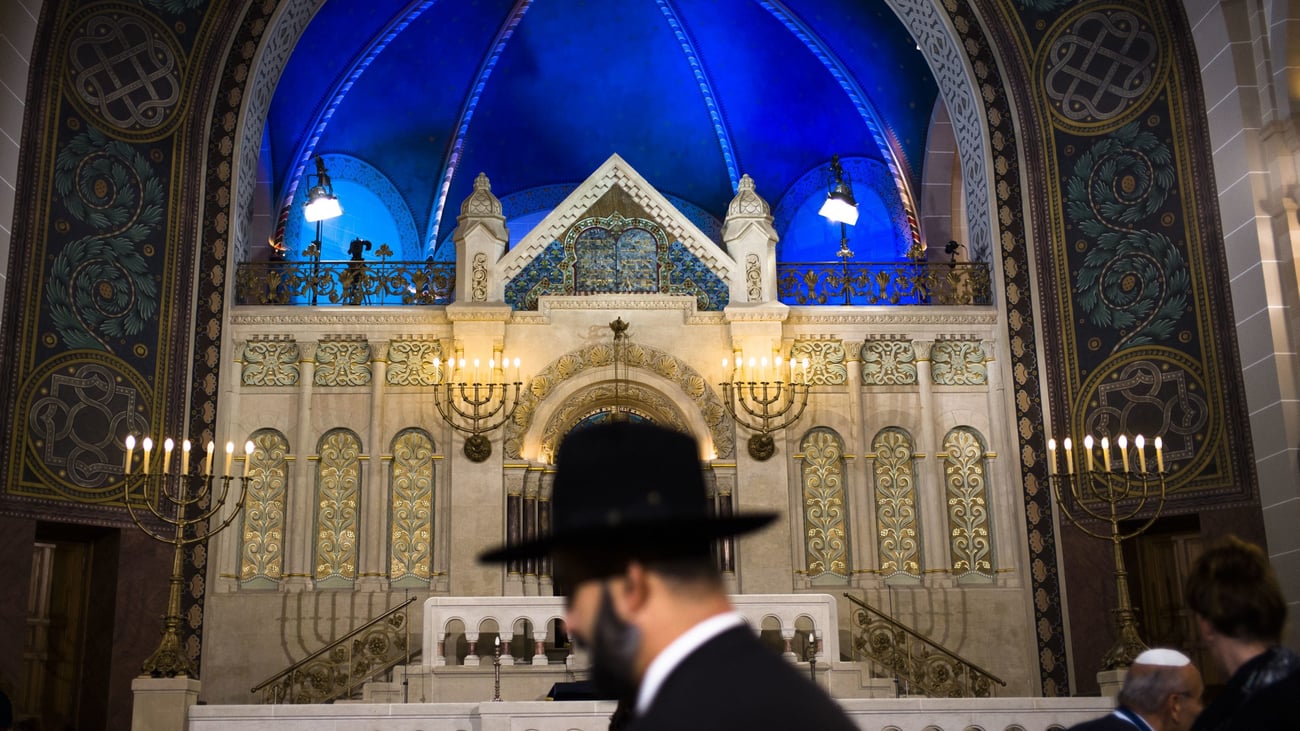
Maryland synagogue sues county over prohibition on firearms near places of worship
Full Article
Original Source
Read the full article at Courthousenews →KhanList aggregates and links to publicly available news content. We do not host full articles from third-party sources. Always verify important information with original sources.