
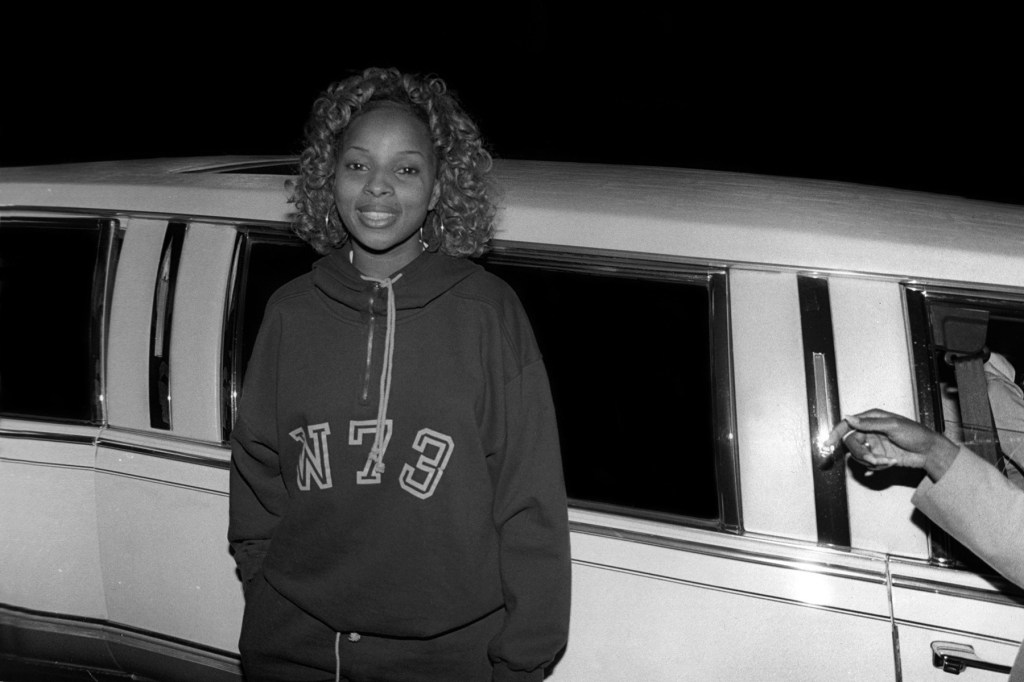
A lawsuit over Mary J. Blige’s 1992 hit “Real Love” has been rejected by a federal appeals court, ending a long-running case that claimed it featured a legendary 1973 funk sample without a license. Filed in 2024 against Universal Music Group (UMG) by Tuff City Records, the lawsuit alleged Blige’s track illegally borrowed from “Impeach the President” by the Honey Drippers — an oft-sampled piece of hip-hop history that’s been used by Run-DMC, Dr. Dre and Doja Cat. Related But in a decision Monday (Nov. 23) obtained and first reported by Billboard, the U.S. Court of Appeals for the Second Circuit ruled that the two songs simply did not share enough copyrighted musical material to constitute copyright infringement. “While ‘Impeach the President’ and ‘Real Love’ share certain percussive elements, other elements are notably different,” the appeals court wrote. “Music borrows, and must necessarily borrow, and use[s] much which was well known and used before.” The ruling upheld an earlier decision by a lower judge that had dismissed Tuff City’s case last year, and echoed that judge’s conclusion: that the overall songs are so different that an ordinary listener would be unlikely to even recognize the earlier song. “The songs’ total concept and overall feel reinforce the conclusion that the works at issue are not substantially similar,” the appeals court wrote in Monday’s decision. “Applying our good ears and common sense, we conclude that the works as a whole are distinct. The songs differ in their lyrics, melody, genre, subject matter, and overall sound.” “Real Love” spent 31 weeks on the Billboard Hot 100 in 1992, reaching a peak of No. 7 on the chart. It has remained one of Blige’s most enduring hits, with more than 137 million streams on Spotify and a movie adaptation released by Lifetime in 2023. Related Like many other hip-hop tracks, “Real Love” featured elements of “Impeach the President,” a 1973 protest funk song that later became a popular sample in the early days of rap. It seemingly ended up in Blige’s song indirectly, via a direct sample of the 1987 hip-hop track “Top Billin’” by the Brooklyn duo Audio Two, who had themselves sampled the Honey Drippers’ song. Decades after “Real Love” was released, Tuff City sued UMG over the alleged sample in April 2024, claiming the company was aware of the problem but had done nothing about it. And during the litigation, UMG effectively conceded that Blige’s song had indeed copied material from “Impeach.” The case highlighted a key distinction in music law: While the direct sampling of a copyrighted sound recording requires a license for any use no matter how small, the rules for interpolating elements of a copyrighted musical composition are far less clear-cut. That led to a strange situation: Before the case was filed, UMG’s recorded music unit had already agreed to pay for the sample of the “Impeach” recording on “Real Love.” But UMG’s publishing unit refused to do so, choosing instead to fight it out in court over whether it also had to pay. Fight it did. In seeking to dismiss the case, UMG argued that Tuff City had popped up “out of the blue” decades later to sue over two tracks that “sound nothing alike.” And in his ruling last year, Judge Dale Ho agreed with those arguments, saying the two songs did not share enough to amount to infringement of the underlying composition: “The songs do not sound the same.” Related In its ruling on Monday, the Second Circuit affirmed that decision, saying the two songs were far more different than similar. Citing its own 2024 ruling on a dispute over Ed Sheeran’s “Thinking Out Loud” and Marvin Gaye’s “Got To Give It Up,” the appeals court said “similarity in some rhythmic elements alone” was not enough to prove infringement by the Blige song. In a statement to Billboard on Monday, Tuff City’s attorney Hillel I. Parness said he and his client were “very disappointed” and vowed to appeal the decision, saying it ran counter to how samples are typically cleared and was not supported by recent copyright rulings, including the Sheeran decision. “Allowing Universal publishing’s refusal to pay for its undisputed sampling to stand would upend decades of law, and decades of industry practice, all designed around ensuring that creators and owners are paid for the use of samples, even if the samples themselves are then reconfigured,” Parness said. An attorney for UMG did not immediately return a request for comment. Tuff City, which owns a large catalog of old songs, is no stranger to copyright litigation. Over the years, the company and its TufAmerica unit have filed lawsuits over tracks by Jay-Z, Beastie Boys, Christina Aguilera and Frank Ocean — including a 1991 case that accused Sony Music and Def Jam of illegally sampling “Impeach the President” on two LL Cool J tracks. That lawsuit, which came at a time when uncleared sampling was widely accepted in hip-hop, was the centerpiece of a 1992 New York Times article, which warned the LL Cool J case could fundamentally change the music industry by forcing rappers and producers to clear every element used in their songs. The LL Cool J lawsuit eventually settled, but the warnings proved accurate. Federal courts later ruled that any amount of sampling of sound recordings counts as copyright infringement and, as a result, labels and artists today clear almost all direct samples and remove them if they cannot.
Mary J. Blige ‘Real Love’ Lawsuit Rejected by Appeals Court: ‘Notably Different’
Full Article
Original Source
Read the full article at Billboard →KhanList aggregates and links to publicly available news content. We do not host full articles from third-party sources. Always verify important information with original sources.