
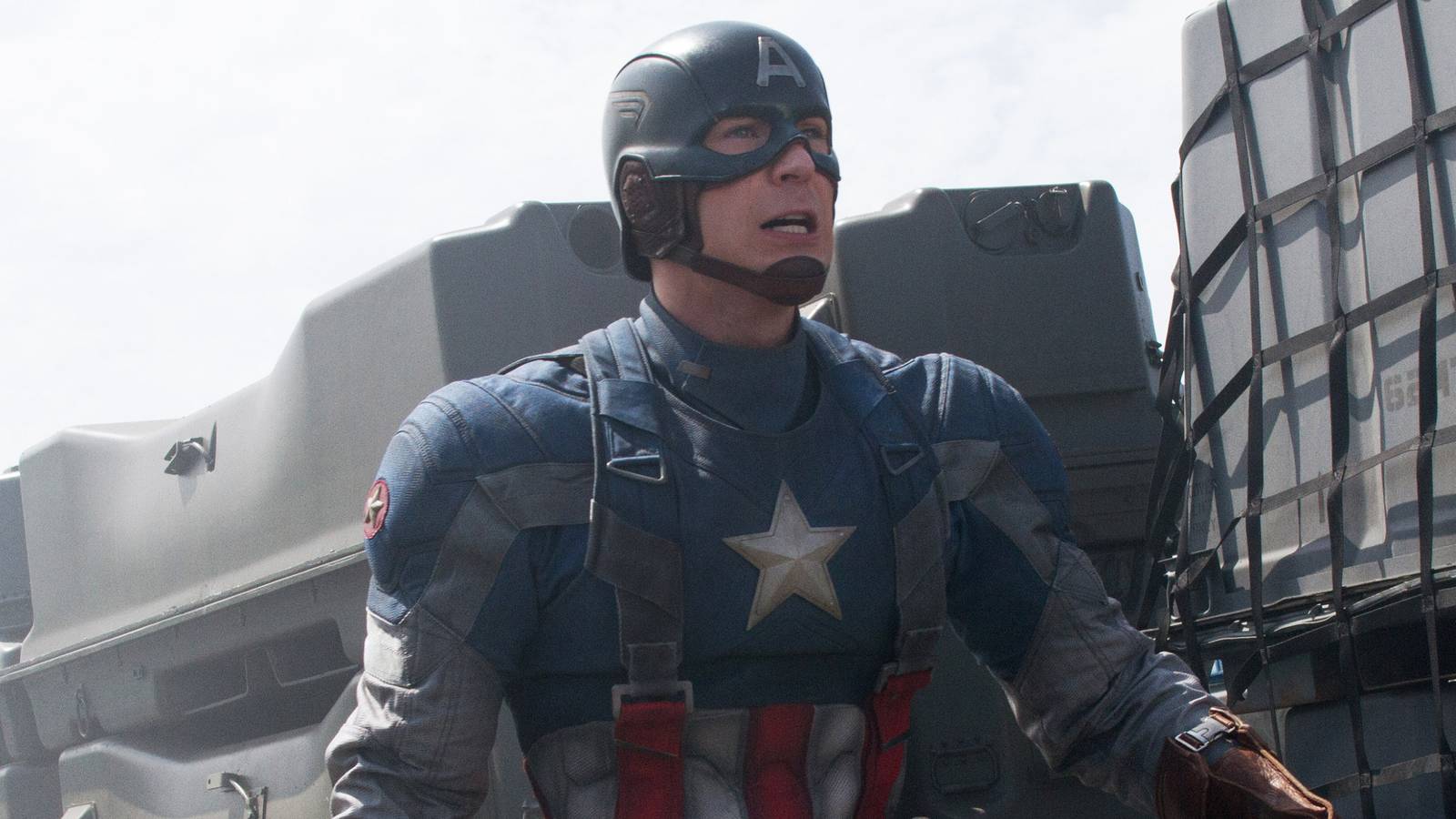
Credit: Zade Rosenthal/©Walt Disney Studios Motion Pictures/Courtesy Everett Collection Published Oct 11, 2026, 5:45 PM EDT El is a Junior TV Features Editor for ScreenRant, with previous experience as The Mary Sue's UK and Weekend Editor. She holds a Bachelor's in International Media and Entertainment Management, as well as an MA and Ph.D. in Creative Writing. There is little she loves more than discussing her favorite TV shows with fellow fans. One day, she hopes to publish an original fantasy novel. Sign in to your ScreenRant account Marvel's best Captain America sequel is a seven-season series with a near-perfect Rotten Tomatoes score. The Captain America franchise is one of the best in the Marvel Cinematic Universe; each installment impacted the franchise's overall arc while still telling character-driven stories. This is especially true of the political action thriller Captain America: The Winter Soldier, which not only reunited Steve Rogers with his long-lost best friend and introduced the future Captain America, but also chronicled the fall of SHIELD following Hydra's decades-long covert infiltration scheme. SHIELD's destruction was a major turning point for the MCU. It forced the Avengers to evolve from a one-off team-up into a full-fledged organization. Ultron's creation and the disastrous Sokovia Accords can all be traced back to SHIELD's (public) dissolution. Unfortunately, because of the MCU's structure, the street-level fallout of Steve, Fury, Natasha, Maria, and Sam's actions in The Winter Soldier was never properly explored in the movies. There was never any time. Thankfully, another MCU-related project did reveal the true scope of Hydra's influence. Years before Disney+ launched and even before Netflix's Marvel TV universe premiered in 2015 with Daredevil, another underrated Marvel show debuted on ABC in 2013: Marvel's Agents of SHIELD. After resurrecting Clark Gregg's Agent Coulson following his deadly encounter with Avengers-era Loki, the first few seasons of the show offered what's best described as a behind-the-scenes look at the MCU, exploring how the Avengers' actions spilled over into other, forgotten parts of the Marvel world, most notably the war between Hydra and SHIELD. Agents of SHIELD Is The MCU's Best Captain America Sequel Image via MovieStillsDB Captain America: The Winter Soldier's Hydra reveal literally blew up Agents of SHIELD's original premise. Suddenly, instead of following a covert team of SHIELD operatives tracking down extraterrestrial, superpowered threats in a weekly, procedural format, the show became more serialized. After a devastating twist exposed one of Phil Coulson's team members as a dedicated Hydra operative, Fury appointed Coulson as the new, underground director of SHIELD. What followed was essentially a clean-up story. Leaking all of SHIELD's and Hydra's secrets and destroying the Triskelion and Project Insight weren't enough to fully destroy the disease. SHIELD and Hydra had bases and agents everywhere. Who could be trusted? Which secrets and artifacts were still waiting to be uncovered? Where else was Hydra hiding? One of Coulson's members went undercover with Hydra and exposed the organization's brainwashing tactics, schemes, and research. SHIELD splintered into different factions, each with its own vision for the future. While Agents of SHIELD never had The Winter Soldier's budget, it still created genuine paranoia and a compelling espionage story while transforming its titular organization into something new, something more. Agents of SHIELD season RT Critics' Score RT Audience Score Season 1 (2013-2014) 88% (Certified Fresh) 82% Season 2 (2014-2015) 91% (Certified Fresh) 92% Season 3 (2015-2016) 100% (Certified Fresh) 92% Season 4 (2016-2017) 96% 94% Season 5 (2017-2018) 100% 93% Season 6 (2019) 93% 90% Season 7 (2020) 100% 94% Average 95% 91% In a way, Agents of SHIELD's earliest seasons were actually sequels to both Captain America: The First Avenger and Captain America: The Winter Soldier. As was established in Steve's original World War II-era adventure, Hydra and the Red Skull were obsessed with the occult and extraterrestrial artifacts. In Agents of SHIELD, following The Winter Soldier's bombshell move, Coulson and his team didn't just shut down Hydra's bases. They also uncovered Hydra's desperate, decades-long research into the Inhuman phenomenon, led by Daniel Whitehall, a World War II-era scientist and high-ranking Hydra official. Agents of SHIELD's first few seasons were a masterclass in integrating the MCU's canon theatrical lore while still building its own unique story and mythology. The Inhumans became a major part of Agents of SHIELD's storytelling. Agents of SHIELD set up the events of Avengers: Age of Ultron, while Captain America: Civil War's Sokovia Accords directly impacted the super-powered Inhumans who worked with the new SHIELD. It also built Peggy Carter's legacy as a founding member of SHIELD after Captain America: The First Avenger and tied into Agent Carter's storytelling. Agents Of SHIELD Actually Gets Better After Leaving The MCU Behind Image via MovieStillsDB For years, Agents of SHIELD dutifully expanded the movies' storytelling. Though Marvel Studios has famously refused to acknowledge Agents of SHIELD as canon in the past — WandaVision never referenced it, despite the Darkhold's importance in season 4, for instance — it's by far one of the best TV spinoffs in any franchise. As the seasons went on, though, Agents of SHIELD gradually distanced itself from the MCU proper. Rather than directly influencing events in the movies or building on them, the show used fewer references as an excuse to pivot into new, unexplored territory. This was especially apparent around Avengers: Infinity War. While Agents of SHIELD season 5 mentions Thanos and the Black Order's arrival, it has very little effect on Coulson's team. In fact, Thanos' Snap™ doesn't impact them at all. Instead, seasons 6 and 7 see SHIELD's most dedicated agents return to space, prevent a different alien invasion, and deal with time travel and alternate realities. This gave the show a chance to focus more closely on its original beloved characters and build a story that suited their development, rather than forcing them to react to someone else's experiences. To this day, Marvel's Agents of SHIELD remains one of the MCU's best shows; it even stuck the landing in season 7, keeping the door open for future canon appearances while honoring its own unique achievements and incredible characters. Whether Coulson, Daisy, May, Simmons, Fitz, Mack, or Yo-Yo will ever turn up again in the MCU is still unclear (Avengers: Secret Wars, perhaps?), but thankfully, viewers can always rewatch its 136-episode run, reliving some of the Marvel Cinematic Universe's and SHIELD's best moments from the beginning. All episodes of Marvel's Agents of SHIELD are available on Disney+. Release Date 2013 - 2020-00-00 Network ABC Showrunner Jed Whedon Cast Daisy 'Skye' Johnson / Quake Directors Kevin Tancharoen, Jesse Bochco, Billy Gierhart, Vincent Misiano, Bobby Roth, Nina Lopez-Corrado, Brad Turner, David Solomon, Eric Laneuville, Kate Woods, Kevin Hooks, Milan Cheylov, Ron Underwood, Roxann Dawson, Wendey Stanzler, Clark Gregg, David Straiton, Holly Dale, John Terlesky, Joss Whedon, Stanley M. Brooks, Keith Potter, Dwight H. Little, Elodie Keene Writers Monica Owusu-Breen, Sharla Oliver, Lauren LeFranc, James C. Oliver, Rafe Judkins, Matt Owens, Mark Leitner, Iden Baghdadchi, Shalisha Francis, Chris Dingess Franchise(s) Marvel, Marvel Cinematic Universe
Marvel's Best Captain America Sequel Is Its 136-Episode Series With A Near-Perfect RT Score
Full Article
Original Source
Read the full article at Screenrant →KhanList aggregates and links to publicly available news content. We do not host full articles from third-party sources. Always verify important information with original sources.