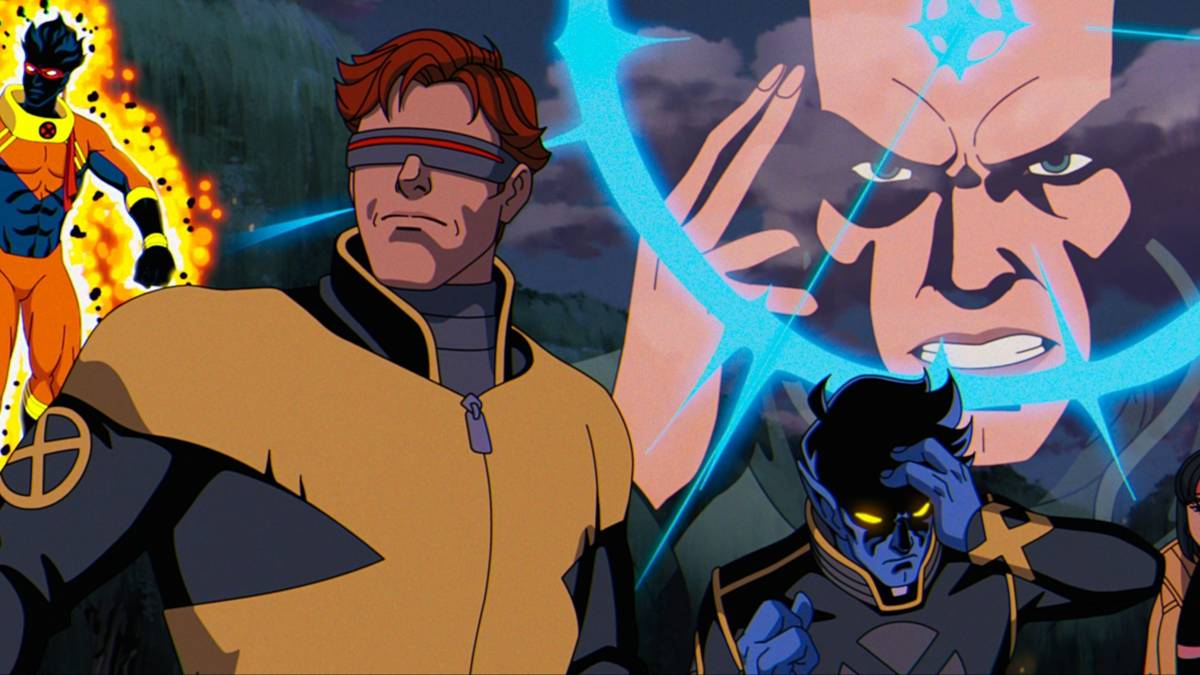
Published Aug 12, 2026, 7:27 AM EDT Jeffrey is a freelance features writer at Collider. He is an MPA-accredited entertainment journalist and a Tomatometer-approved critic based in the LA area. He graduated from the University of Texas at Austin with a Bachelor of Science in Radio, TV, & Film and a Bachelor of Arts in Theater. Editor's note: The below contains spoilers for X-Men '97 Season 2 Episode 9. X-Men '97 Season 2 wrapped up this week, and it's hard to shake the feeling that things ended in rather underwhelming fashion. Despite a great first half, as well as some incredible animation and narrative structure, the show ultimately falls short in paying off the overarching return of Apocalypse (Ross Marquand) as the main villain. On a broader level, the finale represents another major failure in adapting one of the X-Men's greatest villains to the screen. 'X-Men '97' Season 2 Has an Underwhelming Ending for Apocalypse X-Men '97 Season 2 starts to lose focus in the back half with the fakeout surrounding Apocalypse's apparent death. In the penultimate episode, "The Dead Man’s Hand," it's revealed that Apocalypse merely transferred his soul into the newly resurrected Gambit (A.J. LoCascio) after retrieving his body from Genosha, seemingly to make him a member of the Horsemen in a storyline pulled directly from Marvel Comics. However, it's hard to believe that all of Gambit's actions with Rogue (Lenore Zann) in "The Dead Man's Hand" are the will of En Sabah Nur (Adetokumboh M'Cormack), the first mutant. Some of Gambit's actions post-resurrection could've been driven by his desire to be with Rogue, or there's also the possibility that he's being corrupted by Apocalypse's dark influence. The problem is that Apocalypse's ultimate goal in the back half of Season 2 is never made clear. In the original X-Men: The Animated Series, Apocalypse never shows any interest in Rogue beyond being a potential pawn or test subject in his schemes, so what's the desired endgame for him transferring his soul into Gambit's body? It's never made clear in the season's final two episodes whether Gambit was wholly in control of his actions with Rogue, or if Apocalypse was secretly driving him, which makes the villain's motivations even more confusing. 'X-Men: The Original Series' Already Had the Best Ending for Apocalypse Another big issue is that X-Men: The Animated Series already aired the best possible ending for the grander Apocalypse saga in the "Beyond Good and Evil" miniseries. In this storyline, Apocalypse grows weary of his endless cycle of fighting against the mutants who constantly resist him and seeks to end it, once and for all. He steals Cable's time-traveling device and kidnaps the most powerful mutant telepaths on Earth, seeking to harness their abilities to erase reality and remake it in his own image. The X-Men put a stop to it in "Beyond Good and Evil - Part 4," with Apocalypse's Lazarus chamber destroyed in both the past and the future, before he is vanquished from the physical plane, rendering him, for all narrative intents and purposes, "dead." While Apocalypse does come back in the show's fifth and final season, fully resurrected in a throwaway episode and epilogue in "The Fifth Horsemen," his return is never referenced again in the series — until X-Men '97, at least. It's fine that the writers wanted to use Apocalypse again; after all, he does always find a way to return to the comics. However, Apocalypse’s latest resurrection ultimately fails to surpass his more conclusive and climactic ending in the original animated series. X-Men Projects Have Largely Struggled With Adapting Apocalypse Image via 20th Century Studios Adapting the X-Men's greatest villain for the visual medium has turned into a recurring problem, especially when taking the 2016 live-action movie X-Men: Apocalypse into account. Part of the dilemma is that, no matter the medium, Apocalypse is near-unstoppable unless he's somehow weakened by a plot contrivance. In X-Men: Apocalypse, Apocalypse (Oscar Isaac) is borderline omnipotent and basically unkillable until Jean Grey (Sophie Turner) unlocks the powers of the Phoenix to vanquish him in one fell swoop. Meanwhile, X-Men '97 putting Apocalypse in Gambit's body comes off as a way to nerf the villain in the wake of his receiving a Celestial power-up from Esom (Matthew Waterson). The other main issue in X-Men '97 adapting Apocalypse is that the second half of Season 2 is much more disjointed than the first. The show did undergo behind-the-scenes changes after original series creator and executive producer Beau DeMayo was fired, but it's hard to say whether any of Season 2's reported episode rewrites impacted the Apocalypse storyline. There's not even a powerful showdown with the big bad, especially in the wake of his most devastating scene with Professor Charles Xavier (Marquand) and Magneto (Waterson) in "The Rise of Apocalypse: Part II." After an underwhelming finale, the X-Men's most powerful villain needs to be put away for the foreseeable future. Hopefully, upcoming seasons of X-Men '97 will only improve with a stronger narrative focus and direction.
Marvel Still Can't Figure Out How To Adapt the X-Men's Most Powerful Villain
Full Article
Original Source
Read the full article at Collider →KhanList aggregates and links to publicly available news content. We do not host full articles from third-party sources. Always verify important information with original sources.