
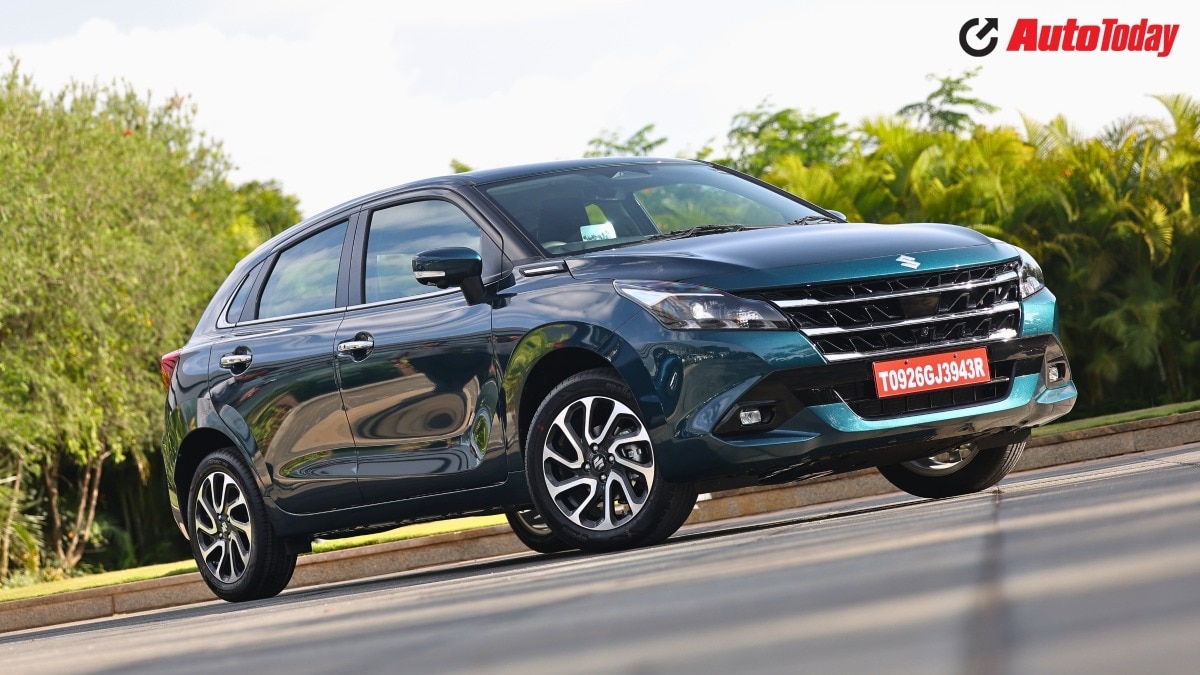
The 2026 Maruti Suzuki Baleno makes quite an impression with that new face but does it have the right mix of features, updates and value-adds to keep it at the apex of the premium hatch space? Read on to find out.Maruti Suzuki Baleno reviewImagine, if you will, the unique engineering and commercial challenge facing the design teams tucked away in Maruti Suzuki HQ. You are tasked with updating a hatchback that routinely posts sales figures usually reserved for daily consumer staples like loaves of bread or instant noodles. It serves as the default, completely frictionless setting for millions of human beings—a vehicle acquired not out of a blinding, white-hot passion, but because it exists, it sips fuel with exceptional parsimony, and it possesses an almost stubborn mechanical durability that promises to outlive us all. When a car becomes that deeply embedded in the fabric of everyday life, messing with the formula is a terrifying prospect. Touch the wrong line, stiffen the suspension too much, or mess with the price, and you risk alienating the vast army of sensible citizens who just want to get to work without drama. The Maruti Suzuki Baleno gets a more assertive grille and reprofiled headlamps, making it look slightly more offended by urban traffic. So, what exactly do you do when the time inevitably comes for a mid-cycle facelift? You give it a larger, noticeably more assertive front grille and re-profile the headlamp clusters, presumably so it looks slightly more offended by the congested urban traffic flowing in front of it. They have also thrown in blacked-out A-pillars to create that fashionable floating-roof effect, and paint the exterior sheet metal in something called "Enigmatic Teal". It is an undeniably lovely shade of paint, though marketing a mass-market hatchback’s colour as "Enigmatic" gently stretches the imagination, suggesting the car possesses deep, brooding secrets, when in reality its most profound existential secret is simply remembering where you put the spare wheel. The Baleno’s side profile blends blacked-out A-pillars with an elegant Enigmatic Teal finish. Yet, on the road, these visual tweaks give the hatchback a sharper, far more modern presence that stops it from fading into the grey background of the city grid. At the back of the facelifted Baleno, changes are minimal. Stepping inside, however, is where the real design detail begins to show. Someone deep within the product planning division clearly discovered a massive warehouse bolt of textured blue fabric and made the executive decision, "Yes, the world needs contrasting blue inserts on the doors and dash". Miraculously, when paired with the dual-tone cloth and leather upholstery, this eccentric choice actually works. Inside, contrasting blue inserts on the doors and dash add flair, while dual-tone cloth and leather upholstery tie it together. Instead of looking like a budget mistake, it gives the cabin a splash of character that sets it apart from the sea of monotone plastic interiors found across this class. There is a new, chunkier steering wheel to hold onto, which gives you a proper sense of control. Remarkably for its price segment, the car gets ventilated front seats. Most remarkably for a car operating in this fiercely competitive price segment, they have fitted cooled front seats. In a country where the summer sun regularly tries to melt your face off, ventilated seats in a small hatchback are not a luxury; they are a gift straight from the gods of air conditioning. It is the kind of thoughtful, climate-specific feature that makes you wonder how anyone survived without it, turning sweaty afternoon commutes into something resembling genuine comfort. The new 1.2-litre, three-cylinder Z12E petrol engine develops 83bhp and 112.4Nm of torque. Then we come to the engineering tinkering hidden beneath the bonnet. Maruti has swapped out the older Z-series motor for a new three-cylinder engine, the same one that we loved on the Swift. Automotive purists will inevitably groan at the news, because three cylinders usually sound like a tumble dryer filled with spanners whenever you demand hard acceleration. But here, the mechanical setup has been tuned with laser focus on two specific things: great fuel efficiency and surprisingly thick smattering of low-end torque. It’s refined but with the heavier Baleno it isn’t urgent. We’re hoping that the 1.0-litre turbo fills this gap. The only real short sell to the driving experience, although it's probably what is keeping the costs in check is the five-speed AMT, which seems to struggle to find shift points smoothly especially when it’s a spirited pace that’s not flat out. Shifts bring the AMT-head nod into play and overall one tends to miss the CVT that seemed more refined and smooth. The five-speed AMT is a drawback, with jerky shifts and less refinement than the CVT. In the real world of stop-and-go gridlock, torque down low is everything. It means when you press the accelerator pedal, the car actually moves off the line with a genuine bit of purpose, rather than just making a loud, strained noise and staying where it was. The power delivery feels linear and progressive, you’re not going to make tight gaps in traffic but it makes effortless work of casual city cruising. It won't push you back into your seat like a track toy, but it delivers power right where you actually need it nine times out of ten. Power delivery is linear and progressive, making it ideal for effortless city cruising rather than quick overtakes. And then we must talk about the price, which is where the entire proposition hardens into pure genius. It starts under Rs 7 lakh (ex-showroom). Think about that for a moment in an era where basic appliances seem to cost a small fortune. You can even step up to a top-spec version equipped with ADAS driver-assistance wizardry for less than Rs 10 lakh. To get active safety monitoring and driver aids in a vehicle at this price point is astonishing value. It democratizes technology that was, until very recently, reserved exclusively for bulky luxury cruisers bought by executives. As an everyday car, the updated Baleno excels, combining calm, efficient performance with practicality while retaining the frugality and reliability that made it a household favourite. When you look at the total package, it becomes clear why this car dominates the landscape so thoroughly. It isn't a sports car, and it certainly won't set your hair on fire with blistering speed, but as an everyday piece of sensible motoring, the updated Baleno is brilliantly, unapologetically good at its job. It takes the everyday chores of driving—the traffic jams, the blazing heat, the terrible road surfaces—and neutralizes them with calm, efficient competence. It manages to upgrade the things that matter to real people on real roads without losing sight of the frugal, bulletproof ethos that made it a household name in the first place. Maruti perfected its bestselling hatchback by refining styling, adding useful features like cooling seats, fixing minor flaws, and keeping pricing realistic—a masterclass in practical, everyday automotive design. In an industry obsessed with reinventing the wheel every few years, there is a quiet brilliance in knowing exactly what your audience needs. Maruti didn't try to transform their beloved hatchback into a track beast or a fake off-roader. Instead, they took the exact car millions of people already rely on every single morning, polished the styling, fixed the minor annoyances, added a few genuinely transformative comfort features like those cooling seats, and kept the price tag firmly rooted in reality. It is a masterclass in pragmatic auto design—a car built for the world as it actually is, rather than how car brochures pretend it to be.Subscribe to Auto Today Magazine - EndsPublished On: Sep 8, 2026 11:00 IST
Maruti Suzuki Baleno review, first drive: New face, new motor, same value?
Full Article
Original Source
Read the full article at Indiatoday →KhanList aggregates and links to publicly available news content. We do not host full articles from third-party sources. Always verify important information with original sources.