
In 1886, Friedrich Nietzsche published Beyond Good and Evil. One hundred and forty years later, the book still asks its original question: what happens when inherited moral maps lose their force, and human beings must create values from strength rather than receive them. The anniversary is worth marking for a second reason. At the same historical moment, on the other side of the Atlantic, a short-lived American experiment was already living out a practical version of that challenge. This is synchronicity, not cause and effect. The cowboys and lawmen of the 1870s and 1880s were not reading German philosophy. They simply operated under conditions that made the underlying drive visible.Nietzsche diagnosed a Europe still clinging to categories of good and evil that no longer rested on living power. He called for a higher type capable of standing beyond those categories and imposing new ones. In the American West, a different response was taking shape. The classic open-range cowboy was not an ancient archetype. He was a late 19-century invention — an improvisation that combined Mexican vaquero technique with post-Civil War commercial cattle drives across a temporary ecological niche created by the destruction of the buffalo and the defeat of the Plains tribes. For roughly two decades this produced a working culture governed more by reputation, the brand, and calculated interest than by distant statute or inherited duty. A man chose his loyalties according to who paid, who protected, and who offered the better chance of survival. Those loyalties could be fierce while they lasted. They were also provisional. Recommended Stories The same period produced extreme violence. The Indian Wars and the range wars were contests over land, grass, water, and the power to impose order. They were often brutally inhumane. Native American nations suffered catastrophic loss of life, territory, and culture under military and settler pressure. That record is clear and does not require softening. At the same time, settlers, farmers, and small ranchers faced their own predators: railroad barons who manipulated land and freight rates, organized marauders and rustlers, and the hired enforcers of larger cattle interests. The gunfight at the O.K. Corral on Oct. 26, 1881, stands as a compact emblem of the same dynamic. In less than a minute, competing factions in Tombstone settled a running dispute by direct force in a place where higher authority was weak and personal reputation still decided outcomes. Three men died. The underlying pattern was not unique to that afternoon; it was simply more visible. On the ground, the decisive factor was rarely abstract justice. It was force — who could project it, sustain it, and make the other side yield. The pattern matches what Nietzsche called the will to power: living systems expanding, colliding, and seeking to dominate or displace one another under conditions of scarcity and incomplete higher authority.The open-range system itself did not last. Barbed wire, homesteaders, railroads, and the hard winters of the mid-1880s closed the window. Almost immediately the cowboy was turned into myth — the taciturn, self-reliant hero of popular imagination. The myth softened both the calculation and the blood. The historical figure had been harder and more interesting: a temporary product of necessity who measured loyalty by interest and lived, for a few decades, outside the older moral maps.FROM ‘WHITE PRIVILEGE’ TO ‘TRANS INCLUSION’: THE WNBA IS RELEVANT FOR ALL THE WRONG REASONSThat historical hardness has a forward echo. The next frontier will not be gentler. The pioneers who eventually leave Earth for permanent settlement beyond this planet will confront an environment even more indifferent than the Great Plains. They will need the same combination the best of the old frontier demanded: hardness sufficient to endure real scarcity and risk, and intelligence sufficient to invent workable orders where none are supplied in advance. Heroes are not made in a moment. They are prepared for the moment over a lifetime, but in that moment a hero will rise when no one else will. Necessity will again produce its figures. Some will prove unequal to the task. Others will rise from the ordinary ranks and impose form on chaos long enough for others to follow.One hundred and forty years after Beyond Good and Evil, the coincidence remains instructive. One culture produced a philosophical demand for men capable of creating values beyond inherited good and evil. Another, under different pressures, produced men who simply did so in the course of surviving. The universe did not supply ready-made heroes then, and it will not supply them for the next expansion. It will create conditions under which they become necessary.Michael Breeden is a retired Air Force chief master sergeant with 29 years of service as a combat controller in special operations. He writes on sovereignty, culture, and institutional accountability.
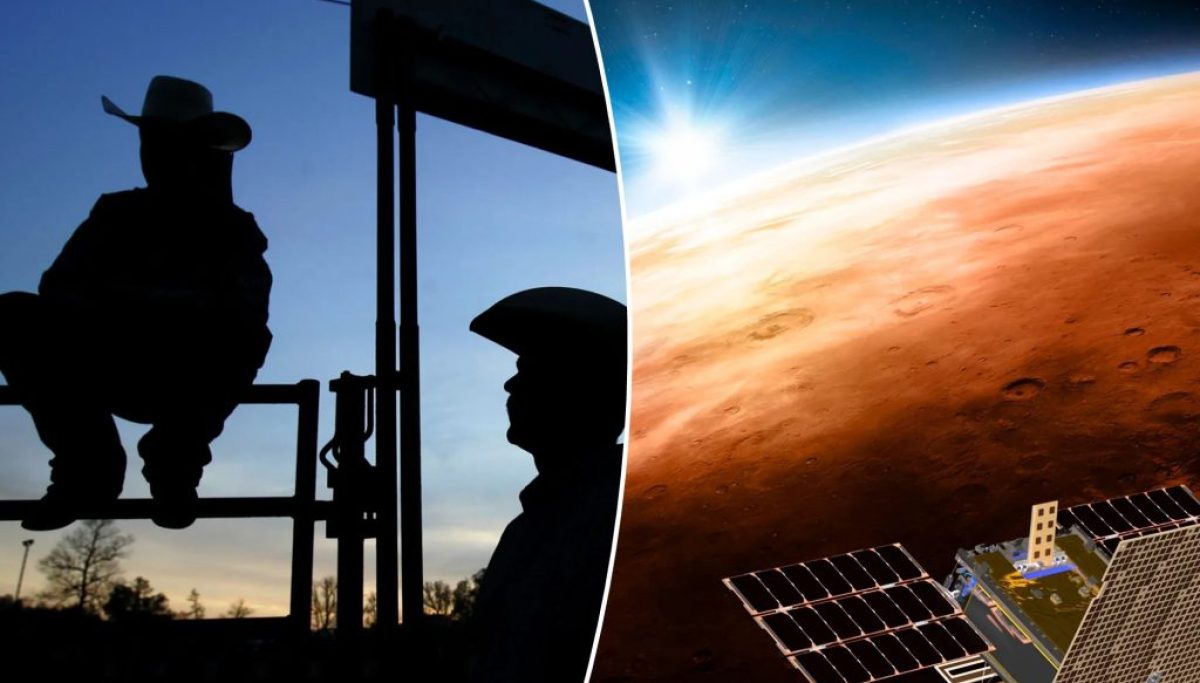
Mars will need cowboys, not committees
Full Article
Original Source
Read the full article at Washingtonexaminer →KhanList aggregates and links to publicly available news content. We do not host full articles from third-party sources. Always verify important information with original sources.