
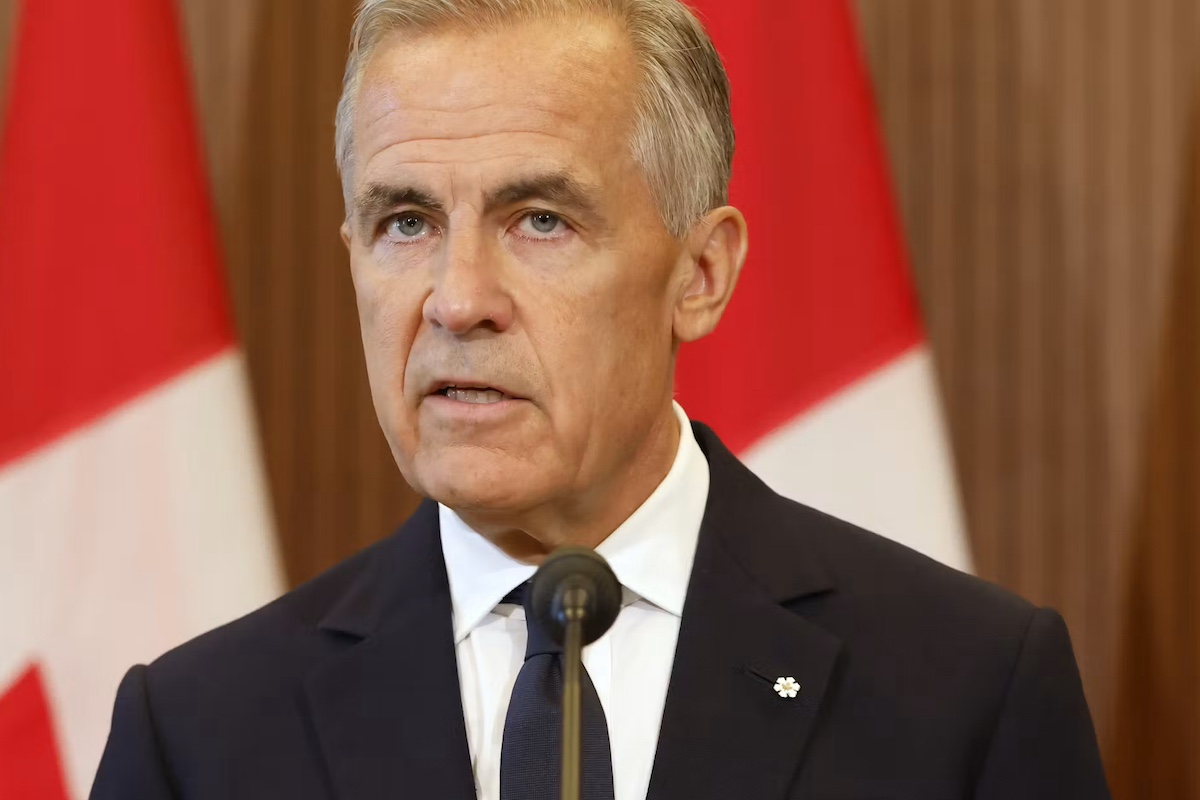
Canadian Prime Minister Carney has announced the suspension of Canada-United States trade talks, citing “last-minute changes” made by American negotiators that “were unfair, uneconomic and called into question the reliability of any deal.” Within hours, President Donald Trump’s new Section 338 tariffs, targeting US$28 billion in Canadian goods, took effect. Early estimates project that the tariffs could cost 90,000 Canadian jobs. Until the breakdown in negotiations, the Carney government’s diplomatic posture towards the US had been highly conciliatory. In May, Carney was calling for greater Canada-US integration, arguing that “Canada Strong will help make America great again.” Now, with trade talks exhausted and fresh economic pain on the way for both Canadians and Americans, conciliation appears to be a spent force. Instead, anger and escalation are taking centre stage. Asked too much, offered too little Nobody expected an equal deal between Canada and the US. Many of the trade deals struck by the second Trump administration have been deeply one-sided, with the US typically imposing hefty tariffs and extracting commitments from the other party to purchase American goods. Still, the sheer one-sidedness of the American proposals is galling. Canada would have had to accept hefty tariffs on automobile, steel, aluminium and lumber exports in return for market access it previously enjoyed for decades. Add to this last-minute demands that would have deeply compromised Canadian sovereignty, including requirements to curtail the protection of the French language — one of the longest running trade policies in Canadian history — and to hold a veto over who Canada can trade with. For any country, a lopsided deal that penalizes national industries is upsetting. But for Canadians already sensitive to Trump’s taunts and insults, adding last-minute demands to erode sovereignty has been nothing short of enraging. As Carney put it on August 22: “We cannot accept what they’ve offered, and we will not give what they’ve asked … They asked too much and offered too little.” The new 50% tariff Up until August 22, most of the Trump administration’s tariffs on Canada followed a basic pattern. Canada was either targeted as part of a broader group of countries — as with the global Section 232 tariffs on steel and aluminum — or over a longstanding trade issue, such as softwood lumber. The 50% tariff breaks with this pattern. As US Trade Representative Jamieson Greer has made clear, the point was to force Canada to drop its provincial alcohol bans and lift tariffs on American autos. In short, Canada is being penalized for defending itself. It’s not clear what’s more troubling: the presumption that America is entitled to sell alcohol to Canadian customers or the belief that it’s illegitimate for Canada to protect its own interests. Retaliation is becoming more palatable Even before the escalation, 62% of Canadians supported retaliation against US tariff threats. Based on the latest drama, however, that number may climb even higher. What’s striking about Carney’s response, however, is how quickly and confidently he vowed dollar-for-dollar retaliation. Carney had previously been cool on retaliatory tariffs, even dropping some of Canada’s last September. Now his rapid pivot to retaliation signals not just a change in strategy, but a belief that Canadians — and the country’s global allies — will support it. Retaliation, however, is not just limited to tariffs. Over the last few days, a war of words has erupted between the Trump administration and Canada’s political leaders, with Ontario Premier Doug Ford saying Trump “can kiss my ass.” Bloc Quebecois leader Yves-François Blanchet is calling for Canada to suspend defense contracts, including the purchase of American F-35 fighter jets. There are options for retaliation that extend far beyond trade. To say this is unusual for Canadian foreign policy is an understatement. Open threats of retaliation were extremely rare before the Trump administration. And when Canadians did talk about retaliation, there were always fears of being punished by the US. Now, the conversation has flipped and political luminaries like Jean Chrétien, a former Canadian prime minister, are at the front of a very long line calling to “hit where it hurts.” US is running out of time The conventional view is that, in any trade dispute, the US would quickly defeat Canada. The US has a much larger economy, is less reliant on exports to Canada, and, in theory, should more easily absorb any retaliatory measures. The New York Times has already dismissed Canada’s retaliatory tariffs as having “the effect of a pea shooter in a gun battle.” But this view underestimates Canada’s leverage. As Nobel Prize-winning economist Paul Krugman explains, the US imports economically vital goods from Canada, like oil, lumber, electricity and aluminum, for which there is no cheap and accessible domestic substitute. Tariffs on these goods means higher costs for American consumers and businesses in an already inflationary environment. Foreign governments are acutely aware of these economic problems and the role they will play in the upcoming US midterm elections. As American foreign policy scholar Paul Musgrave argues, this creates incentives for countries to use time as a weapon against the US. For Iran, this could mean keeping oil prices high in order to punish Republicans in the midterms. For Canada, it means leaving Republicans to defend a bitterly unpopular trade war. It can also mean calibrating tariffs to target areas with vulnerable Republican House and Senate seats, like Ohio, Michigan and Maine. Democratic candidates in these states are already racing to attack Republican incumbents over their support for Trump’s trade war. The point is not that Canada can defeat the US — it can’t. But it can cause enough pain in the right place, and at the right time, to make a trade war politically costly. Two views of Canada’s future In the last 18 months, Canada’s response to the Trump administration has been driven by a specific view of the future. In this view, the Trump administration may be detestable, but it is only an anomaly and one day it will be gone. When this happens, relations will normalize, so Canada had best not do anything to jeopardize the long-term relationship. After last weekend, a very different view of the future is emerging. In this view, Canada needs to send a pointed message that the Trump administration had crossed a red line. If the administration does not pay a political price for its aggression, then there will be nothing to deter future administrations from pursuing a similar policy. Whether Canadians are willing to shoulder the sacrifices required by this sharper view of the future is something only time will tell. Eric Van Rythoven is instructor in political science, Carleton University This article is republished from The Conversation under a Creative Commons license. Read the original article.
Mark Carney shows the world how to bite back at Trump’s tariffs
Full Article
Original Source
Read the full article at Asiatimes →KhanList aggregates and links to publicly available news content. We do not host full articles from third-party sources. Always verify important information with original sources.