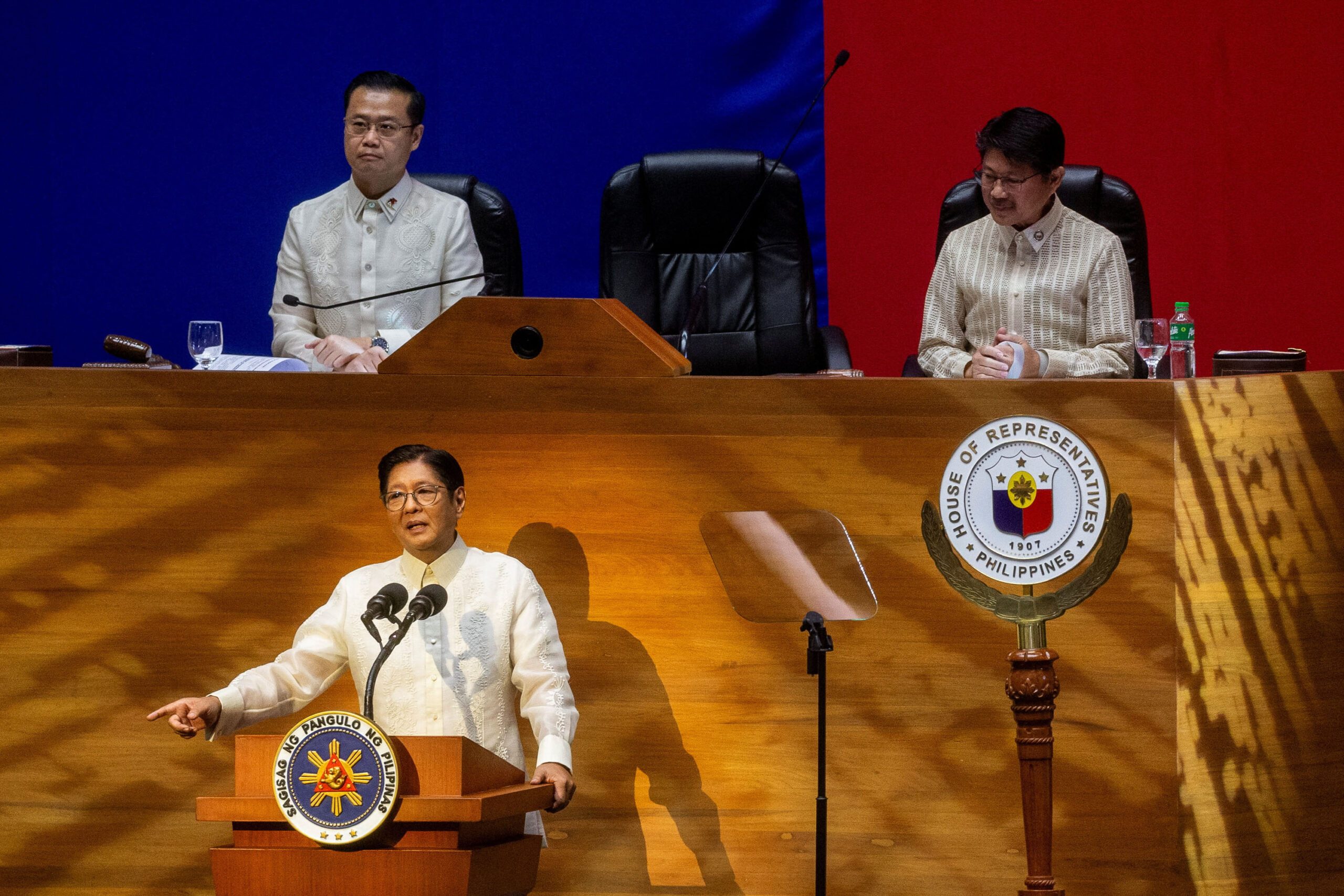
MANILA, Philippines – President Ferdinand Marcos Jr. on Monday, July 27, highlighted the government’s artificial intelligence (AI) training initiatives while calling on lawmakers to strengthen protections for children against online harms, including pornography, “fake news,” and toxic social media content. During his fifth State of the Nation Address (SONA), Marcos said the government would continue expanding AI literacy and workforce development programs, arguing that the Philippines must prepare for a future where AI becomes embedded across industries. “AI is here to stay; and so we adopt it to harness its potential to enhance critical sectors, from our educational system to our industries,” Marcos said. According to the President, government-led AI readiness programs have already reached at least 1.8 million individuals, including students, parents, and teachers. He said the administration would further scale up AI literacy efforts “across all sectors” to keep the Philippines globally competitive. The President also stressed the importance of developing critical thinking, creativity, innovation, and problem-solving skills among young Filipinos, saying scholarships, grants, and innovation competitions would continue supporting these goals. The Department of Education rolled out its National AI Upskilling plan this year, budgeted at P1.5 billion, focusing first on high-schoolers, but will also include programs for those of working age. It’s anchored by a 5-tier system, from the basics of AI to actual skills improvement for professionals. Push for online child protection Beyond digital skills, Marcos devoted part of his speech to what he described as the growing dangers children face online, urging stronger action against harmful digital content. “We must protect them from the harmful influences and forces that exploit their vulnerability: the corrosive influence of fake news; the unfettered exposure to pornography, even to minors; the constant depiction of casual violence; and the toxicity and hate culture pervasive in social media,” he said. The statement comes in response to the fatal Tacloban school shooting in June that left 3 students dead. The incident has been linked to an online extremist network called 764 that targets vulnerable children, and influences and coerces them to do violent acts, reaching out to them via online games and other digital platforms. Marcos paid tribute to the victims of the shooting, and extended condolences to the family. “Ang mga nasawi nating mga mag-aaral kamakailan dala ng karahasan at kapabayaan ay nag-iwan ng malaking puwang sa kanilang pamilya, at mapait na aral din para sa ating lahat. (The recent deaths of our students due to violence and negligence have left an immeasurable void in their families and served as a painful lesson for all of us.) “Sa mga magulang at kaanak ng mga nasawi at nasaktan dahil sa nangyaring karahasan sa mga paaralan, tanggapin po ninyo ang aming taimtim na pakikiramay. (To the parents and loved ones of those who lost their lives or were injured in the violence that occurred in our schools, please accept our deepest condolences.) “To the parents of Chris Lorenz Fabian, Joyancee Separa, and Ayessa Nicole Dazo: we are all so very proud of the unflinching bravery and heroic virtue that you have instilled in your children. They are an inspiration to us all.” He said these online influences contribute to mental health issues, teenage pregnancies, rising HIV/AIDS cases, and other consequences. While Marcos did not identify any specific legislation, the appeal signals that online child protection could become one of the administration’s legislative priorities in the remaining two years of his term. There are at least 13 House bills tackling the issue of social media use of minors in relation to their mental health, among other concerns. In the Senate, there are 7 similar bills, some seeking an outright ban on minors’ use of social media while some push for “age-appropriate” use. Marcos also said in his SONA that the first batch of 10,000 School Counsellor Associates will soon be coming to public schools for children’s mental health assistance. HB 9465, or the Digital Media Anti-False Information Act, passed third reading in the House in May, consolidating anti-disinformation bills, the majority of which focus on more traditional content-based policing, but also include provisions for systems-focused governance, as well as platform and algorithmic accountability. It has faced criticism from civil society groups who have repeatedly cautioned that efforts to combat “fake news” should avoid restricting legitimate speech or press freedom. Other technology efforts Marcos also highlighted several technology-related initiatives beyond AI, including efforts to strengthen the country’s communications infrastructure during emergencies. The President said the government has rolled out a Government Emergency Communications System alongside the country’s first satellite-to-mobile service, a private sector-led initiative that aims to keep telecommunications running nationwide during disasters and other crises. Globe and Starlink announced the launch of their satellite-to-mobile service back in January 2026, at an event attended by the president himself, with the actual rollout beginning in June 2026. Marcos likewise touted the administration’s push toward electric mobility, saying the government has extended zero tariffs on electric vehicles (EVs) until 2028 to make them more affordable while requiring government agencies to prioritize EVs in their fleet replacement programs. He said the policy is also designed to develop domestic industries involved in EV assembly, battery manufacturing, and related components, with the administration targeting for half of all vehicles in the Philippines to be electric by 2040. Among the projects cited were electric “Love Bus” units and articulated buses for Davao City, as well as the M/B Dalaray, an electric ferry developed by the University of the Philippines and the Department of Science and Technology. Marcos said similar electric ferries are expected to serve the Pasig River Ferry Service in the future, connecting Pinagbuhatan in Pasig City to Escolta in Manila. – Rappler.com
Marcos touts AI upskilling, calls for online protections vs. violence, ‘fake news’
Full Article
Original Source
Read the full article at Rappler →KhanList aggregates and links to publicly available news content. We do not host full articles from third-party sources. Always verify important information with original sources.