
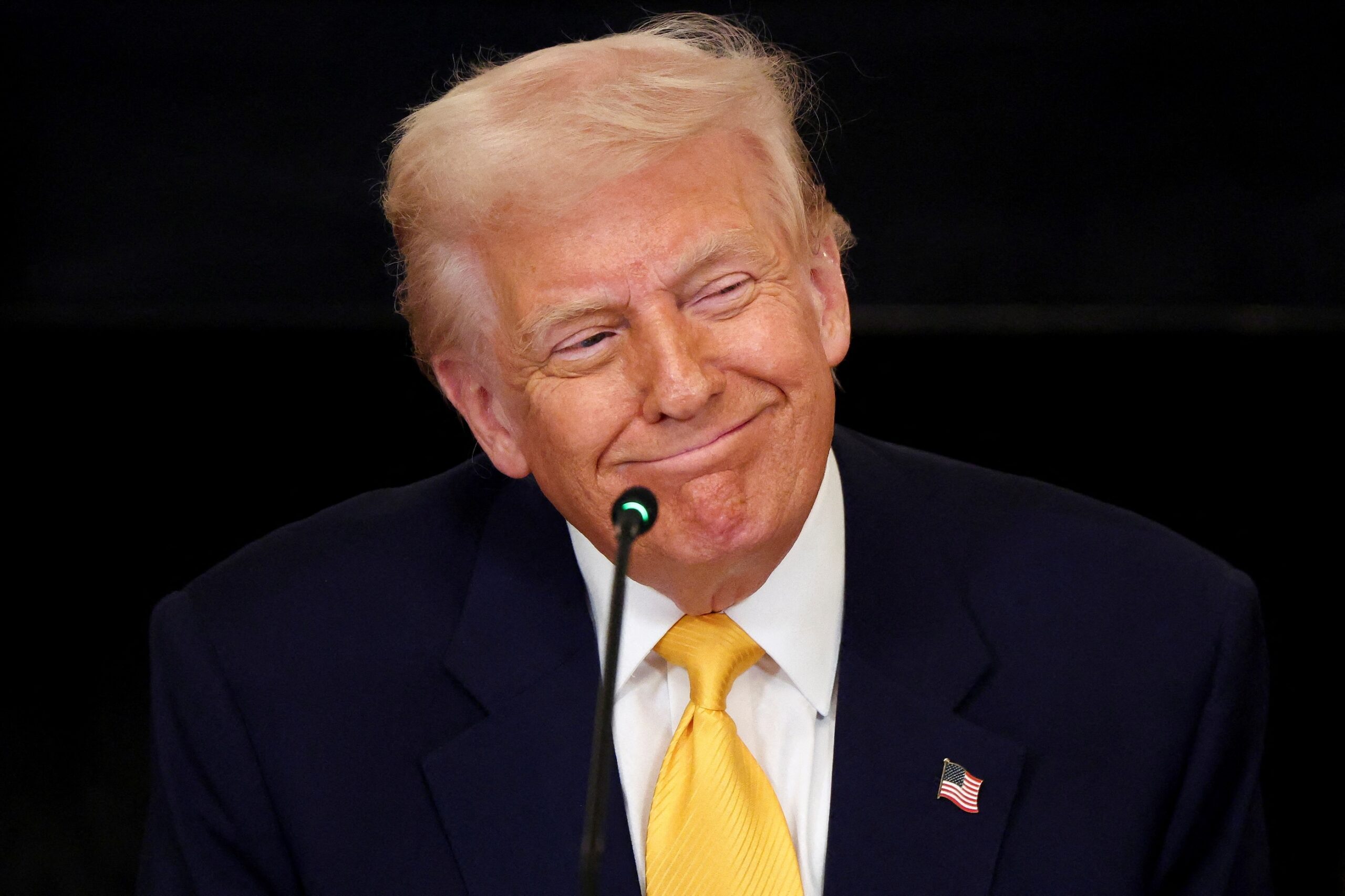
US President Donald Trump's overnight visit to Manila precedes a trip to Shenzen, China, for the Asia-Pacific Economic Cooperation Leaders' Meeting MANILA, Philippines — Weeks after a midterm blue wave dislodged his party’s hold of Congress, US President Donald Trump received a red-carpet welcome in Malacañang with cultural performances and the usual pomp of a state visit on Wednesday, November 18. Philippine President Ferdinand Marcos Jr. welcomed Trump to the Palace a day after Manila hosted an ASEAN-US Special Summit following the conclusion of the 49th Association of Southeast Asian Nations (ASEAN) Summit and Related Summits wrapped up. Trump is in the Philippines for ASEAN events and the state visit, before he flies to Shenzen, China to attend the Asia-Pacific Economic Cooperation (APEC) Economic Leaders’ Meeting. Trump, on his second term, is the first US president to undertake a state visit to the Philippines in over a decade, after Barack Obama in 2014. Trump’s first visit to the Philippines was not easy to orchestrate. Manila had reportedly pushed back the schedule of the summit just months ahead, so that the long travel-averse US president would be able to make an appearance, according to sources privy to these discussions, much to the chagrin of other nations — partners and ASEAN members included. The Economist said invitations to other partners countries had to be updated given the accommodations for the US leader. In the end, however, Trump’s visit to Manila — state honors included — will be short and sweet. He did not make it in time for the East Asia Summit, the premiere leaders-level gathering under ASEAN. Manila Hosted an ASEAN-US Special Summit with Trump instead. Longstanding ties with Marcoses Trump, 80, is well-acquainted with the Marcos family, a point he first made to Marcos Jr. back in 2024, when the Philippine leaders called to congratulate him on his election victory. Trump told Marcos that his mother, former first Imelda, was a friend. At the ASEAN-US Special Summit, Trump reiterated his friendship with Marcos’ parents, the late dictator Ferdinand Marcos Sr. and former first lady Imelda Marcos, calling them “great.” The Marcos Sr. years are marred by human rights violations and the pilferage of public funds. Several prime real estate properties in New York City, Trump’s home town, were later seized by the Philippine government. Trump, a real estate mogul prior to his political career, would have been in his late 30s during the People Power Revolution that ousted the Marcoses from power. Before the meeting with ASEAN, Trump participated in his first-ever meeting with fellow leaders of the Quadrilateral Security Dialogue or Quad, discussing with India, Japan, and Australia issues of security and the development of artificial intelligence, among others. He also had a bilateral meeting with Thai Prime Minister Anutin Charnvirakulat. The two leaders signed a statement about the “substantial conclusion” to negotiations on reciprocal trade, Trump said the agreement, when completed, “will be a wonderful deal for both parties.” In China, Trump is expected to hold a trilateral meeting with Chinese President Xi Jinping and Russian President Vladimir Putin. Outside Malacañang But activists did not warmly embrace Trump’s visit to the Philippines, with their protests targeting the US-led Pax Silica initiative. Ahead of the ASEAN Summit, thousands of students across the country walked out of their classrooms. Protests continued amid meetings of international leaders, with the police arresting nearly 300 individuals, including students, during the summit’s opening day. Lawmakers, groups, and climate advocates are calling for an investigation. The contentious Pax Silica, which seeks to strengthen supply chains for semiconductors, critical minerals, and other advanced technologies, will be developed in New Clark City, Tarlac. But advocates raised red flags over its environmental impacts and potential displacement of indigenous communities in ancestral domains. As the trade department and US Ambassador to the Philippines Lee Lipton said earlier, no Pax Silica project was signed during the ASEAN summit. US-Philippine ties The Philippines’ close bilateral relations with the US are rooted in decades of colonization. Years after the US recognized Philippine’ independence, the two countries signed a Mutual Defense Treaty that’s considered the core of its relationship in 2026. Under the MDT, both countries promise to defend each other in the event of an attack. The treaty covers possible attacks in the South China Sea. Those decades of close ties were tested in recent years and, most recently, in 2025. During his presidency, Rodrigo Duterte threatened several times to end a Visiting Forces Agreement (VFA) between the American and Filipino militaries. Duterte had wanted a pivot to China, the US’ superpower rival. Ties were normalized before going on “hyperdrive” under the Marcos administration and then-US president Joe Biden. In 2023, the Philippines under Marcos agreed to add five more Enhanced Defense Cooperation Agreement (EDCA) sites, or areas where the US military could preposition assets for both defensive and humanitarian efforts. The years that followed saw an increase in the intensity of military training exercises, as well as the frequency of joint sails in the West Philippine Sea, including near areas that China claims or de-facto controls. In December 2025, the US Congress passed the Philippines Enhanced Resilience Act, which authorizes allocating $500 million annually in foreign military financing to the Philippines, totaling $2.5 billion by 2030. Trump’s second presidency saw the US imposing unilateral tariffs hikes across the world — including on treaty-ally the Philippines. The US Supreme Court eventually junked Trump’s tariff attempts, putting an end to what was then ongoing negotiations between the two countries. Yet as much as defense and security ties have grown closer and trade ties have tried to normalize under Trump, the Republican president has also been keen to bring the White House closer to countries that the US, and underwriter of a decades-old Western world order, has not traditionally aligned with. The trilateral in China with Xi and Putin is but one indication of that desire. – With reports from Jelo Mantaring, Reuters/Rappler.com
Marcos rolls out red carpet for Trump state visit
Full Article
Original Source
Read the full article at Rappler →KhanList aggregates and links to publicly available news content. We do not host full articles from third-party sources. Always verify important information with original sources.