
The law firm of Democratic election attorney Marc Elias is involved in dozens of high-stakes legal battles this midterm election cycle, most recently mounting Alaska Senate Democratic nominee Mary Peltola’s election certification fight against the Justice Department.According to Elias, his team, the Elias Law Group, is currently litigating 92 election-related cases across 42 states, in addition to Washington, D.C.Although in 2023 he had reportedly parted ways with the Democratic National Committee, a longtime client of his, Bloomberg reported that the Elias Law Group has reemerged as a top litigator and legal adviser for the DNC on the 2026 campaign trail. Campaign finance records show that the law firm has earned more than $2.4 million for legal services it provided to the DNC from November 2024 to August 2026. Over the past year, Elias has notched a significant number of wins in the run-up to the Nov. 3 elections, scoring major courtroom victories against the Trump administration in cases involving mail-in ballots, redistricting, and federal oversight.The Elias Law Group was back in the spotlight this week after a New York Times report linked the firm to successful efforts by Peltola’s campaign and senior Democratic Party operatives to recruit a spoiler candidate with a name identical to her GOP opponent, Sen. Dan Sullivan (R-AK), in a deliberate attempt to deceive voters.Mary Peltola certification case Last week, the Elias Law Group filed a motion to intervene on behalf of Peltola’s campaign and the Democratic Senatorial Campaign Committee seeking to dismiss the DOJ’s certification lawsuit over the Alaska Senate race.“We will win this case, Mary will win this election, she will be certified and seated,” Elias wrote while announcing the intervention filing on Bluesky.In United States v. Alaska, the Trump administration is asking the court to temporarily block Alaska from certifying the Senate race’s election results in the event that her GOP opponent, Sen. Dan Sullivan (R-AK), loses and votes cast for “spoiler candidate” Dan J. Sullivan would have made a difference deciding the victor.MARY PELTOLA AND ‘DECOY DAN’ SULLIVAN FACE COLLUSION ACCUSATIONS AS DOJ INVESTIGATES ALASKA SENATE CAMPAIGNDOJ officials want to halt the certification process until investigators can determine whether voters accidentally picked the independent challenger, dubbed “Decoy Dan” by his conservative critics, instead of the Republican incumbent due to their nearly identical names.The legal feud took a turn on Thursday night when the DOJ filed an amended complaint incorporating reporting from the New York Times that describes ballot-stacking efforts between Peltola’s advisers and senior DSCC aides, aimed at recruiting prospects to run against Sulllivan and siphon votes from the sitting senator.For months, Republicans have suspected that the second Dan Sullivan’s Senate bid was designed to confuse voters as part of a broader scheme allegedly plotted by the Democratic Party to boost Peltola’s chances.Trump’s mail-in voting order In April, the Elias Law Group filed a lawsuit on behalf of the DNC, the DSCC, the Democratic Congressional Campaign Committee, the Democratic Governors Association, Senate Minority Leader Chuck Schumer (D-NY), and House Minority Leader Hakeem Jeffries (D-NY), challenging President Donald Trump’s executive order restricting mail-ballot delivery based on a federally created “citizenship list.”Trump’s order, titled “Ensuring Citizenship Verification and Integrity in Federal Elections,” directed the Department of Homeland Security and the Social Security Administration to compile a national list of individuals in each state confirmed to be U.S. citizens using federal databases. The presidential directive accordingly instructed the U.S. Postal Service not to deliver mail-in or absentee ballots from any voter not appearing on the list.The plaintiffs argued that Trump’s order exceeds his presidential authority and violates the Constitution, the Administrative Procedure Act, and the Privacy Act.On Sept. 14, a Trump-appointed judge blocked the U.S. Postal Service from implementing any portion of its new mail-in ballot rule, holding that the Postal Service likely overstepped its authority when it moved to implement Trump’s executive order.U.S. District Judge Carl Nichols, a Trump appointee, granted the plaintiffs’ preliminary injunction barring the rule’s implementation in its entirety, going even further than a previous ruling from an Obama-appointed judge in Massachusetts that blocked only specific provisions of the rule.Missouri redistricting In September, the Supreme Court repeatedly sided with the Elias Law Group’s camp in its challenge of Missouri’s newly-drawn congressional map, passed by the GOP-controlled state legislature in 2025 at Trump’s urging, that redrew the state’s districts to the advantage of Republicans.The central legal question was whether Missouri could use the map, meant to help Republicans gain an additional House seat, in the midterm elections before voters had a chance to approve it through a statewide reference. The Elias Law Group filed the case on behalf of People Not Politicians, an organization pushing for the referendum.On Sept. 3, the Missouri Supreme Court unanimously ruled that the map could not take effect without voter approval via a referendum vote.Setting off a series of wins for the Elias Law Group, the U.S. Supreme Court then declined Missouri officials’ emergency request to overturn that ruling, leaving the state Supreme Court’s decision in place. Two days later, the justices blocked a separate federal district court order that would have required Missouri to use the new map. And on Sept. 25, the U.S. Supreme Court intervened again, blocking an 8th U.S. Circuit Court of Appeals ruling that would have reinstated the map.In their unsigned Sept. 25 opinion with no noted dissents, the justices mentioned that mail-in and absentee voting were already underway, concluding that changing district boundaries at this stage risked causing electoral chaos.“My law firm just beat the Missouri GOP 9-0 in the Supreme Court,” Elias touted on social media that same day. “It was the third time we won and the GOP lost.”As a result, Missouri is using its 2022 congressional map for the midterm elections, while voters decide the fate of a new map through the referendum.State voter rolls The Elias Law Group moved to intervene in all of the DOJ’s voter data acquisition lawsuits filed against noncomplying states that refused to turn over their unredacted voter rolls. Since then, the DOJ has lost an overwhelming majority of its state-specific lawsuits.“I’m still not tired of winning,” Elias said in a statement reacting to the DOJ’s 18th straight loss in July.The 18th consecutive defeat for the DOJ, coming in the form of a dismissal of its lawsuit targeting New Jersey, followed a disclosure from the state revealing that thousands of noncitizens were illegally registered to vote.U.S. District Judge Zahid Quraishi, an appointee of former President Joe Biden, denied the DOJ’s attempt to compel access to the state’s complete voter registration database, including driver’s license information and the last four digits of voters’ Social Security numbers. State officials had provided a version of the rolls that withheld such sensitive personal information, citing privacy concerns.Days before Quraishi’s ruling, Gov. Mikie Sherrill (D-NJ) announced that a software failure in the state’s voter registration system caused around 6,600 noncitizens to be added to New Jersey’s voter rolls between June 2023 and June 2024. She said roughly 400 of those individuals went on to cast ballots in at least one election.DOJ SUFFERS SETBACK IN NEW JERSEY VOTER ROLL LAWSUIT DESPITE ILLEGAL REGISTRANTS SCANDALQuraishi ruled that the registration error had “no bearing” on whether the DOJ has the statutory authority to force New Jersey to hand over its full voter rolls.Judges have ruled in states’ favor in 25 other cases, rejecting the DOJ’s demands for full voter rolls from Arizona, California, Colorado, Connecticut, Georgia, Illinois, Kentucky, Maine, Maryland, Massachusetts, Michigan, Minnesota, Nevada, New Hampshire, New Mexico, New York, Oregon, Pennsylvania, Rhode Island, Utah, Vermont, Virginia, Washington, West Virginia, and Wisconsin, as well as the District of Columbia.CBS News reported earlier this week that the DOJ has lost almost all of its voter data seizure cases, except for a settlement agreement it reached with Oklahoma, while the department has won none of the 31 total lawsuits filed. Three cases remain pending in Delaware, Hawaii, and Idaho.In the string of cases, Elias Law Group represented various voting rights groups and nonprofit organizations, rather than the states themselves, though the firm’s intervention strategy has helped the legal opposition.Many of the case dismissals granted motions to dismiss filed by Elias Law Group on behalf of the intervenor-defendants.The Washington Examiner contacted the Elias Law Group for comment.
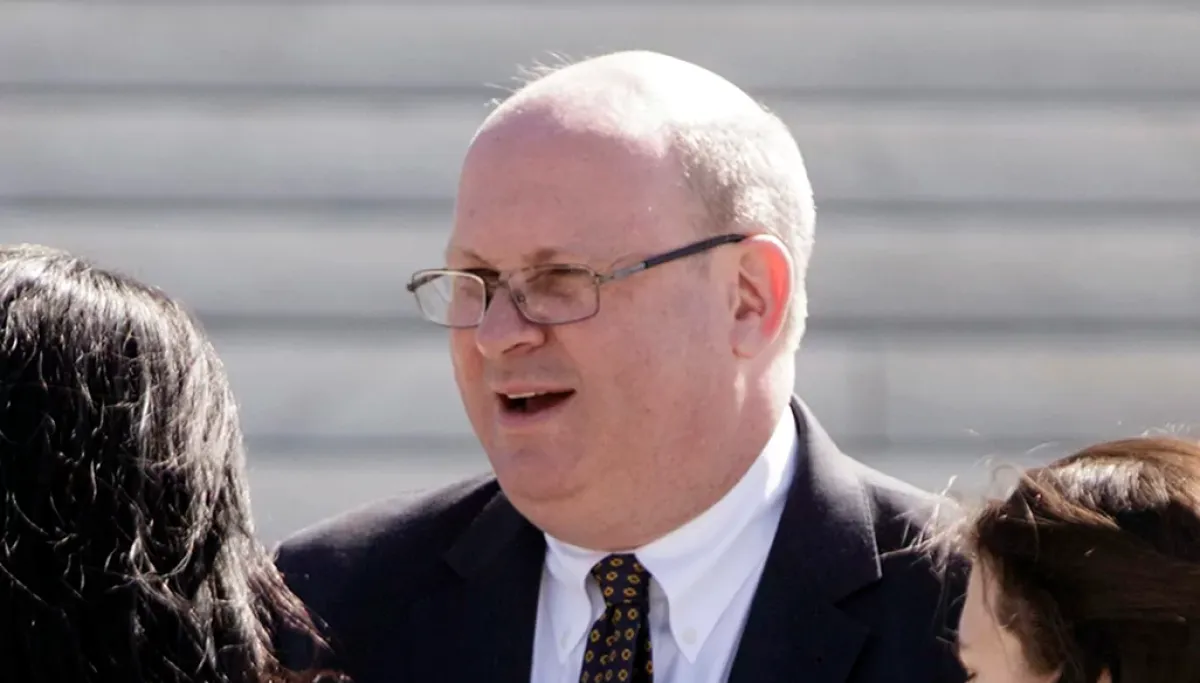
Marc Elias has hand in major election lawsuits this midterm, including Mary Peltola certification fight
Full Article
Original Source
Read the full article at Washingtonexaminer →KhanList aggregates and links to publicly available news content. We do not host full articles from third-party sources. Always verify important information with original sources.