
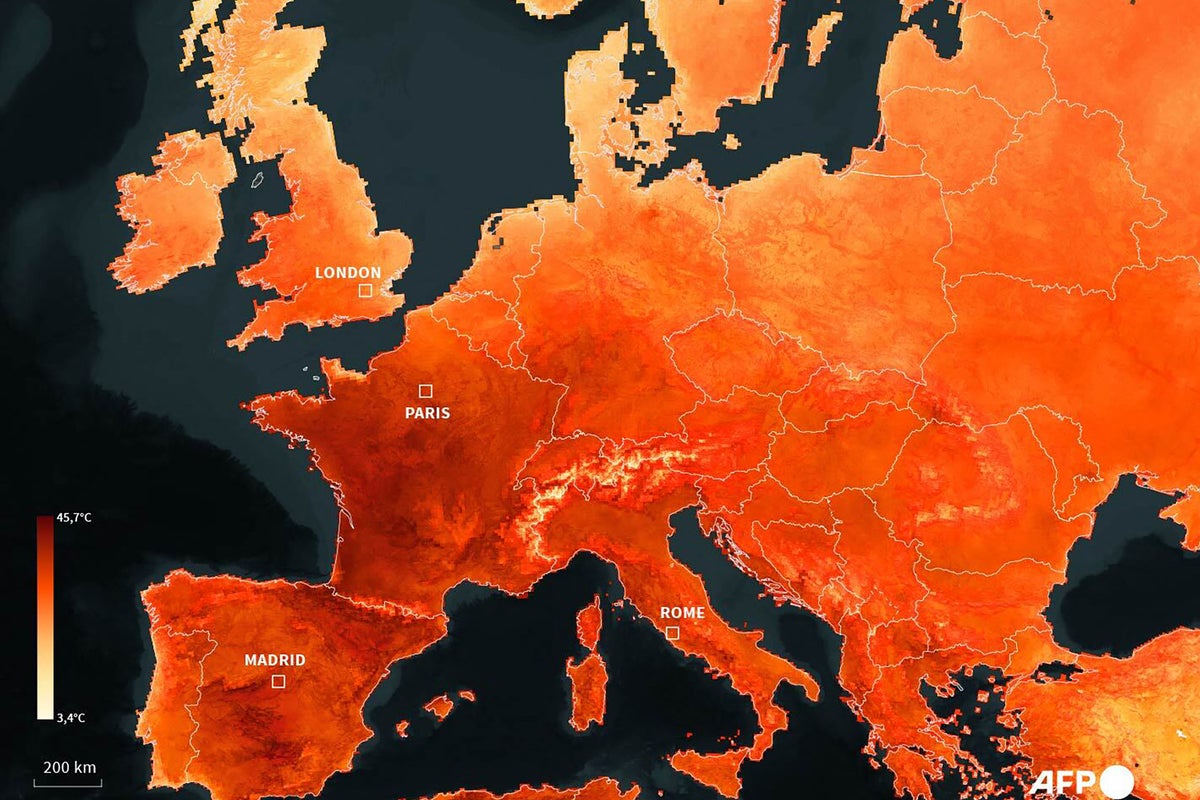
A study on heat-related deaths in Europe has revealed the hardest hit areas following the continent’s deadliest summer on record. Researchers from Imperial College London and the London School of Hygiene and Tropical Medicine have estimated heat deaths in 854 urban areas – accounting for roughly 40 per cent of the population in the EU, UK, Norway and Switzerland – using modelling that has previously produced results consistent with official figures.The study, which is being published in Nature Health, said there were more than 50,000 heat-related deaths in towns and cities across Europe, while two-thirds of the excess deaths can be attributed to climate change.According to the findings, Italy was the worst hit country with 13,303 excess deaths – 8,772 of which scientists said can be linked to “human-made climate change during June-August 2026”.Meanwhile, Malta had the highest ‘standardised excess deaths per million population’ at 716, followed by Italy (561), Hungary (537) and Croatia (461). The number of estimated excess deaths was highest in Southern Europe at 22,204, although thousands of deaths were also seen in northern European countries such as the UK.In Britain, there were an estimated 4,354 excess in urban areas, with 2,535 more deaths than there would have been without the severe heat driven by climate change, the study said.Almost a third of all the estimated European heat deaths for the summer are estimated to have happened between June 17 and July 1, when temperatures across the entire region were more than 5C above average.Dr Clair Barnes, extreme weather and climate change researcher at the Centre for Environmental Policy, Imperial College London said: “I think we can be quite confident in stating that the summer of 2026 is likely to have been the worst on record for heat-related mortality across much of Europe.“These numbers are a stark reminder that our hotter, more extreme summers are having an increasingly severe impact on public health.”And she warned: “Behind these statistics are real people whose lives were lost and real families who grieve for them.“It is yet another reminder both of the imperative of rolling out targeted interventions to protect those who are most vulnerable to this increasingly extreme heat, and of the growing need to rapidly transition away from fossil fuels to slow the pace of change and limit future warming.”
Mapped: The European countries with the most heat-related deaths in 2026
Full Article
Original Source
Read the full article at Independent →KhanList aggregates and links to publicly available news content. We do not host full articles from third-party sources. Always verify important information with original sources.