
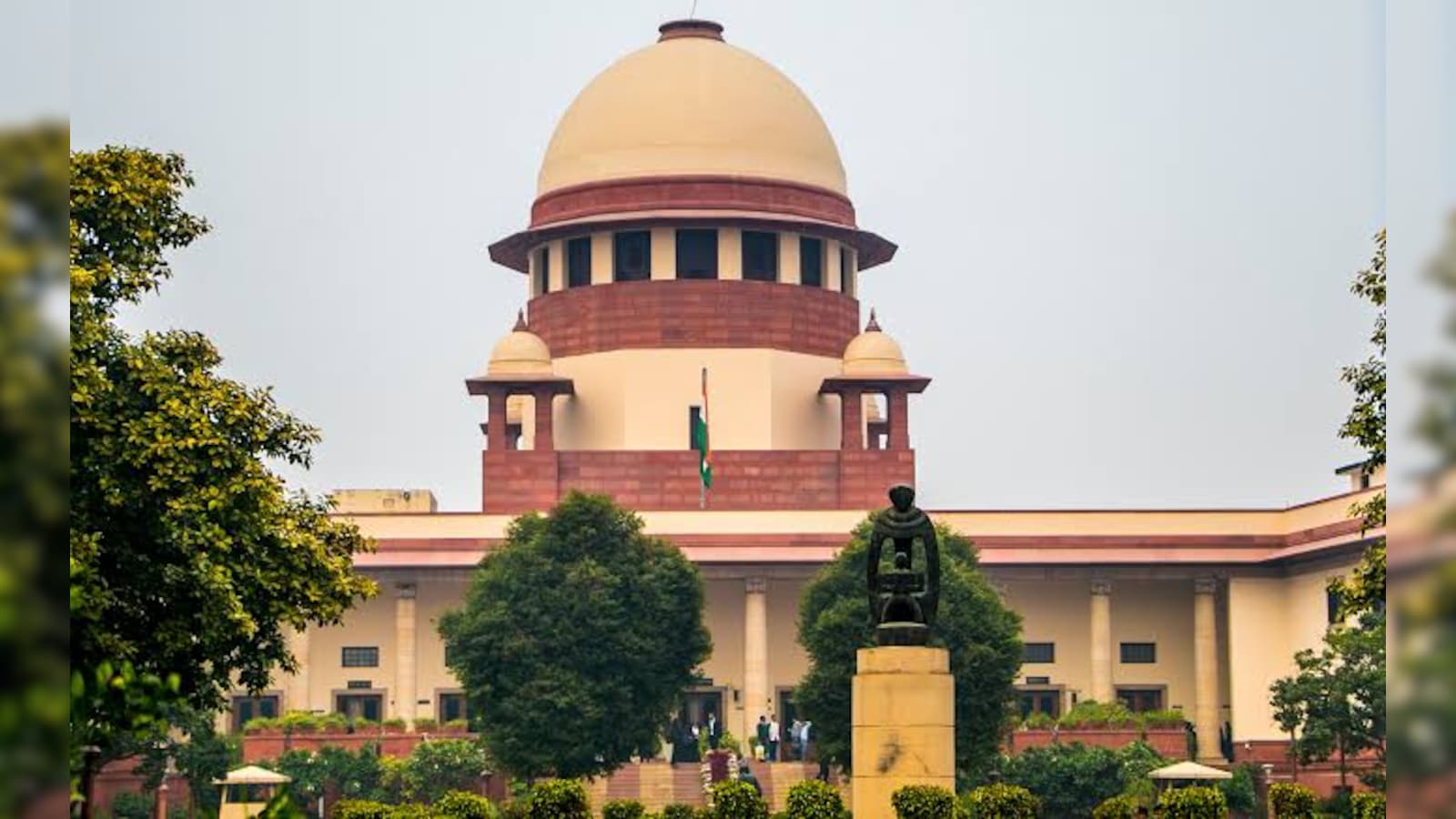
New Delhi: The Supreme Court on Wednesday acquitted a man, who was convicted of alleged sexual assault and murder of a minor child and served over 16 years of imprisonment, saying there were several "missing links" in the chain of the prosecution case.A bench of Justices Sanjay Kumar and Sanjeev Sachdeva held that the trial court had erred in convicting and sentencing him to life imprisonment and the Punjab and Haryana High Court also erred in upholding his conviction.The top court noted that there was no direct evidence of the offence and the entire case against him was based on circumstantial evidence and the theory of "last seen together".It said there was no "plausible explanation" for the accused making an alleged extra-judicial confession to the village sarpanch, with whom neither he nor the victim had any connection."Extra-judicial confession is a weak piece of evidence and per se without any independent and cogent corroborative circumstance or evidence cannot be made the sole basis for conviction," the bench said.It noted that wherever the court, upon due appreciation of entire prosecution evidence, intends to base a conviction on an extra-judicial confession, it must ensure that the same inspires confidence and is corroborated by other evidence."If, however, the extra-judicial confession suffers from material discrepancies or inherent improbabilities and does not appear to be cogent as per the prosecution version, it may be difficult for the court to base a conviction on such a confession," the bench noted.The top court delivered its verdict on an appeal filed by the man challenging an October 2022 order of the high court.The high court had dismissed his appeal against the trial court's April 2010 order that convicted and sentenced him to life term in the case registered in 2007 at Ambala.In its judgment, the top court noted that the appellant has "already served over 16 years and 7 months of incarceration".The bench said the trial court had held the appellant guilty of the alleged offences, including that of murder and unnatural offences.It said the prosecution's case was that the appellant was last seen with the victim, and it was alleged that he committed unnatural sexual assault and then smothered the boy to death before throwing the body in a well.The bench said it was also alleged that two days later, the appellant went to the village sarpanch and made an extra-judicial confession admitting his guilt.The bench noted that the victim went missing on March 11, 2007, and his body was discovered the next morning.It said that according to the prosecution, slippers of the deceased along with an open packet of namkeen were seized from the spot."There does not appear to be any reasonable explanation as to why the packet of namkeen, which was allegedly found at the site, was also seized. Since such packets were sold on a daily basis, what was so suspicious about an open packet of namkeen for the police to seize it," the bench said.It noted the seizure was made on March 12, 2007, when the story of alleged purchase of a packet of namkeen by the appellant emerged only on March 14, after he allegedly made the confessional statement."There is no such evidence to link the packet of namkeen allegedly recovered from the spot with the packet of namkeen allegedly bought by the accused from the shop of the PW7 (prosecution witness)," it said.It said the theory that the accused and the deceased were last seen together was not borne out from the testimony of witnesses."It may be noticed that the presence of the accused at the spot of incident at the relevant time is sought to be established by mere presence of an open packet of namkeen which, in the evidence of the prosecution has been established, is a packet which is readily available and sold in thousands all over the village," the bench said.It said there were serious doubts regarding the veracity of the prosecution case."This doubt is further fortified by the testimony of the prosecution witnesses who deposed that the accused was brought by the police on March 12, 2007 i.e. two days prior to the alleged extra-judicial confession," the bench said."As noticed above, there are several missing links in the chain of the prosecution case which, in our view, do not establish beyond reasonable doubt that the accused was the person who committed the offence," it said.While allowing the appeal, the bench set aside the orders passed by the high court and the trial court.The bench noted that when it had reserved the judgment in the matter, it had directed that the appellant be released forthwith from prison unless his continued incarceration was lawfully required in connection with any other case."Said order is hereby reaffirmed," it said. (Except for the headline, this story has not been edited by NDTV staff and is published from a syndicated feed.)
'Many Missing Links': Supreme Court Acquits Man In Murder Case
Full Article
Original Source
Read the full article at Ndtv →KhanList aggregates and links to publicly available news content. We do not host full articles from third-party sources. Always verify important information with original sources.