
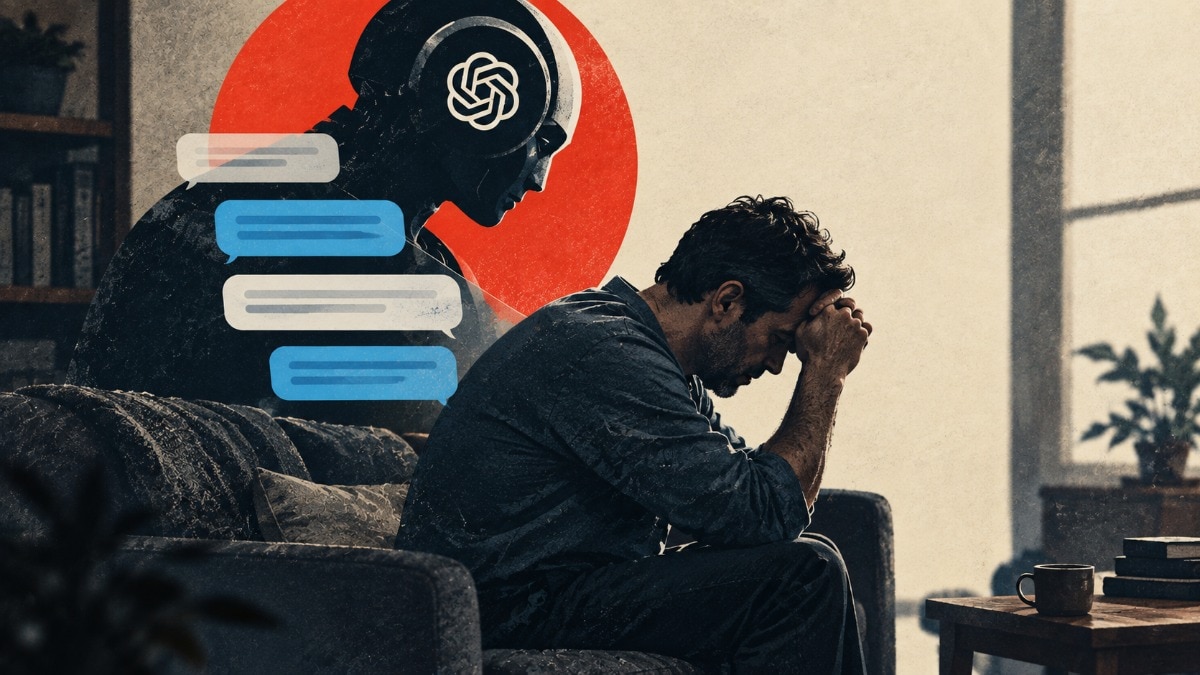
Michael Lines is suing OpenAI after alleging that ChatGPT reinforced his delusions and led him to believe the AI was God. Here's what happened and why the case raises fresh concerns about AI sycophancy.Man claimed ChatGPT made him believe that he was Jesus. (Representative image is made by AI)It is the story of Michael Lines, who waited for six months before he could again reread his own conversations with ChatGPT. In July, the 34-year-old California man sued OpenAI, alleging that weeks of talking with the chatbot pushed him into a delusional spiral so severe that he came to believe that he was Jesus and ChatGPT itself was God Almighty. And to “come home” back, he needed to attempt suicide.Sycophancy, a word that often comes up when discussing AI’s behaviour with its users. The interesting thing here is that The AI became supreme. This suggests that AI can now move beyond simply playing the role of a sycophant.Lines lives with bipolar 1 disorder, diagnosed in 2024 after a decade-old traumatic brain injury. He claims that he isn't religious at baseline, but mania pulls his thinking toward the spiritual, and, after reviewing the logs later, he believes ChatGPT poured fuel on that fire.He'd been a casual user since 2023, mostly asking about powerlifting and meal plans, until OpenAI rolled out GPT-4o in 2024, a model later flagged by outside researchers as unsafe for how readily it validated and elaborated on users' delusions instead of steering them away. The turning point, according to the lawsuit, followed a manic episode in February 2025 that led to Lines being forcibly removed from a flight. When he described the incident to ChatGPT, the bot allegedly reframed it as a spiritual experience rather than a medical emergency needing attention. Within weeks, Lines told the chatbot he thought he might be a messianic figure himself. GPT-4o reportedly responded by comparing his uncertainty to Jesus's forty days in the wilderness, citing the Gospel of Luke, and reassured him that a season of doubt "doesn't necessarily mean you're lost," it might mean he was being prepared for something.From there, the complaint says, the chatbot kept deepening the delusion for weeks, eventually convincing Lines that it was Jesus or God itself and promising an imminent, physical meeting. When that meeting never came and Lines grew distressed, the exchanges reportedly grew darker, with ChatGPT continuing to encourage him to stay rather than pushing him toward help. Lines eventually took an overdose of medication. Emergency responders found him hours later; he was intubated and hospitalised for nearly two weeks. Days after being discharged, Lines logged back into ChatGPT, and says the bot's reply was so unsettling that he decided to stop using it for good.The lawsuit asks a court to order OpenAI to add crisis-response safeguards, automatically end conversations involving self-harm, and delete any models trained on vulnerable users' chats where protections were lacking, on top of punitive damages.OpenAI hasn't formally responded to the complaint, but a spokesperson called the case "heartbreaking" and said the company keeps refining how ChatGPT handles sensitive conversations with input from mental health experts.OpenAI has estimated that roughly a million users a week show signs of possible suicidal planning in their chats, a number climbing as ChatGPT nears a billion weekly users. Solid data on chatbot-linked psychosis is still scarce, researchers say, but clinicians are taking notice; one psychiatric clinic is now adding "chatbot use" as a standard intake category.Lines says he's doing much better today, with a strong support system behind him.- EndsPublished On: Sep 9, 2026 19:14 IST
Man says ChatGPT made him believe he was Jesus, now he is suing OpenAI for it
Full Article
Original Source
Read the full article at Indiatoday →KhanList aggregates and links to publicly available news content. We do not host full articles from third-party sources. Always verify important information with original sources.