
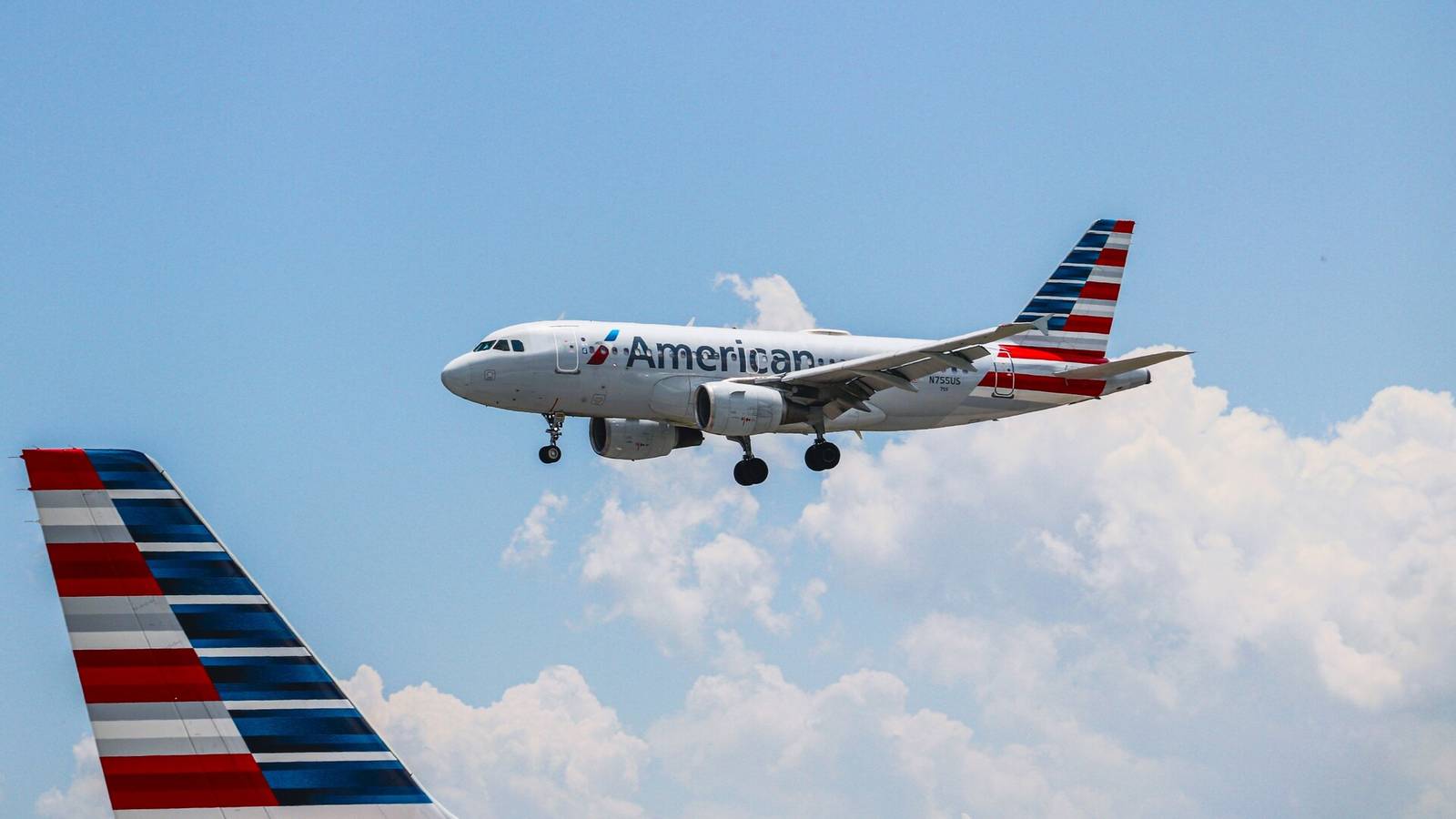
Published Sep 2, 2026, 5:46 PM EDT Paul has had a career of 25+ years focused on the international technology sector, which has taken him to over 100 countries. Along the way, he developed a deep love for aviation, with a travel bucket list measured by aircraft types flown rather than destinations reached. Now he brings that avgeek passion, along with the journalism experience he accumulated early in his career, to write insightful pieces for Simple Flying. An American Airlines passenger was arrested at Miami International Airport (MIA) after authorities say he told a gate agent that he had a bomb while preparing to board a flight to Cuba. WSVN reports that the remark came during routine questioning about hazardous items in his luggage, but immediately ended his journey and resulted in a felony charge. The incident is particularly striking because it came just a day after another incident where a traveler allegedly told an American Airlines employee at the same airport that he had a grenade. Miami has seen several comparable bomb threat incidents over the past two years, while false bomb threats elsewhere have delayed flights, triggered evacuations, and brought substantial criminal penalties. The Passenger Said He Was "Only Joking" Credit: Miami-Dade Sheriff’s Office According to a Miami-Dade Sheriff's Office arrest report, 33-year-old Yoel Guevara-Crespo, of Lake Charles, Louisiana, was preparing to board an American Airlines flight to Camaguey Ignacio Agramonte International Airport (CMW) in Cuba when a gate agent began asking what deputies described as “the standard security questions.” One of those questions was whether he had lithium batteries or incendiary devices in his bag. Authorities say Guevara-Crespo provided an alarming response: “No, but I have a bomb.” The agent immediately told Guevara-Crespo that he could not fly, and that a supervisor would be contacted. Guevara-Crespo then reportedly said that he had been joking, but deputies took him into custody and a K-9 swept his luggage, ultimately finding no bomb. Miami's Local10 News reported that he was booked into the Turner Guilford Knight Correctional Center, and a judge subsequently found probable cause and set bond at $2,500. The lithium-battery question itself reflects a genuine aviation safety concern. The FAA warns that lithium-ion batteries can overheat and enter thermal runaway, potentially causing a fire. Regulations require that spare lithium batteries and power banks remain in carry-on baggage rather than checked luggage. This Is Far From The First Bomb “Joke” At Miami Credit: Shutterstock Guevara-Crespo's arrest came just one day after another American Airlines passenger was arrested over an almost identical incident at Miami International Airport. On August 30, Osniel Blanco-Lopez was asked at an American ticket counter whether he was carrying dangerous goods and allegedly responded in Spanish, "Tengo una granada" — "I have a grenade" — and began laughing. A nearby employee contacted authorities, who took Blanco-Lopez into custody. A bomb-detection K-9 subsequently found no explosives in his luggage. Nor was that even the first such case at MIA this year. In January, Eulalio Orama was questioned by American Airlines gate agents about whether his carry-on contained lithium batteries, as they needed to check the bag. Authorities said agents heard Orama say that he had a bomb; although he maintained that he had joked that a bomb would not fit inside his bag. Nevertheless, passengers were deplaned and the aircraft, luggage and surrounding area were searched before he was arrested on a second-degree felony charge. While not the only airport experiencing these sorts of incidents, Miami is clearly at the epicenter, having also experienced two further bomb threat incidents last year: Date Location At MIA What Authorities Say Happened Outcome August 31, 2026 American Airlines counter Guevara-Crespo allegedly replied “No, but I have a bomb” when asked about lithium batteries or incendiary devices. Denied boarding; K-9 search found no bomb; arrested. August 30, 2026 American Airlines counter Blanco-Lopez allegedly said “I have a grenade” after being asked about dangerous goods. K-9 search found nothing; arrested. January 21, 2026 American Airlines gate Orama allegedly made a bomb-related remark while answering a question about lithium batteries. Passengers deplaned; aircraft searched; arrested. July 1, 2025 JetBlue counter Aliyah Evans allegedly said she had a bomb while holding a phone displaying what appeared to be a timer. K-9 and bomb squad cleared luggage; arrested. March 23, 2025 Terminal D Carmen Rosa Solislerqux allegedly said a bag contained a bomb before saying “I was only joking.” No explosives found; arrested on a second-degree felony charge. The consequences can become considerably bigger once an aircraft is involved. In July 2025, Taj Malik Taylor said that his laptop was a bomb shortly after his Allegiant Air flight departed St. Pete-Clearwater International Airport (PIE), according to federal prosecutors. The aircraft returned to the airport; Taylor subsequently pleaded guilty in federal court and faces up to five years in federal prison. A False Bomb Threat Can Carry Serious Penalties Credit: Shutterstock Florida law treats false bomb reports as far more than an ill-judged joke. Florida Statute § 790.163 makes it unlawful to knowingly make a false report concerning the planting of a bomb, explosive, or weapon of mass destruction with intent to deceive or misinform another person. Violation of the statute is a second-degree felony. A conviction can carry up to 15 years in prison, up to 15 years of probation, a fine of as much as $10,000, and a court can additionally order a convicted person to pay restitution for costs and damages arising from the law-enforcement response. The statute is particularly strict because the charge is not reducible to a misdemeanor, and it is not the kind of felony a sympathetic judge can soften. Within the statute, § 790.163(2) says adjudication may not be withheld, meaning a court cannot use the type of deferred or withheld judgment that can sometimes keep a first felony offense from becoming a permanent conviction. Florida law also does not require proof that the defendant intended to cause actual harm. Saying the remark was a joke, laughing afterward, or immediately saying “just kidding” does not provide any defense if the statement could reasonably be understood as a false explosive report. Federal law adds another layer when a threat affects aviation. Under 18 U.S.C. §35, someone who willfully or maliciously conveys false information — or does so with reckless disregard for human life — concerning certain offenses can be imprisoned for as long as five years. Taylor's case shows how quickly a remark aboard an aircraft can escalate, and move beyond an airport-level security response and become a federal prosecution. For Guevara-Crespo, there was ultimately no explosive in his luggage and he reportedly told the American Airlines employee almost immediately that he had been joking. But by that point, the statement had already ended his trip to Cuba, summoned law enforcement, triggered an explosives search, and resulted in a felony arrest — demonstrating just how consequential a few poorly chosen words spoken at an airport can become.
Man Admits He Has “A Bomb” To American Airlines Gate Agent At Miami International Airport
Full Article
Original Source
Read the full article at Simpleflying →KhanList aggregates and links to publicly available news content. We do not host full articles from third-party sources. Always verify important information with original sources.