
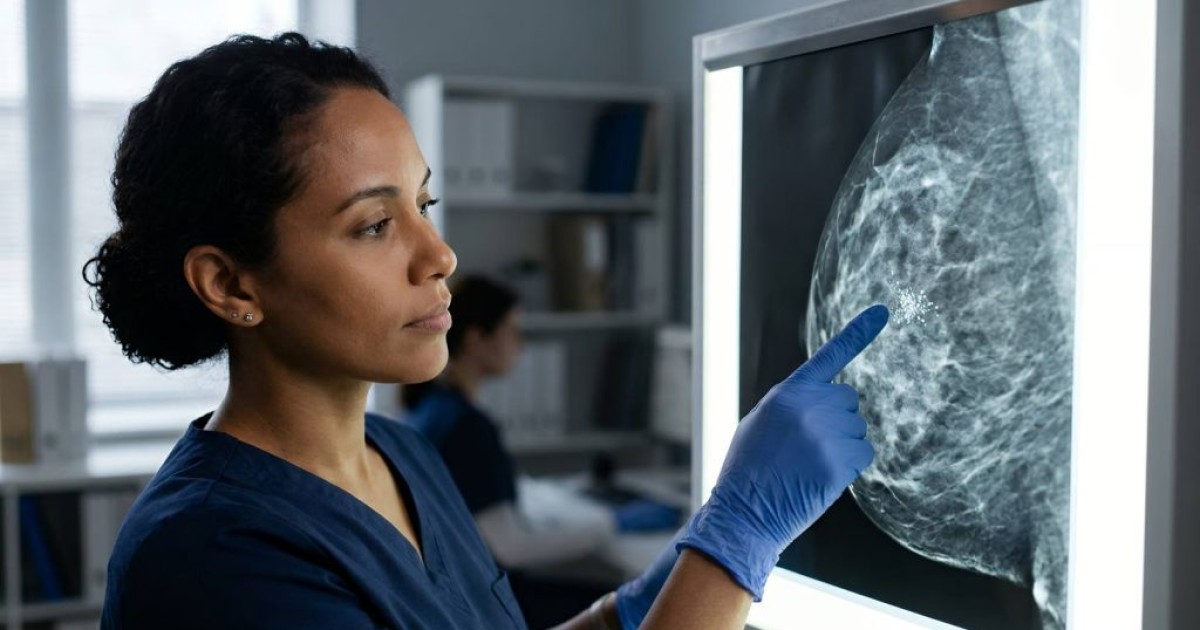
A radiologist examines a mammogram scan for breast cancer detection.Photo: Adobe Stock MONTEGO BAY, St James — The National Health Fund (NHF) is developing an initiative to have a mobile mammography unit travel across the island, providing critical screening service to the public. While the programme is still in its early stages, it comes as western Jamaica faces a severe shortage of mammography equipment used to screen for and diagnose breast cancer. “We’re working on a mobile solution, but are not at the point to say it’s fully sorted, but early in the new year we can update you,” NHF CEO Everton Anderson told the Jamaica Observer in an interview last Friday. The limited availability of mammogram machines in the region has left patients with few options. One resident told the Observer that she will have to travel to Kingston for her annual examination. A private medical facility in St James that typically offers the service is reportedly operating without a functional machine. Efforts to reach a representative of the institution by phone were unsuccessful. ANDERSON…we’re working on a mobile solution (Photo: JIS News) Clinical coordinator for the Western Regional Health Authority (WRHA) Dr Delroy Fray outlined the gravity of the situation in western Jamaica. “Unfortunately, none of the private places in Montego Bay do mammograms. However, Radiology West does CT [computed tomography] of the breast, and CT of the breast can give you the information that you need to know, but it costs more than a mammogram,” explained Dr Fray. Dedicated breast CT is a modern imaging technology designed to examine breast tissue directly, without painful plate compression. Public institutions offer little relief. Dr Fray noted that across the four parishes managed by the WRHA — St James, Hanover, Westmoreland, and Trelawny — Cornwall Regional Hospital (CRH) in St James is the only facility with a functioning unit, and access is strictly prioritised. “It’s hard to provide that for the private patient because it will take up a lot of our time, so we use it for our public cancer patients, and sometimes we have to be on a waiting list,” said Dr Fray. FRAY…none of the private places in Montego Bay do mammograms The WRHA clinical coordinator estimated the backlog at approximately three months. In the meantime, the resident who spoke with the Sunday Observer said she underwent alternative screening last year, but her doctors remain firm that a mammogram is the standard. Dr Fray emphasised that mammograms remain the safest and most cost-effective diagnostic tool for women aged 40 and older, or for those aged 35 and above with a strong family history of breast cancer. For women under 35, a breast ultrasound is typically recommended. “Mammography is very sensitive to pick up breast lesions. We like to use that, and it’s cheap for the patient,” stated Fray, adding, “I would be in favour of having mammograms available in the private sector in the west, and I’m hoping that somebody will come along and do it,” added the senior medical doctor. With the planned implementation of a mobile service and at least one private entity showing an interest in offering the service in the future, Dr Fray is now hopeful. For now, the public can access the mammogram service in St Ann, Manchester, and Kingston. Addressing common patient concerns regarding discomfort and radiation, Dr Fray offered reassurance, noting that radiation exposure during a mammogram is comparable to passing through an airport security scanner. “Just to put their heart at rest about the radiation, and squeezing the breast is not going to spread anything. It’s a very safe thing. And now they have a digital mammogram, which is the modern one, in which the pressing is not as hard as before,” assured Dr Fray. He also dispelled reports of lengthy delays for men seeking colonoscopy appointments in the region, clarifying that at least three private facilities currently offer the procedure. A colonoscopy uses a thin, flexible tube equipped with a light and a camera to examine the inside of the large intestine and rectum. “That’s optical, where you put an instrument up. You can do what’s called virtual colonoscopy, which is a CT scan, and they are indicated to have your colon screened from that aspect,” stated Dr Fray. He added that once the ongoing rehabilitation of CRH is complete, public access will expand significantly. “We are going to have a dedicated endoscopy suite that will perform both upper GI [gastrointestinal] endoscopy and lower GI endoscopy, which includes colonoscopies. That will come on stream soon for public patients,” stated the clinical coordinator.
Mammogram woes worsen in western Jamaica
Full Article
Original Source
Read the full article at Jamaicaobserver →KhanList aggregates and links to publicly available news content. We do not host full articles from third-party sources. Always verify important information with original sources.