
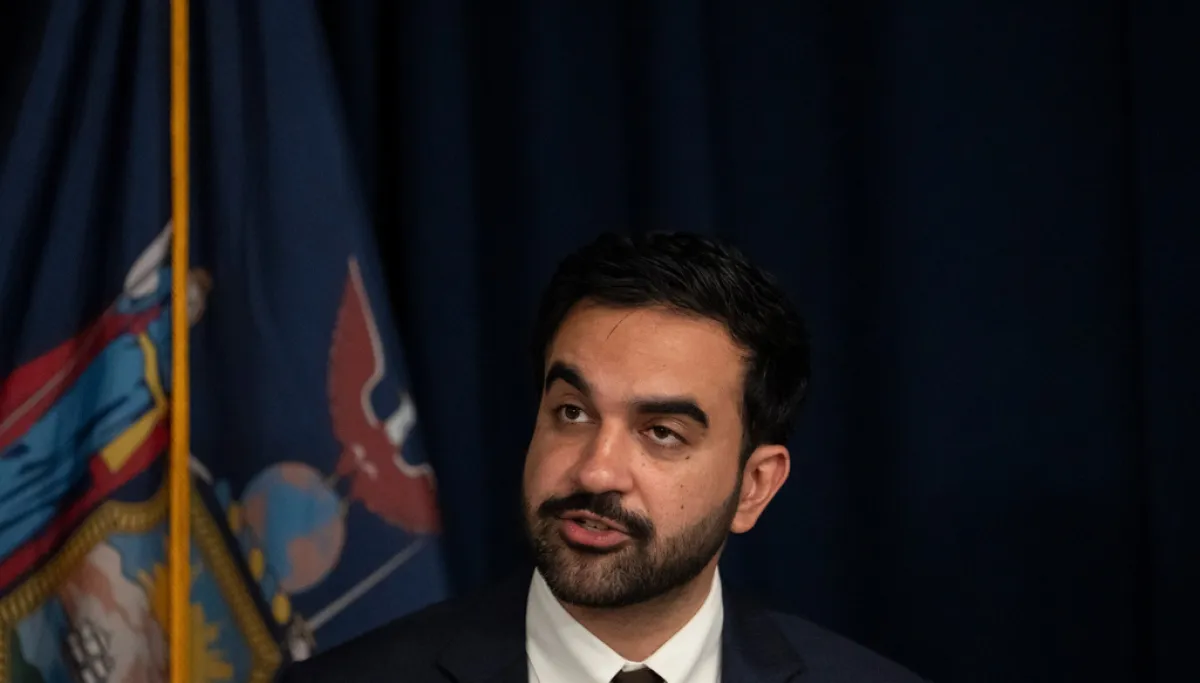
New York City Mayor Zohran Mamdani campaigned on affordability, and he made no secret of how he planned to deliver it. He would raise taxes on those he and his Democratic Socialists of America comrades call “the rich” to make life more affordable for lower-income New Yorkers. He moved quickly on that front, championing a pied-à-terre tax on certain second homes and a reduction in the city tax credit for high-income business owners.When he realized that sticking it to the rich wouldn’t provide quite as much revenue as he’d anticipated, he widened his net to include ordinary New Yorkers. For example, at the recommendation of his Department of Environmental Protection, the city’s water board raised water and sewer rates by 6% on July 1.Now comes Mamdani’s latest money grab, the Delivery Protection Act. Introduced in February by far-left New York City Council Member Tiffany Cabán, the bill is pending before the council and appears likely to pass. Known as Intro 518, the bill would require companies that operate last-mile delivery facilities in the city to obtain a license from the Department of Consumer and Worker Protection and directly employ the workers who perform core warehouse and delivery functions. The license would come with safety, training, and employment requirements that both the city and workers could enforce.What passage would mean for Amazon Amazon relies on a network of third-party couriers to deliver packages across the five boroughs. To keep its city delivery facilities open under the bill, Amazon would have to put the drivers who now work for those couriers on its own payroll.The bill would add an unnecessary layer of regulation and expense to a delivery system that has served New Yorkers well for decades. If it ain’t broke, why fix it?Why supporters say the law must pass The Mamdani administration maintains that outsourcing deliveries to third-party partners “shields parent corporations from legal liability for injuries, labor violations, and union organizing.” According to a report from the comptroller’s office, truck crashes resulting in injuries near last-mile warehouses rose by 137%. It also said that truck congestion, idling, and air pollution were concentrated in certain residential neighborhoods.In an August interview with Spectrum News, Cabán claimed that injury rates at last-mile facilities were roughly three times the national average. She argued that steep delivery quotas leave drivers scrambling to stay on schedule and give subcontractors an incentive to skimp on van maintenance.The City Council noted that licensing last-mile warehouses would give the city a way to enforce safety, training, and recordkeeping standards.The measure is also backed by organized labor. The International Brotherhood of Teamsters has been working to organize Amazon’s delivery and warehouse workers.The case against Intro 518 Amazon, FedEx, DoorDash, and business groups such as the Small Business and Entrepreneurship Council argue that Intro 518 would put local businesses and jobs at risk. Amazon works with more than 40 independently owned local delivery service partners that employ roughly 5,000 New Yorkers.New York Mayor Zohran Mamdani speaks during the annual New York State Financial Control Board meeting on Wednesday, Aug. 12, 2026. (AP Photo/Yuki Iwamura) Citing estimates from the New York Delivers Coalition, the SBE Council warns the bill “could result in 132 million late deliveries annually and significant additional costs of $664 for households. A September 2026 report by AKRF and the New York Delivers Coalition warns the bill threatens more than 100 subcontracted last-mile businesses, many of which are minority, immigrant, veteran, or family-owned.”Amazon says dismantling its local delivery network could also force it to shift operations outside the five boroughs, potentially to Long Island or New Jersey. The company warns that packages could take longer to arrive, trucks could travel farther, and New Yorkers could pay up to $5 more per order.Critics also point to the legal protections delivery workers already have. They argue that the city can enforce those protections and strengthen safety and workplace standards while preserving the independent businesses that deliver packages across New York.Knives out? Amazon has warned it will pass the costs of adhering to the new law on to consumers.This month, America’s largest online retailer launched a pop-up campaign on its website to warn New York City shoppers about the potential cost of the proposed law. One of the messages reads: “The New York City Council is considering Intro 518, legislation that could increase prices for New Yorkers and affect how Amazon and other companies deliver packages, groceries, and more, to you.”Fox Business reported that shoppers who click through are taken to a form that automatically drafts an email to their City Council member urging them to oppose Intro 518. The email warns that the bill could add up to $664 a year to a shopper’s delivery costs. It concludes, “In a city already facing an affordability crisis, that’s money I cannot afford to lose—and neither can my neighbors.”City Council members received more than 60,000 emails in the campaign’s first 36 hours.In a statement to the Wall Street Journal on Friday, Amazon spokeswoman Kelly Nantel said the company wanted customers to know what the bill could cost them if it passed as written. She urged concerned shoppers to contact their City Council members and ask them to oppose it.Amazon’s warning to New York shoppers apparently struck a nerve. The socialist mayor wasted little time firing back on X.“Amazon is a multi-trillion dollar company. If Jeff Bezos adds $5 to your order, it’s not because of City Council’s efforts to protect workers’ rights and keep our streets safe,” Mamdani wrote. “It’s greed.”And he renewed his call for council members to “Pass the Delivery Protection Act.”In a rather surreal turn, City Council Speaker Julie Menin took to X to lay the blame for New York’s high cost of living at Amazon’s doorstep. She wrote: “It defies logic that Amazon, a $3 trillion corporation, would raise New Yorkers’ cost of living if it’s forced to adhere to basic regulations and worker protections. We are crafting legislation that regulates Amazon and protects workers, without impacting prices or jobs. If Amazon thinks this deceptive campaign will effectively threaten New Yorkers and intimidate this City Council, they are dead wrong.”Both responses were disingenuous. It’s easy to invoke workers’ rights and safer streets. It’s harder to explain why New Yorkers should pay up to $5 more per Amazon order or what would become of the jobs at the independent couriers Amazon relies on. Those are the consequences the City Council ought to reckon with before imposing a new layer of regulation on deliveries.More to the point, if Mamdani wants to talk about greed, he might start with his own administration’s insatiable appetite for revenue to fund its favored social programs. Now he’s backing a bill that could make everyday deliveries more expensive. Amazon’s warning didn’t come out of nowhere; it was prompted by a policy City Hall chose to pursue.The problem with these young idealistic democratic socialists is that they have little or no experience in running a business and a shaky grasp of how the economy works. Yet they keep trying to set policy based on how they think businesses should operate, leaving employers to adjust and workers and consumers to bear the costs.This is hardly Amazon’s first clash with New York progressives. In 2018, then-Rep.-elect Alexandria Ocasio-Cortez emerged as a vocal opponent of the company’s plan to build a second headquarters in Queens. Three months later, Amazon scrapped the project, which was expected to bring 25,000 jobs to the city.TRUMP WISHES AMERICA, INCLUDING THE ‘RADICAL FAR LEFT,’ A HAPPY THANKSGIVINGThe lesson of the Queens deal is that Amazon can walk away. If the City Council passes Intro 518 and the company moves its delivery operations outside the five boroughs, local couriers and their employees could lose business while New Yorkers wait longer and pay more for their packages.Mamdani can call Amazon greedy all he likes. He still owes the people who elected him on a promise of affordability an explanation for why they should pay more to have groceries and other consumer goods delivered to their door.
Mamdani’s ‘affordability’ agenda could add $5 to your Amazon order
Full Article
Original Source
Read the full article at Washingtonexaminer →KhanList aggregates and links to publicly available news content. We do not host full articles from third-party sources. Always verify important information with original sources.