
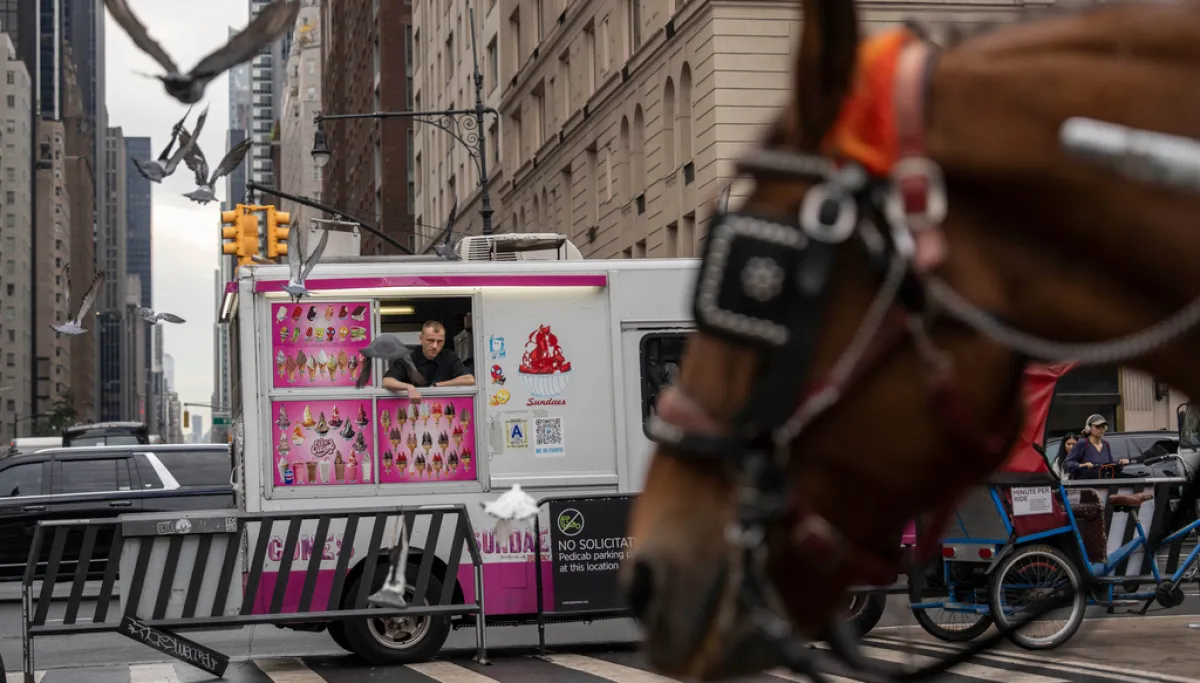
From the passenger seat, it is easy to understand the appeal. A horse-drawn carriage moving through Central Park offers a little piece of an older New York: the clip-clop of hooves, trees overhead, skyscrapers beyond them and, for a few minutes, the illusion that the city has slowed down.It is romantic.Now imagine the same scene from inside the harness. The clip-clop is no longer charming. It is your hooves striking hard pavement, mile after mile. There are cars and buses, horns and engines, summer heat rising from pavement, winter cold, rain, and humidity. Behind you is the constant pull of the carriage, its passengers and the miles still ahead.For the passenger, it is a carriage ride. For the horse, it is hard labor.New York City has finally decided that this particular piece of nostalgia has run its course.It took 19 years.The New York City Council passed Romanch’s Law on Oct. 22 by a 40-7 vote. Mayor Zohran Mamdani has pledged to sign it. The law would end horse-drawn carriage operations by June 1, 2028.I disagree with Mamdani on plenty. On this, he deserves credit.But why did New York need nearly two decades to get here?The first council legislation seeking to eliminate horse-drawn cabs was introduced in 2007. Later efforts failed. After Ryder, a carriage horse, collapsed in Manhattan in 2022, another proposal tried to replace horse carriages with electric ones. That stalled, too.The resistance was not mysterious. Drivers and stable workers had livelihoods at stake. Owners had invested in horses, equipment, and licenses. Labor unions fought to protect those jobs. Others sincerely believed the horses could work humanely under proper regulation.And then there was tradition.Horse-drawn carriages have operated in Central Park since 1858. What began as transportation became tourist entertainment — a visual shorthand for an older, supposedly gentler New York. President Donald Trump, opposing the ban, called the carriages a “great tradition.”But tradition is not the same thing as justification.A tradition still has to justify what it asks of the animal required to sustain it.The scientific case should not be exaggerated. A small 2017 veterinary study of New York carriage horses did not find physiological evidence of poor welfare among the animals studied. New York also limits carriage horses to nine hours of work in 24 hours, requires rest periods, veterinary examinations and annual furloughs, and prohibits work in specified weather extremes.Working does not automatically mean suffering. People who oppose the ban are not necessarily indifferent to animals.Then came an accident that changed the politics.In June, 18-year-old Romanch Mahajan, a tourist from India, was visiting New York with his family to celebrate his high school graduation and acceptance to university. They were taking a carriage ride through Central Park when the driver stepped away to photograph them.The horse bolted. Mahajan’s mother fell from the runaway carriage. According to his father, Romanch jumped out trying to help her, struck his head, and later died.His death pushed support for ending the industry to a tipping point, according to the City Council.It should be remembered first as the loss of a young man, not as a legislative device. Yet the chronology leaves an uncomfortable question: Why did a human death accomplish in months what years of concern about the horses could not?New York has settled the larger argument. It has not settled what happens between now and June 2028.Current reporting puts the population at roughly 100 licensed carriage horses. The industry now has an expiration date. That does not mean owners will abuse their animals, and it would be unfair to predict that they will.Still, incentives matter. As shutdown approaches, owners could face declining business values, legal expenses, and uncertainty over compensation. The Transport Workers Union has threatened litigation. A horse, meanwhile, generates revenue only while it works.The city should anticipate that tension. Work-hour, rest, veterinary, and weather protections should be enforced especially closely during the transition. Inspections should catch problems, not merely document them afterward. Veterinary assessments should be independent. Injuries, violations, and removals from service should be transparent. Owners who retire horses early should not be financially punished for doing so.Workers deserve a fair transition as well. Romanch’s Law requires a workforce transition plan and consideration of compensation. That is fair to the people involved. It may also reduce economic pressure on the horses.Retirement must mean retirement. The law bars the sale or transfer of carriage horses for slaughter or another carriage business. But New York should also know where every horse goes and verify that “humane disposition” means more than an address on a form.Washington should pay attention, too. The District of Columbia still permits and regulates horse-drawn carriages. Its current law limits a carriage horse to eight hours of labor in 24 hours; requires rest, food, and water; and prohibits overdriving or working a horse to exhaustion.THE CLIMATE WAR’S DUMBEST LIE: JOBS VS. NATUREThat leaves Washington, and other cities that still permit the practice, with the same question New York has finally answered: Is regulation enough, or is pulling tourists through a modern city simply no longer a job we need horses to perform?For nearly 19 years, New York looked at the carriage from the passenger’s perspective. For the next 19 months, it should try standing in the horse’s hooves. Today’s horses must not pay the price for tomorrow’s protection.Arie Blitz is a retired physician and independent writer in Weslaco, Texas, who writes on foreign policy, medical ethics, and public policy.
Mamdani is … right? It’s time to retire New York’s horse-drawn carriage tradition
Full Article
Original Source
Read the full article at Washingtonexaminer →KhanList aggregates and links to publicly available news content. We do not host full articles from third-party sources. Always verify important information with original sources.