
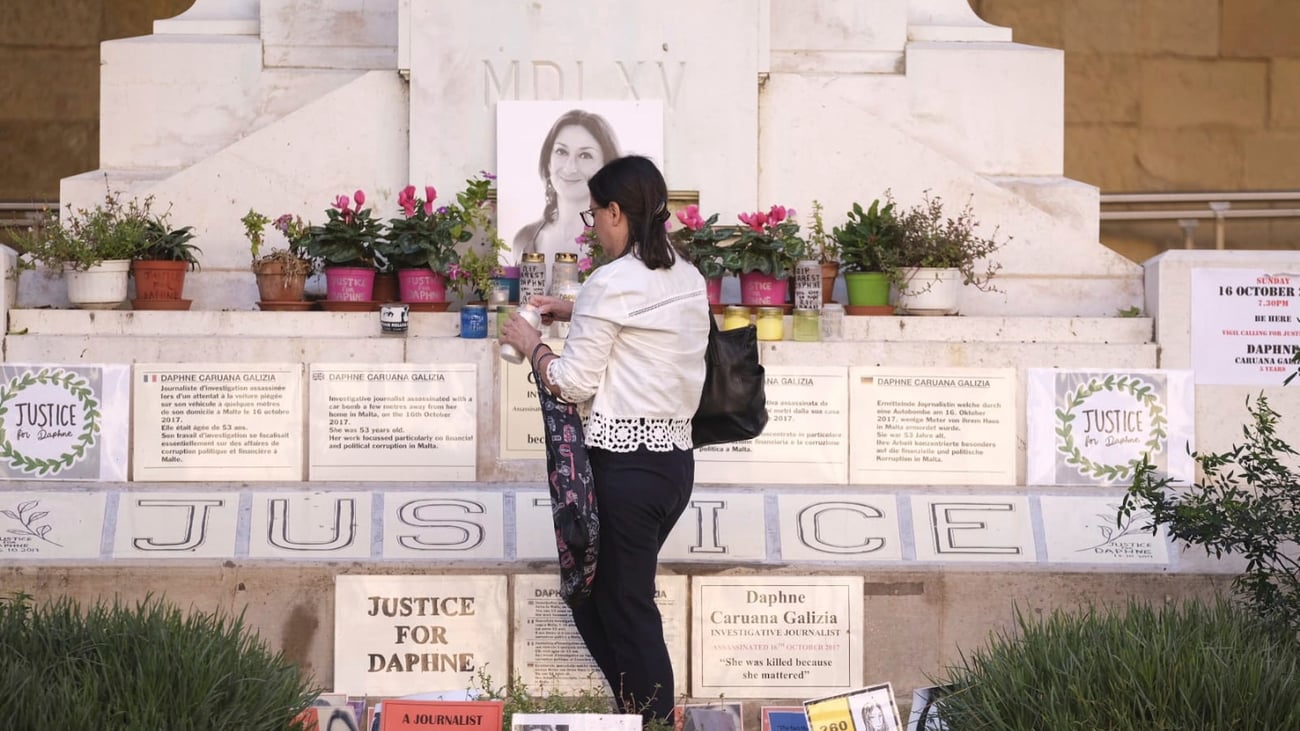
Europe’s human rights court dismissed the brothers’ complaints about their legal representation and preparation time, leaving them to serve 40-year prison terms.(CN) — Two brothers who admitted murdering a Maltese journalist found no takers in Europe’s human rights court Thursday for their claim that they never got a fair shot at a defense.The European Court of Human Rights rejected applications by George and Alfred Degiorgio, each serving 40 years for Daphne Caruana Galizia’s murder. They argued that Malta violated their fair trial rights by assigning lawyers they had not chosen and giving them too little time to prepare.Caruana Galizia, 53, investigated corruption among Malta’s political and business elite, including offshore dealings exposed by the Panama Papers leak. A remotely detonated car bomb killed her near her home on the Mediterranean island on Oct. 16, 2017.The brothers’ lawyer withdrew in August 2022. His court-appointed replacements faced over 11,000 pages and four gigabytes of material, and twice unsuccessfully requested more preparation time. When trial opened Oct. 14, they said they could not have examined everything while also serving other clients.The brothers pleaded not guilty that morning, then accepted a deal for 40-year sentences that afternoon. Their criminal appeal failed in 2023, followed by their constitutional challenge in April 2025.The Strasbourg court found appointing legal aid lawyers was justified after others refused the case. The brothers’ preferences did not outweigh the need to keep the prosecution moving and protect the interests of others affected.The judges wrote: “In the present case, while a little more than forty days to cover the entire material might appear short, the court observes that two lawyers, rather than one, had been appointed to assist the applicants charged with the same facts and offenses.”The brothers already knew the prosecution’s evidence and had explored a plea bargain with their previous lawyer, the court noted. A trial expected to last several days would also have allowed further preparation.The judges found the timetable didn’t pressure the brothers into involuntary pleas. Medical and psychiatric assessments, warnings from the trial judge, repeated confirmation of the pleas and subsequent court review supported that conclusion.Although the brothers did not separately challenge whether their pleas were voluntary in Strasbourg, the court examined the issue anyway. They supplied no evidence backing their claims of pressure or Alfred’s near-unconsciousness, leaving no basis to question the official trial record. The court also reasoned that, at ages 60 and 58, life imprisonment was unlikely to mean substantially more time than the agreed sentences.Sarah Ciliberti, a lawyer specializing in criminal law at Malta-based City Consult, considered the outcome defensible but questioned the reasoning on preparation time. “The accused having previously been exposed to the evidence is not equivalent to newly appointed counsel having sufficient time to master it and formulate an effective defense,” she said.She also questioned treating preparation during trial as a substitute for being ready beforehand.Ciliberti saw a potentially circular argument: The pleas helped defeat a complaint about the conditions the brothers said had prompted them. Comparing sentence lengths, she said, understated the pressure of facing trial with lawyers who said they were unprepared. She cautioned against treating the decision as approval of a 40-day preparation period; the outcome depended heavily on safeguards surrounding these particular pleas.The brothers were among five men convicted over the killing. Alfred planted the bomb; George detonated it remotely. Their accomplice Vincent Muscat, who kept watch while the bomb was planted, pleaded guilty in 2021 and received 15 years. Bomb suppliers Robert Agius and Jamie Vella received life sentences in 2025 and lost their appeals in January.Taxi driver Melvin Theuma admitted acting as middleman, received a pardon in exchange for testimony and identified businessman Yorgen Fenech as the mastermind. Fenech denied involvement and was acquitted Sept. 2. Prosecutors appealed Sept. 22, arguing that legal errors occurred at trial. Police separately began investigating jurors’ oaths and public comments they were said to have made before the proceedings.Neither the Maltese authorities nor the applicants’ representatives responded to requests for comment.The European court dismissed both complaints as clearly unfounded and declared the applications inadmissible. That decision is final, with no appeal to its Grand Chamber. The brothers’ convictions and 40-year sentences stand; their challenge in Strasbourg ends here.Courthouse News reporter Eunseo Hong is based in the Netherlands.Subscribe to our free newslettersOur weekly newsletter Closing Arguments offers the latest about ongoing trials, major litigation and rulings in courthouses around the U.S. and the world, while the monthly Under the Lights dishes the legal dirt from Hollywood, sports, Big Tech and the arts.Additional Reads
Malta journalist’s killers lose fight over rushed defense
Full Article
Original Source
Read the full article at Courthousenews →KhanList aggregates and links to publicly available news content. We do not host full articles from third-party sources. Always verify important information with original sources.