
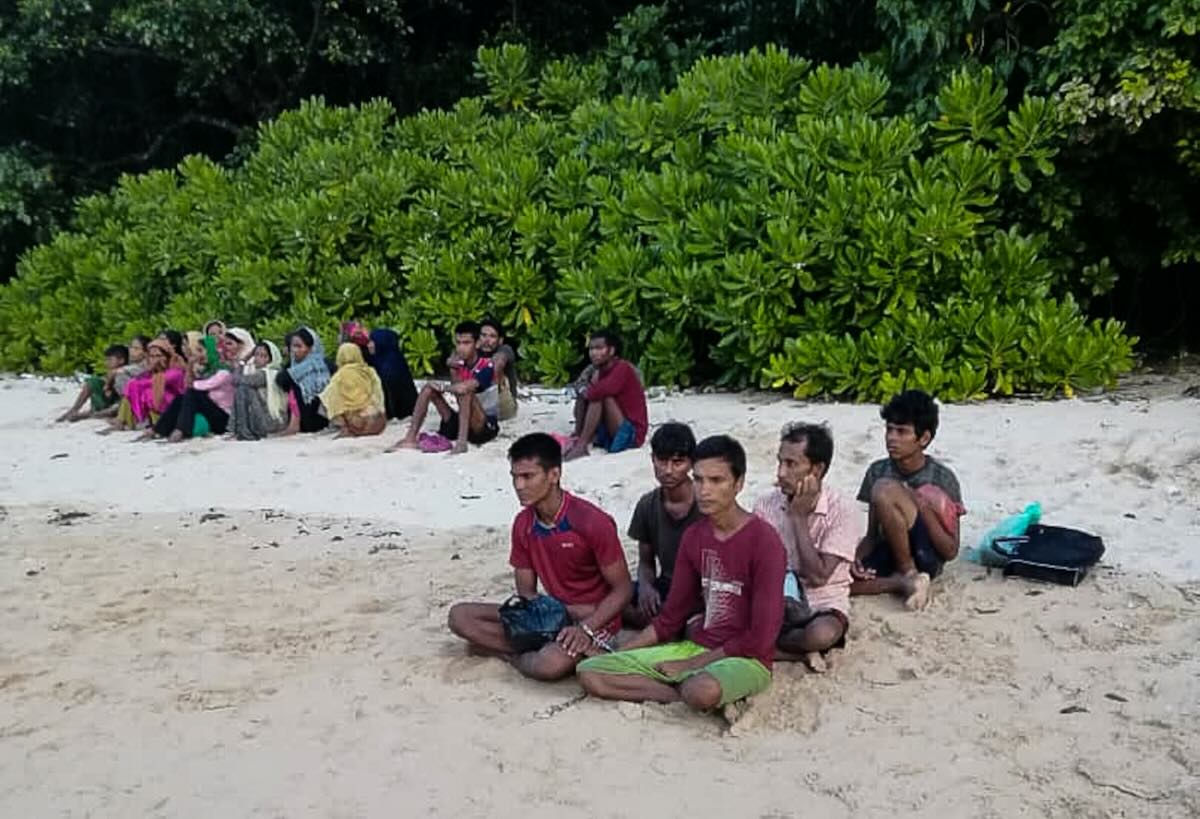
As a Rohingya exile who abandoned his life in Malaysia to return to Myanmar, Ismail’s bleak prospects may portend what awaits others caught in Kuala Lumpur’s migrant crackdown. Weeks ago, the 25-year-old was eking out a living at a Malaysia fish market, one of legions of the Muslim minority group who left Myanmar to escape violence some monitors say amounted to genocide. But a wave of anti-Rohingya sentiment, migrant arrests and a government plan to repatriate Myanmar nationals drove Ismail back, even though the nation he fled still denies him full citizenship. “People without a country like us, we have nowhere to come back [to],” said Ismail, using a pseudonym for security reasons like other Rohingya in this story. He subsists jobless on the charity of family in Yangon, carrying ID branding him a second-class citizen and cowering from the security forces who spearheaded the crackdown on his people. “We are the most discriminated people,” said Ismail, “the people from nowhere.” Nearly 1,500 Myanmar migrants are due to be sent home from Malaysia next week, the first of 5,000 that Kuala Lumpur says agreed to “voluntary” repatriation from detention centres. Malaysia’s foreign and home ministries have not responded to a query on what proportion will be Rohingya, but the group makes up two-thirds of the 190,000 Myanmar refugees and asylum seekers in the country, according to the United Nations. Perilous precedent The Rohingya left Myanmar en masse starting in 2017 when a crackdown of mass killing, rape and arson began in western Rakhine state. Rights groups say it was a military-led campaign of ethnic cleansing, a claim the armed forces deny. The majority of Rohingya—1.2 million—now live over the Bangladesh border in overcrowded camps, while Malaysia is the second-largest host nation. Despite Malaysia being a Muslim-majority country, the Rohingya there are facing pressure, including from an online campaign that rights advocates say is fuelling xenophobia and intimidation. For years, efforts to repatriate Rohingya to Myanmar have stalled over the ethics of returning them to a country where conditions have only worsened since a 2021 coup that triggered civil war. Some fear Malaysia’s return scheme will erode existing protections. “Whether or not Rohingya are among those returned, this could set a troubling precedent,” said one UN official in the region, speaking anonymously because they were not authorised to talk to media. “Other countries in the region could follow suit despite ongoing risks in Myanmar.” With many Rohingya sequestered inside detention centres with reportedly dire living conditions, it is hard to judge how voluntary the repatriations are. “Given the choice, I don’t think anyone wants to stay there,” said Yap Lay Sheng, a senior human rights specialist with NGO Fortify Rights. “They would rather risk their life and go back home.” The Myanmar military regime has pledged a “safe and dignified” welcome. But it is unclear where the Myanmar navy ships slated to carry them will dock, and what their future holds. Myanmar-based activist Mohammad fears any fellow Rohingya may be dispatched to impoverished and besieged displacement camps in Rakhine. Four residents recently died there in a suspected cholera outbreak, while both sides of the civil war are accused of atrocities against the Rohingya. “I feel extremely helpless,” said 26-year-old Mohammad. “They don’t recognise us as human.” But he struck a note of resilience: “While they don’t count us as people, I still have my own life and hope—because I was born human.” ‘Bargaining chips’ Yap of Fortify Rights said the Rohingya are being treated as “bargaining chips”. Malaysian Prime Minister Anwar Ibrahim is “politically embattled” and “wants to be seen as powerful on immigration enforcement” ahead of elections due by early 2028, he said. Myanmar meanwhile is seeking favour from Malaysia as it tries to shake off its post-coup pariah status. Anwar has invited coup leader turned self-appointed president Min Aung Hlaing for an official visit in a bid to expedite the repatriations. It would be the first such welcome since the coup for Min Aung Hlaing, named as a chief architect of the Rohingya crackdown in numerous legal cases. The Myanmar military claims the campaign was targeting insurgents, but the International Court of Justice is weighing whether it constituted genocide. Caught between a hostile adoptive home and a motherland that denies their rights, Rohingya migrants in Malaysia, like 30-year-old Asif, face an agonising choice. “I get a headache just thinking about where to go,” he said. A decade of reporting at a cost In 2025, we marked the 10th anniversary of Myanmar Now. In Myanmar’s history, journalists are often the first targets during political repression. We founded this outlet during a brief window of stability, starting with a small team in a modest office in downtown Yangon. Our goal was simple: to report on injustices that had been silenced for decades. In many countries, justice is sought through courts and police. In Myanmar, these institutions have historically been instruments of oppression. From the start, we committed to reporting without discrimination—regardless of ethnicity, religion, or citizenship. We believe our work should be accurate, deeply sourced, and strong enough to serve as a historical record. We also believe journalism should be a force for positive change, and that our primary readers should be the people of Myanmar. That belief came at a cost. Members of our team and others associated with Myanmar Now have endured long legal battles, physical assaults, arrests, and torture. Despite these hardships, Myanmar Now continues to report the news—thanks to the resilience of our team, the courage of our sources, and the trust of our readers. Please subscribe to support a free press in Myanmar.
Malaysia’s migrant return plan chills Myanmar Rohingya
Full Article
Original Source
Read the full article at Myanmar-now →KhanList aggregates and links to publicly available news content. We do not host full articles from third-party sources. Always verify important information with original sources.