
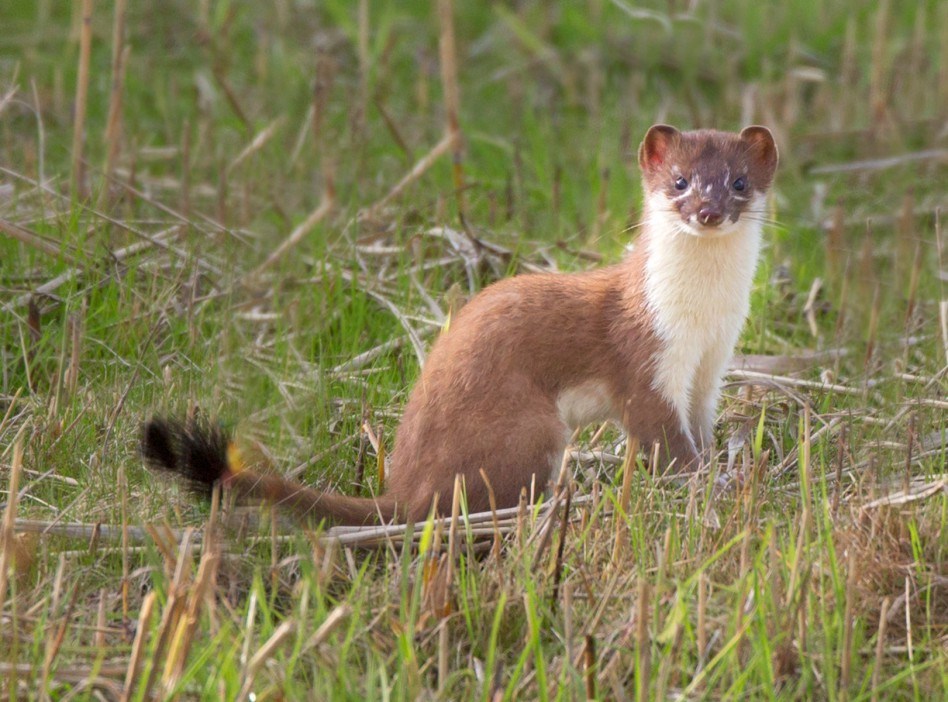
A MASSIVE £150,000 operation to track down a invasive predator threatening wildlife on a remote island has been launched. Despite deploying detection dogs, artificial-intelligence cameras, and setting more than 200 traps, conservationists have been unable to capture the solitary male stoat. The tiny predator is the subject of a long-running manhunt (stock) Credit: Getty A stoat was spotted in Rousay for the first time on one of the Orkney Nature Wildlife Project’s trail cameras earlier this year Credit: Orkney Native Wildlife Project Rousay, a small, hilly outcrop home to roughly 230 residents, was believed to be free of the non-native species until a single stoat triggered a camera trap in April on the remote Scottish island. It has sparked grave concern for local bird populations such as nesting curlews, lapwings, and oystercatchers. Sign up for The Sun newsletter Thank you! The relentless predator also threatens the Orkney vole, an endemic creature vital to the diet of native hen harriers and short-eared owls across the 70-island archipelago. Work to safeguard Orkney’s indigenous wildlife has been running since 2019 under the Orkney Native Wildlife Project (ONWP). The £15 million initiative jointly run by RSPB Scotland, NatureScot, and Orkney Islands Council. It is believed the elusive mammal managed to swim the two-mile stretch of water from Mainland, Orkney’s primary island. Following the initial sighting five months ago, an extra £150,000 was pledged to hire a specialist trapper, an additional field worker, vehicles, and equipment. The most recent sighting was logged on September 6. Most read in The Sun A spokesman for ONWP said: “This was a short-term solution to ensure that Rousay was responded to in the most appropriate way.” Stoats are entirely non-native to the Northern Isles, which encompass both Shetland and Orkney, but were first detected on the latter in 2010. Experts suspect the initial invaders arrived hidden within hay cargoes aboard ferries, or were deliberately released to suppress local rabbit numbers. For years, the population remained contained to Mainland and the southern islands connected by the Churchill Barriers, making the recent breach particularly troubling. To date, the project has removed 9,039 stoats in what stands as the largest species eradication scheme ever undertaken globally. On Rousay alone, 229 traps and 59 specialized cameras have been positioned since May to catch the solitary male. Search teams rely on specially trained detection dogs capable of tracking the animals by scenting their droppings. Meanwhile, locals have been urged to report any potential sightings immediately. Earlier this year, the ONWP described the arrival of a stoat on Rousay as “desperately disappointing”. But the agency said the island is within swimming distance of the mainland. Sarah Sankey, the project lead, previously said: “We always knew there was a high risk of stoats travelling to more islands and I am actually quite amazed that it’s taken until now to do that. “It took less than 10 years for stoats to spread 58,000ha and become the world’s largest stoat eradication, so we can’t sit on our laurels.” It is not yet clear how the stoat made it to its new home but the ONWP said that, at 1.8 miles (3km) from the mainland, swimming was possible. Sankey said the gravity of the situation depends on the sex and number of the stoats. Comment now
Major search for 12-inch predator threatening wildlife on island – as thermal drones and dogs deployed in £150k hunt
Full Article
Original Source
Read the full article at Thesun →KhanList aggregates and links to publicly available news content. We do not host full articles from third-party sources. Always verify important information with original sources.