
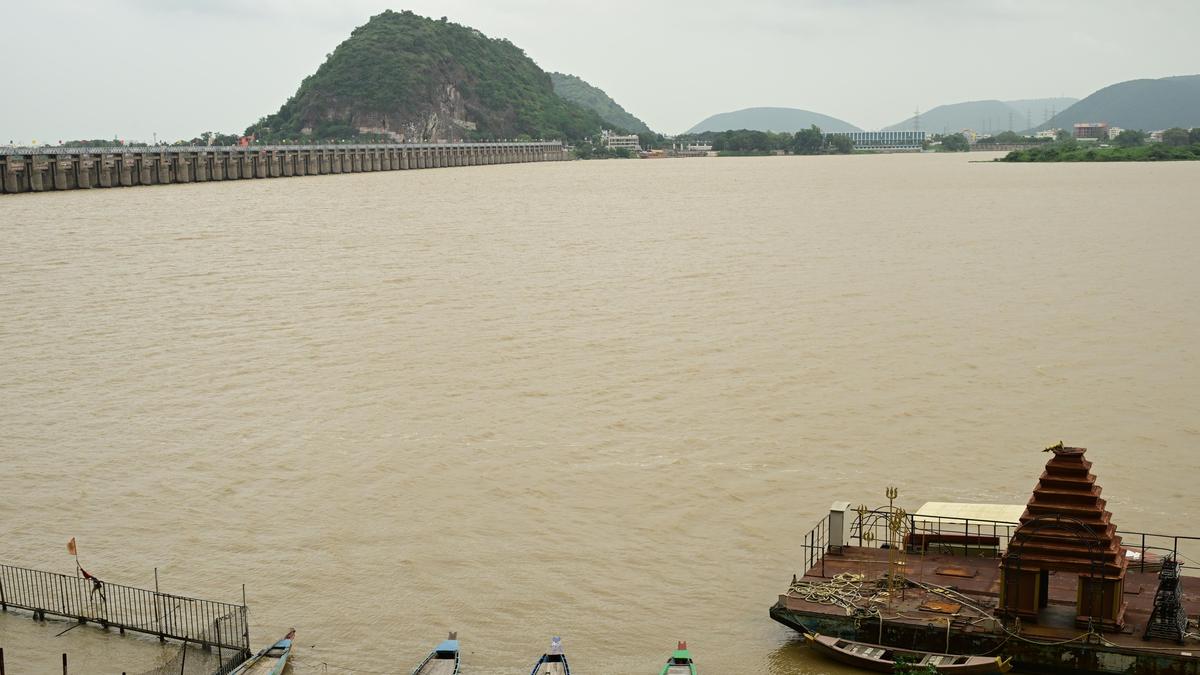
A view of the Krishna river upstream Prakasam Barrage in Vijayawada. | Photo Credit: G.N. RAO Andhra Pradesh’s major reservoirs are yet to reach full capacity, with relatively weaker upstream inflows compared with the previous year slowing the pace of filling.The current storage position, however, has left substantial space in several key reservoirs to absorb further monsoon inflows, even as downstream barrages continue to operate at their prescribed levels to meet the irrigation requirements.Major reservoirs like Sriisailam and Nagarjuna Sagar are maintaining a balance between water storage and flood absorption capacity. While major barrages are operating at their prescribed levels to serve irrigation needs, upstream reservoirs continue to retain significant space to absorb additional monsoon inflows.Weaker upstream inflows compared with the previous year have slowed the filling of several major reservoirs, leaving important flood cushions in the Krishna basin even as barrages downstream continue to feed the State’s extensive delta irrigation network.According to government sources, the Srisailam reservoir currently holds about 157.5 tmc ft of water — nearly 73% of its gross capacity of 215.81 tmc ft. At a water level of 873.7 feet, the reservoir still has more than 58 tmc ft of space available to accommodate additional inflows.Further downstream, Nagarjuna Sagar contains about 182.5 tmc ft against its gross capacity of 312.05 tmc ft, placing it at around 58.5% capacity. Pulichintala, a key balancing reservoir in the Krishna system, holds 28.19 tmc ft, or about 61.6% of its capacity.At the other end of the river system, the Prakasam Barrage in Vijayawada is being maintained at its maximum operational level with a storage of about 3.07 tmc ft. While supplying water to the Krishna Eastern and Western delta canal systems, it is also regulating and passing downstream the continuing run-of-the-river flows.A similar situation prevails in the Godavari basin. The Sir Arthur Cotton Barrage at Dowleswaram is being maintained at its maximum operational pond level, holding about 2.93 tmc ft and ensuring supplies to the Godavari delta, while routing excess inflows towards the sea. The Sileru (Guntawada) reservoir holds 2.86 tmc ft against its total capacity of 4.33 tmc ft.The wider irrigation network, however, still has considerable room to absorb fresh rainfall. Across 65 monitored medium and minor irrigation projects, the cumulative storage stands at 33.23 tmc ft against a total capacity of 91.99 tmc ft — an average filling of just 36.1%. This leaves an aggregate storage space of about 58.75 tmc ft.Although a few projects, including Bhupatipalem, are nearing full capacity, the overall picture suggests that much of Andhra Pradesh’s reservoir network still has room for late-monsoon inflows, while continuing to support irrigation and water requirements. Published - August 28, 2026 07:57 pm IST
Major reservoirs yet to reach full capacity in Andhra Pradesh
Full Article
Original Source
Read the full article at Thehindu →KhanList aggregates and links to publicly available news content. We do not host full articles from third-party sources. Always verify important information with original sources.