
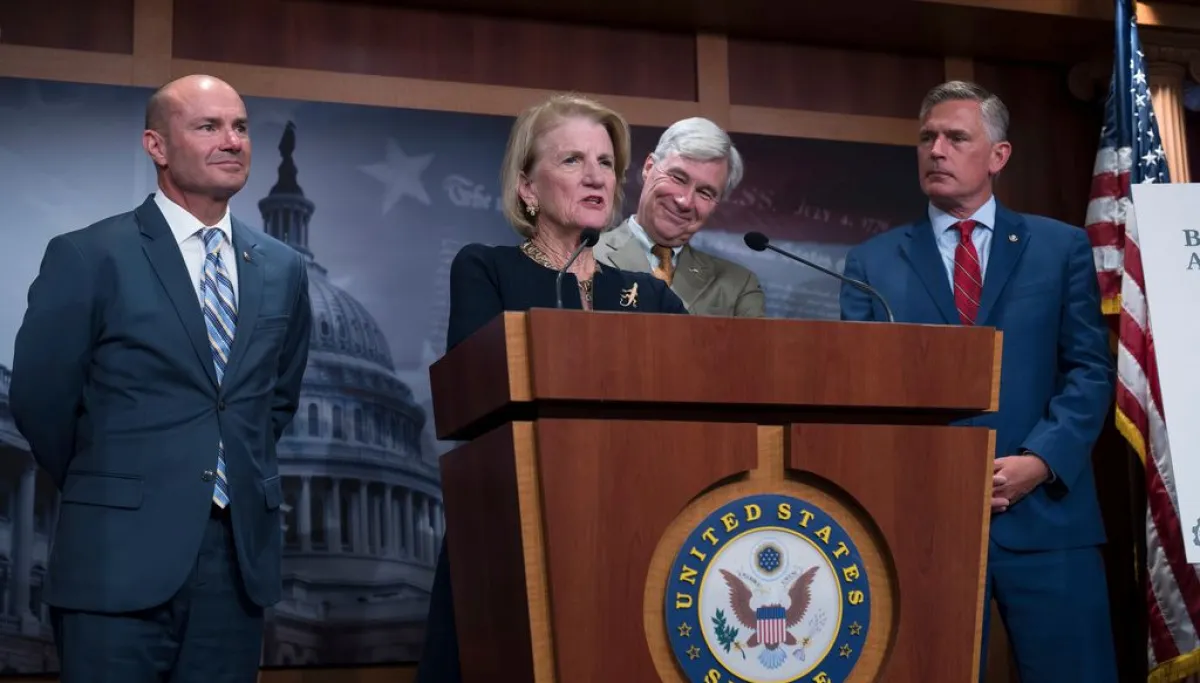
The Senate has cleared a crucial procedural hurdle for passing a bipartisan bill aimed at making it easier to build energy and infrastructure projects across the country.The Senate voted 73-25 Monday evening to invoke cloture on the Bipartisan American Affordability and Jobs Act, which limits debate and sends the nearly 500-page bill toward a final vote.The key negotiators of the bill, Sens. Shelley Moore Capito (R-WV), Mike Lee (R-UT), Sheldon Whitehouse (D-RI), and Martin Heinrich (D-NM), needed to secure 60 votes for the bill to move forward. They exceeded that goal, with 22 Democrats voting in favor. Several members who voted “aye,” though, have not committed to voting for final passage. Only one Republican, Sen. Mike Rounds (R-SD), voted against. Ahead of the vote, advocates of the bill said at least 15 to 20 Democrats are needed to back the bill in order to whip votes in the House.Better known as BAAJA, the legislation has the support of dozens of clean energy and manufacturing associations, more than 300 solar and storage companies, oil companies, utility firms, some climate change groups, and lawmakers across the aisle.If passed, the bill would be a major overhaul of permitting for federal projects, including but not limited to highways, pipelines, and power lines. It would arguably be the most significant bill, in terms of its economic impact, signed by President Donald Trump during his second term.While the test vote indicates the bill is on its way to Trump’s desk, it faces an uphill battle in the House, as many Democrats wish to push permitting discussions to the next Congress, when they hold the majority in both chambers.However, advocates of the bill say that Democrats won’t be able to strike a better deal that Trump would still be willing to sign.The current bipartisan deal would streamline the federal permitting process through a number of avenues, including reforming the National Environmental Policy Act, a 55-year-old law that requires federal agencies to evaluate the environmental effects of major actions and decisions relevant to their departments, such as issuing permits and licenses for large projects.The bill would also reform other bedrock environmental laws, such as the Clean Water Act, the National Historic Preservation Act, and the Endangered Species Act.Broadly, the legislation would shorten the window for lawsuits challenging environmental reviews for new projects. It also includes measures to accelerate the build-out of transmission infrastructure.One provision sought by Democrats would make it more difficult for the president to revoke project permits, which is a priority because Trump has halted the construction of renewable energy sources.The bill would also prevent data centers from passing along their electricity and energy costs to consumers.Key negotiators in the Senate released an updated version of the bill over the weekend, using a process called a manager’s amendment. The amended legislation includes “clarifying, conforming, and technical edits” meant to address several concerns brought forward by environmental groups, tribal communities, and utilities over the last few weeks.These changes include extending the window for objections to certain environmental reviews, giving states a pathway to ask the federal regulators to investigate local utility projects, preserving collective bargaining agreements for employees at power marketing administrations, and creating a new data center community assistance program within the Department of Energy.The manager’s amendment also addresses concerns regarding the permit certainty provisions, as critics claimed the legislation would make it difficult to walk back permits of projects that might have a worse environmental impact than previously thought.Some of the most prominent changes were made to provisions regarding the National Historic Preservation Act, which were widely criticized by tribal groups. Specifically, the amendment version cuts a measure that would let the secretary of the Interior assume responsibilities of a tribal historic preservation officer in some cases, and strikes a controversial definition of “property of traditional religious or cultural importance.”It would also require more consultation with tribes and native organizations, and require the Interior Department to provide Tribal Historic Preservation Offices with technical assistance, training, and support.Heinrich told reporters ahead of the vote on Monday that changes to the legislation would also give tribes an equal seat with states regarding transmission planning and would require federal agencies to consult with tribes early on projects that affect important cultural sites.The changes to the bill, broadly, did not cause any of the more prominent environmental and climate organizations to drop their opposition. Many, including the Sierra Club, the League of Conservation Voters and The Wilderness Society, redoubled their criticisms and pressed lawmakers not to rush to pass the bill.National Tribal and Preservation Associations also remain largely opposed to BAAJA. The filmmaker and activist Julian Brave Noisecat, though, described the amendment as a “real effort at compromise.”He specifically pointed to a change that would exclude records that tribes share with states and the federal government from the Freedom of Information Act “to keep sensitive sacred sites from exposure.”“That sort of in-the-weeds detail—a nod to tribal data sovereignty—tells me that there’s real effort here to try to honor tribal consultation,” he said.The amendment also prompted an endorsement from the Edison Electric Institute, which represents utility companies across the U.S. This is a significant show of support as major utilities lobbied against a similar permitting reform proposal led by then-Sen. Joe Manchin (I-W.V.) and Sen. John Barrasso (R-WY).The legislation has the backing of Trump, whose endorsement has been considered crucial in Washington to secure enough Republican votes.On the eve of the procedural vote, Trump released a statement of support for BAAJA, calling the bill a “BIG WIN for U.S. ENERGY INDEPENDENCE AND DOMINANCE.”The president said the bill would codify his administration’s “America First” energy agenda and speed up the construction of pipelines, mines, and power plants. He also said it would ensure data centers would build and pay for their own electricity and invest in local communities.Trump’s comments are the first sign directly from the Oval Office that he would be willing to support legislation that would allow for accelerated deployment of renewable energy resources.HERE’S WHAT’S IN THE BIPARTISAN MEGABILL MEANT TO ALLOW THE US TO BUILD AGAINDemocrats have been wary of backing the bipartisan bill for fear that the president would not fairly implement the reforms for wind and solar power.The Trump administration has attempted to assuage these concerns by advancing wind project reviews under the Department of War. While this could be viewed as a sign of good faith, many wind proponents have been quick to point out that the Pentagon was court-ordered to move forward on the reviews earlier this year, after stalling for months.However, just minutes before Monday’s vote on BAAJA, Trump said he would not approve any wind farms, calling the projects “losers.”
Major bill to cut red tape for energy projects clears Senate hurdle
Full Article
Original Source
Read the full article at Washingtonexaminer →KhanList aggregates and links to publicly available news content. We do not host full articles from third-party sources. Always verify important information with original sources.