
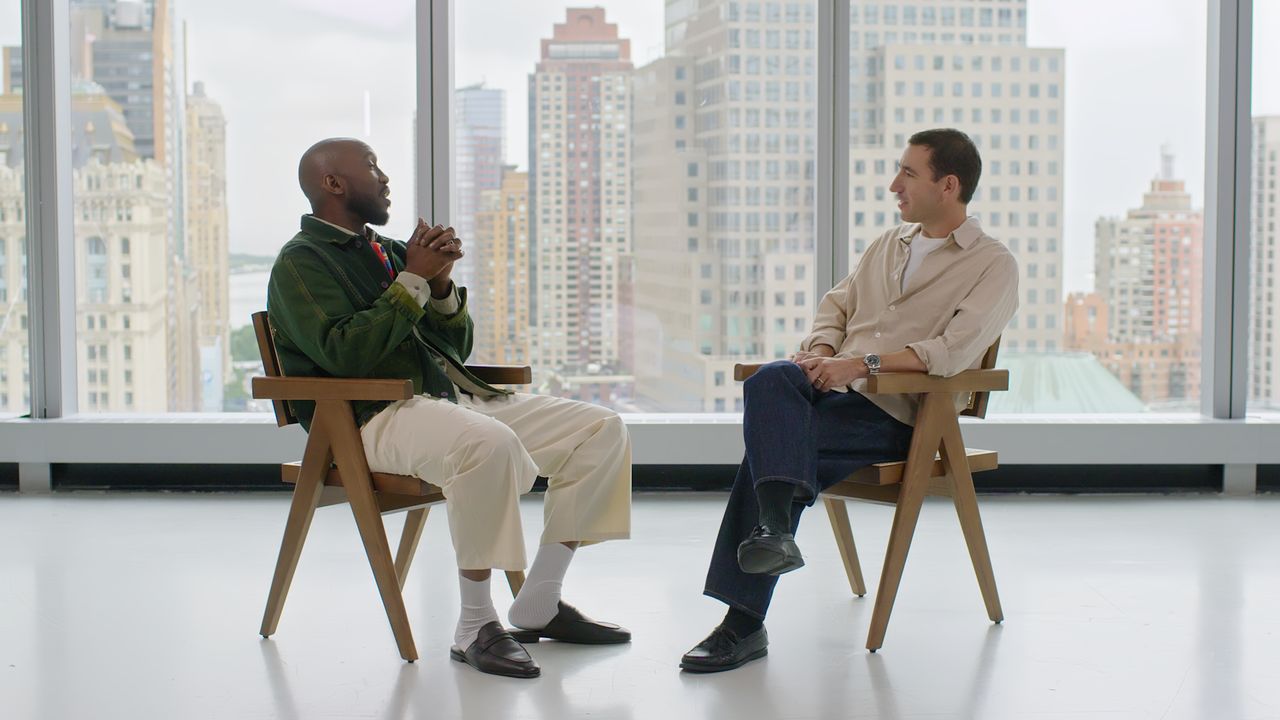
Very few actors have experienced what Mahershala Ali has experienced. Ali had been working steadily but not happily in Hollywood for nearly 16 years when he was cast in a supporting part in Barry Jenkins’s 2016 film Moonlight. Suddenly, at age 43, Ali had won his first Academy Award. Two years later, he won his second, for a supporting part in Green Book. There are only five living actors with more acting Oscars than Ali.Since then, Ali has had memorable parts—including in Swan Song and Leave the World Behind—but fewer than he might have expected. “You’re constantly having to reintroduce yourself to people that you feel like technically you should be known by,” he says in our conversation. Part of this he attributes to the vagaries of a fickle industry. Part of it he attributes to Blade, the much talked-about Marvel film, which was to be directed by Bassam Tariq, that Ali was loudly cast in and which was never actually made.His newest film, Your Mother Your Mother Your Mother, is directed by Tariq, and Ali uses many of the skills he learned for Blade in the part, but it is otherwise the opposite of a Marvel movie: it is deeply original in its conceit (about a grieving assassin trying to care for his children after the death of his wife) and tone, which veers from melodrama to comedy to action and back again.Ali and I first met in 2016, when I interviewed him for this magazine. He stood out then — and stands out now — as an exceptionally honest, decent person. As a journalist, you’re not really supposed to root for the people you write about or interview. But I root for Mahershala Ali.The following conversation is lightly edited and condensed from the latest episode of One More Question with Zach Baron. Watch below or on YouTube. Listen on Spotify or Apple Podcasts.We have met once or twice before.Little history.In 2016, I interviewed you for GQ. I think it was a week after Moonlight came out. We were in Venice. What I recall is that life was still so relatively quiet for you. What do you remember about that time?It was like the first trimester of almost giving birth to yourself. I kind of knew what we had. Everyone felt like we had done something special. And so, starting to experience people experiencing it was really beautiful because it felt like you had this secret that was starting to be shared. And someone like myself, I wasn’t new to the business. My first movie was Curious Case of Benjamin Button, which I had shot 10 years before prior to that. But I think that there was so much energy on my end and anticipation because I kind of felt like, finally, I was in something, and a part of something, where everything felt like it was going to align. And that essentially happened.I saw you later that fall, and it felt like every time I saw you, you were slightly more tired and slightly more dazed. I thought: I’m watching someone’s life change in real time.Probably slightly thinner. I wasn’t eating. And I had a baby on the way. My daughter was born four days before the award. So yeah, there was a lot happening. I think it was definitely changing for the better, but I think that type of change challenges everything and everyone around you. It’s a funny thing because people will say, “Oh, don’t change.” To anyone who has some sort of huge experience, there’s this expectation for you not to change. But when you realize very quickly that everything around you changes. So it’d almost be like if you’re living life in winter and then suddenly it’s 90 degrees outside. If you don’t take that peacoat or parka off, you actually will look crazy. You will feel crazy and be crazy as a result of not changing. So you might need to know what to let go of or what to put on so that you can actually be sane in the environment, because you are not permitted to continue to approach things the way that you approached things before, because the world around you is different. I’m still adjusting and adapting to things as a result of how different my life became.You had been acting like 16 years at that point already. And I think you compared the wait for recognition and opportunity to holding a sneeze in. What was that feeling like and when did you let it go?That’s a really good question. I think in some ways I’m probably just now starting to let certain things go, because there are ways in which I think I’ve begun to let go of my expectations of the world and the business. It’s like you’re fighting with people to see you how you see yourself. And even when they start doing that, you realize they still don’t get it. And you’re constantly trying to explain yourself to people or explain your taste or explain your instincts. And people are hiring you for your instincts, but then not respecting your instincts. So I feel like there’s been this larger letting go as of late, and giving over more so to the things I can control, and letting go of the things that I can’t control. I have, I think, a lot more clarity around things I want to do, the type of people I want to work with. And so now moving forward, I think my internal GPS just feels like I can locate where I want to go better.You’re a two-time Oscar winner. It’s crazy to hear you feel like the industry doesn’t understand you, or that you get hired and not listened to.It happens. Trust me. Trust me. If you represented me, you’d get sick of hearing me [talk about it] probably. I don’t want get too negative, but it’s a very frustrating experience. You’ve got to realize too, there’s a lot of turnover in these spaces. And there’s people that come from spaces that are not necessarily creative that end up with the power to make or break projects. And these companies are constantly being bought up all the time. So everything’s changing all the time. And so I think you’re constantly having to reintroduce yourself to people that you feel like technically you should be known by, or there should be some sort of natural reciprocity or give and take. And I don’t know why I constantly feel like I have to remind people of stuff or prove myself to people, but that’s just how this business works. And it exhausts me. And so then you start thinking about: How long do I have to do this this way, or do it at all?Really?Yeah, for sure. And so for me, then it goes more to like: Where’s the happy place? It’s doing great work or being around people where there’s the potential to do great work and just really getting back to story. But it’s hard to remind yourself of that. Because I think on some level, the more success I’ve had, the more protective I’ve been and want to be very conscious around the choices I make and what I lend my energies to.I had to check this two or three times, but Your Mother Your Mother Your Mother is only your second or third leading performance.It’s like, two.Two, right. After Swan Song. How is that possible?That’s what I’m saying! I don’t know. But I don’t lose too much sleep over it. I feel taken care of. And I feel like I’m the type of person where if you get it, you get it. If you get me, you get me. And I think we’ll probably have a great time working together if the respect is mutual. When I feel supported and seen, I definitely do my best work. And I feel like my energy always comes ready to try to uplift, improve the story, elevate the character. I approach something not to meet it where it’s at. I always approach it going, “Can I improve it?” That’s always my goal. I’m conscious and I’m specific about the things I do, the folks I want to work with. I don’t think anything’s going to change that. If anything, at times when I’ve kind of relaxed on that, those are the things that quietly I feel like have proven to kind of bite me in the ass a bit. And I’m not mad at that either because: Alright, good to know. I’ve been working 26 years now, but because of the experiences that I’ve had up until this point professionally, there’s a part of me that feels newly formed. There’s a part of me that feels like: Oh, okay, I get it now. I think I have calluses in the right places now. I’m not taking this stuff as personally. But that’s recent. I don’t want to speak like I’ve had this figured out. It’s very difficult as an actor because you can’t be good at your job unless you are deeply empathetic. But then there’s something in the world and in this business that tells you to shut that off when you’re not on screen.Really?Yeah. And we could get into that. But my real point is that you have to do that on camera, but not everyone wants that to be in other parts of your life per se. So what I’m trying to say is that you can’t train yourself to be, or maybe you’re naturally an empathetic person and you find yourself as an artist or an actor, and then suddenly you turn that off when you’re not technically working. I feel sensitive in life. It’s a weird business. So that’s been more of the challenge for me over the course of, especially the last 10 years, is to be able to differentiate, protect my empathy and my sensitivities from some of the business experiences that really don’t care about your feelings. Does that make sense?You’re an astronaut. You win an Academy Award for Moonlight and then then two years later, you win another one for Green Book. What are you walking around feeling and thinking in the days and weeks after that happened?Oh man. It’s strange to admit, but I kind of felt like a bit of—I was having this golden-boy experience after Moonlight. And the tough lesson I learned very quickly after Green Book is that there can be an equal energy to sort of like, not even undercut, but to really question and pick one apart.What do you mean by that?I think because of certain controversies around that film. I mean, they still write articles bashing that film. To be honest, there’s still people who got stuff to say about that film when, I don’t know—I’ve seen some other films that I have something to say about, if we really want to go there talking about Green Book, but that have done very well at the Academy. But I just think that these things are not fresh for people and audiences because it’s kind of what people do. If something comes out, they either love it or hate it or something in between and they pick things apart for various reasons. Sometimes those reasons are super legitimate. And I’m not discounting some of the criticisms around Green Book. But I think for me personally, to be involved in something, being so hyper-conscious throughout my career, I even said no when I couldn’t afford to say no at certain times. Coming up, there were shows that I was offered that technically probably was a good job, but it just didn’t feel like where I was trying to go. And I felt like I knew in 2000 that coming right out of school, One Life to Live wasn’t right for me. You know what I’m saying? But I got a good offer to go do that. And I needed that money. My point is sometimes things can go in a way where you just don’t control that. And so I felt like whatever had kind of happened from the Moonlight of it all, I feel like so much came into question for me after Green Book and a way in which certain people responded to that, that I definitely felt impacted by.And how did you react to that? Did that change the way you made decisions? Did that change the way you thought about your career?I think my nature is a little bit like a cat, where I kind of have to feel spaces out. But then once you’re comfortable in the space, you’re like, okay. And I think I actually grew to feel relatively comfortable. And then I think the response to Green Book from some people that I had admired, it made me uncomfortable in the space. And I was even grateful for that because it was a reminder not to sort of fall asleep and not to believe too much of any of it.Here’s the list of actors who have more acting wins than you, by the way: Katherine Hepburn, Meryl Streep, Jack Nicholson, Ingrid Bergman, Daniel Day Lewis, Francis McDormand, Sean Penn, Walter Brennan. That’s it. It’s five living actors. I don’t even have a question. I just think that’s cool.I think that’s pretty cool.I guess if it were a question, it would be: Do you recognize yourself in that company?I don’t think about myself like that. I feel like I got so much work to do. I don’t know what is for me in the future, but I really do. I feel like I’m discovering so much when I’m working.Okay. I have a question about this too. Here’s the list of films you’ve done since Green Book. That same year you do Spider-Man: Into the Spider-Verse. 2019, Alita: Battle Angel. 2021, Swan Song, 2023, Leave the World Behind. 2025, Jurassic World Rebirth. And now Your Mother, Your Mother, Your Mother. I don’t want to be greedy, but that’s like five films in eight years.It should have been six or seven. Blade didn’t happen, which I felt like definitely impacted how things unfold in your trajectory.So you were saving time for that film?I wasn’t saving—once it was happening, I was working on it. I was doing what I needed to do to prepare myself. It just didn’t happen.Why not?That’s a Kevin Feige question. They had, as you said, a two-time Oscar winning actor under contract and you got billions of dollars. That’s a question for them. I don’t mean anything personal to you, but I don’t know why it didn’t. To this day, I don’t know why it didn’t happen. I just know that it was—Kevin, he said it was the biggest failure of his career and I agree.The quote was, “[I feel] like a giant loser and failure for not getting off the ground with Mahershala.”I agree with him. I agree with him one hundred percent. One hundred percent. He should feel that way. I agree.And so some of that time that we’re talking about is accounted for by Blade?I spent a year training. I trained so hard I blew my knee out. I was just waiting for them. [They were] pushing it back, pushing it back, pushing. I’m still training. I’m training. I’m learning sword work. Name the martial art, I’m training in it. And I literally moved, uprooted my family, moved to Atlanta. We are there waiting to go. And they just keep pushing it back, pushing it back, pushing it. It doesn’t happen. And then it’s a strike.So when it’s five and it’s supposed to be eight, that’s what happened.Listen, I went to them in 2019. That was my first meeting. And we’re at Comic-Con by 2019 in the summer. I didn’t want to make no announcements. I don’t believe in the announcements. You just do the work and then it’s like, Okay, you announce the work is done. But all this anticipatory stuff, I’m not a fan of that at all. But they want to do all that. We did all that and had a story greenlit, and then we don’t have any deliverables. I can’t deliver until they deliver. They never delivered. So that’s not a secret. Otherwise, we’d have a movie.But I will say, to sort of bring it back around to actually more how I’m feeling in the moment, is: I’m actually grateful it didn’t happen because I don’t think we would get this film. I know you wouldn’t get this film with me.Your Mother, Your Mother, Your Mother, which is directed by the director that was originally attached to the Blade project, Bassam Tariq.Right. We wouldn’t get that film. And when I look at the benefits of what I got to do, opposed to what I thought I was supposed to do, I honestly feel—creatively, I feel fulfilled by Your Mother. And I also think what I think the Marvel of it all taught me is—it was kind of the opposite of why I wanted to get off of House of Cards. First of all, I could tell that part wasn’t growing. It almost felt like it was kind of getting smaller. I felt frustrated by that because I felt like, Oh, I wanted to move into this leading-man space that I’d been fighting so hard to get to and dreaming of. But some of it had to do with, at that time, I was living in New York and walking around in Brooklyn and people being like, “Yo, Remy.” Once people knew my character name and could identify me with something, that scared me a bit because I think I really prided myself on at least working to be transformational and working to be different in different things.And so the idea of someone just being able to be like, “Oh, you’re that character”—that made me a little nervous. And then two, I think after the whole Marvel announcement, you realize there’s a lot of people who really don’t really know your work like that, but could go, “Oh, you’re playing Blade,” or, “That’s Blade.” I started getting that before I’d done a day of work on it. And I realized that this sort of almost anticipatory fame felt really unfamiliar to me. And so you almost feel creatively in debt. You want everything to be good. But I had never experienced someone labeling you as a character or feeling like this is what you’re supposed to do, this is what you’re supposed to be able to be, before it even comes out. So I feel like just for my nature, I think the blessing in disguise for me is that it sort of removes me out of that space of being. And there’s only one space where people become that type of famous and it’s in the Marvel world. After things began to sort of undo and I had to start divesting energetically, I felt okay about it because in looking back, I really want to be someone who originates things.This film is the polar opposite of that in every way. It’s completely original. I imagine there were people around you that were like, “It’s a little too original, man. I don’t know.”You know what? Maybe. Maybe. But I would much rather err in that space and to be one of those genre-defying films potentially that, for better or for worse, people just are, “I love that—but,” or, “I just love that,” or, “I hated it.” Cool. But you can’t say it was like anything else. And I think for me, and again, my nature, I lean heavily into that space. And so these for me are, I hope, proving to be really good lessons. And it helped me get clarity on not only the type of projects I want to work on, but the type of directors, executives, studios, the people who have a certain type of passion for storytelling and filmmaking and supporting of talent’s instincts. And especially in a time when they clearly don’t know what people want, because people are not going to the movies like they used to go to.You and I were talking before we started rolling about being parents. I have two kids, you have one. And this isn’t the only thing that the movie’s about, but one of the things that I really liked about it was it was just, like: Being a dad is hard. I wondered if somehow your experiences as a father had fed into your desire to do the film.I think my experiences as a father made me very grateful to get to do this film. It’s a really wonderful responsibility to be tasked with articulating something you’re familiar with. But not knowing all of it—like, I don’t know everything about being a dad. I do the best that I can. I hope my daughter will grow up, God willing, and be like, “I had an amazing dad.” But I don’t know if I’m always doing things right. You do the best you can. And I think Latif, I don’t think he has the grace for himself that I think I’m speaking to for my own self right at this moment, but I think Latif ends up there. I know the tenets of being a father, but getting to step into Latif’s world specifically and be the type of father he has to be is a mystery to me.And so getting to navigate his responsibilities moment to moment and all the stressors and even being a widow, I know pieces of those things. I know grief in my own way. I know fatherhood in my own way. I know being overwhelmed in my own way. I know God in my own way and community in my own way. So all these attributes that can come together, that need to come together and stitch together to play Latif, I’m familiar with. And so that’s the joy in wrestling with a character like that—working day to day to make it all make sense and hopefully be somebody that resonates with you once those credits roll.You’ve been pretty open about your relationship with your father, who was a showbiz guy, too. And I don’t want to mischaracterize it, but it seemed like he more or less chose work over family. I don’t know if that’s a fair way to put it, but he was on Broadway, he worked in New York and you grew up on the West Coast—There’s so much to my dad’s story. I think about somebody who’s like 20 years old when he moves to New York—I feel like he was very much in a space that I mentioned earlier, a moment where you’re sort of giving birth to yourself. You are conscious enough to go, “Oh, this is what I need to be to be able to even be here for other people.” There’s a way in which I think of him, especially the time in which we got to spend together, where I almost think more of him being honest about who he was, what he was pursuing. In some way as his child, it’s like a paying it forward type of thing. I almost feel like I learned more from him being exactly who he needed to be than I would’ve learned from him sort of editing his experience and staying home in the Bay Area.I think the child version of me would’ve loved to have had my dad in proximity. But I can honestly say that I learned so much in the moments that I had with him. And part of that inherently was him being honest about who he was and his pursuits. And I never felt cut out of that. He just wasn’t present, if that makes sense. And again, it may be difficult to understand, but I think what’s most important is that I get it. He and my mom weren’t going to be together regardless anyway. And so in terms of him being who he needed to be, that wasn’t in the Bay Area. I don’t prioritize the quote unquote success and experience that I’m having now over my childhood per se, but I will say that the things that happened had to happen for me to be on my journey towards the fulfillment that I know to be worth seeking. And so I honor his choices in that way.It also makes me very aware of, and conscious and grateful for, the things that my mom and the family around my father did that really supported my upbringing. His mom, my grandparents were extraordinary. There’s no way I’d be talking to you right now without my grandma. Ain’t no way. There’s no way. There’s no way. There’s no way. My mentality, how I look at the world, it’s so much of it. And my mom has played a huge part in my life, but just speaking specifically to the absence of my father, I think my grandmother specifically and her husband, my grandfather, but really my grandmother came in and filled some voids in a way that really helped to shape me. I kind of wouldn’t trade that time with her almost for anything.When you became a father yourself, did that give you a different perspective on your dad?I think it has made me grateful for the iteration of fatherhood that perhaps my daughter is experiencing. And even then I sometimes question: Is it enough? And I’m trying to do the best that I can.Well, it occurred to me that another explanation for not making a ton of movies in the past eight years is that you have a nine-year-old daughter.Yeah. And we really try to stay together as best we can. I’m working on the East Coast and she’s kind of in school for a semester on the East Coast because I’m working. But we’ve been able to sit still for X amount of years where she’s been able to have some consistency. So that’s always something that I’m very cognizant of. And even going to do Jurassic a couple years ago, that meant I was kind of not with them for like five months for the most part, besides a couple of weeks. And that didn’t feel good. It felt hard because we were on the other side of the world just missing each other.I know that feeling.Yeah, you’re trying, but it’s not clicking. But I will also say that I know she sees me trying and she gives me credit for that. I know she does because there’s been times when I was like, “Oh, I’m sorry. I can’t hang out with you right now.” And she’ll have her reaction to that. And I’m having my reaction to it right now. [Ali gets emotional here.] But she’ll have her reaction to that. And I remember saying, “Oh, I’m so sorry. I have to go to work.” And she’s crying and she goes, “Oh, it’s not your fault.” And so part of me is just very grateful that that’s her attitude, at least right now, on it. So I just try to sort of honor her feelings. So that’s the best I can say about getting too choked up. Sorry, I need a second.Don’t apologize. What are you apologizing for?It’s just a little fresh right now. There’s these ways in which kids change. And I think that the way they express love changes along with their language and their capacity. So I just think that as she grows, that’s becoming more — it’s not even adult, it’s just maturing. And so when they can honestly speak to things in a way that can cut deep because they’re just honestly articulating themselves, that’s different from when they’re three and they want something, but once they start getting older and they got that language to really say, “This is how I’m feeling,” you’re just like, “Oh, God.”How involved were you in the kind of development of the film, the making it, the shepherding of it through?Bassam had sent me the script. I got the script in, I want to say December 2024. And I really took my time. It was like a month before he heard, maybe even longer, honestly. We probably were talking some things through. But the script [was] probably 85, 90 percent of what you see now. I think if anything, I might have impacted the development once he knew that he had me. You could lean in and go, “Okay, it’s really for Mahershala.” But he would tell you that when he started writing it, he just put my name in it.You’re clearly using Blade training in it, too.Thank God, because we didn’t have any time. So it’s like I got to use all that training because literally we didn’t have time or the money. I hadn’t trained for a year, but when I did get to tap back in with some people locally back in LA, it was like: This is all ready to go. And so that was a huge help. So it wasn’t all a waste.I had a conversation earlier this year with the actor, Robert Pattinson, and he was talking about how he thought you hit this certain level of success and there’s a magic door that opens. And behind that door is all the good projects and opportunities. And he’s like, “And then I got there and I opened the door and there was nothing behind it.” Has that been your experience too?There’s been two projects—no, I’m going to be honest. I’ve only had one project in seven years that has been a no-brainer, and I haven’t got to do that one yet. I said yes to that one. And we’re really working to do that as soon as I can. But one thing me and my manager kind of joke about is I’m just waiting for the, like, “Oh, you got to do this one. This is a no-brainer.” Your Mother Your Mother Your Mother wasn’t that. He was like, “I’m not sure, but I really like this. What do you think?” Because you could imagine what you see on screen—imagine just reading that and going like, “How’s all this going to fit together?” Because that was my major question: This feels like a lot of different movies. And so I was curious about how he’s going to stitch together these genres to make them feel cohesive. And he was able to do that in a wonderful way. So that’s why I would say this is not a no-brainer because I wasn’t sure as to how that was going to really fit together. But going back to Robert’s statement, I one hundred percent agree because there’s no projects that I’ve gotten that have been like, “I got to do this.” You know what I’m saying? It’s more of like, “Well, maybe we can kind of fudge this and make this work,” or “Let’s get it going in conversation…” kind of thing.Pattinson’s point was, what you find is that you do movies like Your Mother and just make your own path.That’s where the clarity is. But I thought, especially after winning two, and, especially because they’re both for supporting, I was like, “It’s going to break now.” But I’m asking to be the lead on True Detective. It wasn’t, “Oh, here you go.” You know what I’m saying? But I think there’s part of me that knows all that now. So I don’t feel any bitterness or disappointment around that. I want to be careful of it coming off that way because it’s honestly not how I feel. If anything, there’s sort of a relief in the epiphany of like, “Oh, ain’t nobody coming to save you. You got to build your boat. They’re not coming. There’s no helicopter coming. Get to cutting wood.” You realize that the best you can do is use those materials around you to make your way out. And so I think if anything, there might be a couple of more nails and hammers around. And I go, “Oh, okay. All right. Let’s put this vision to work and start trying to make something.”The golden ticket wasn’t ultimately a golden ticket. It was two cool statues.Very cool statues.Two extremely cool statues.Shiny. But you got to keep going. You got to keep doing work. And that’s just what it is.
Mahershala Ali: ‘It’s Like You’re Fighting With People To See You How You See Yourself’
Full Article
Original Source
Read the full article at Gq →KhanList aggregates and links to publicly available news content. We do not host full articles from third-party sources. Always verify important information with original sources.