
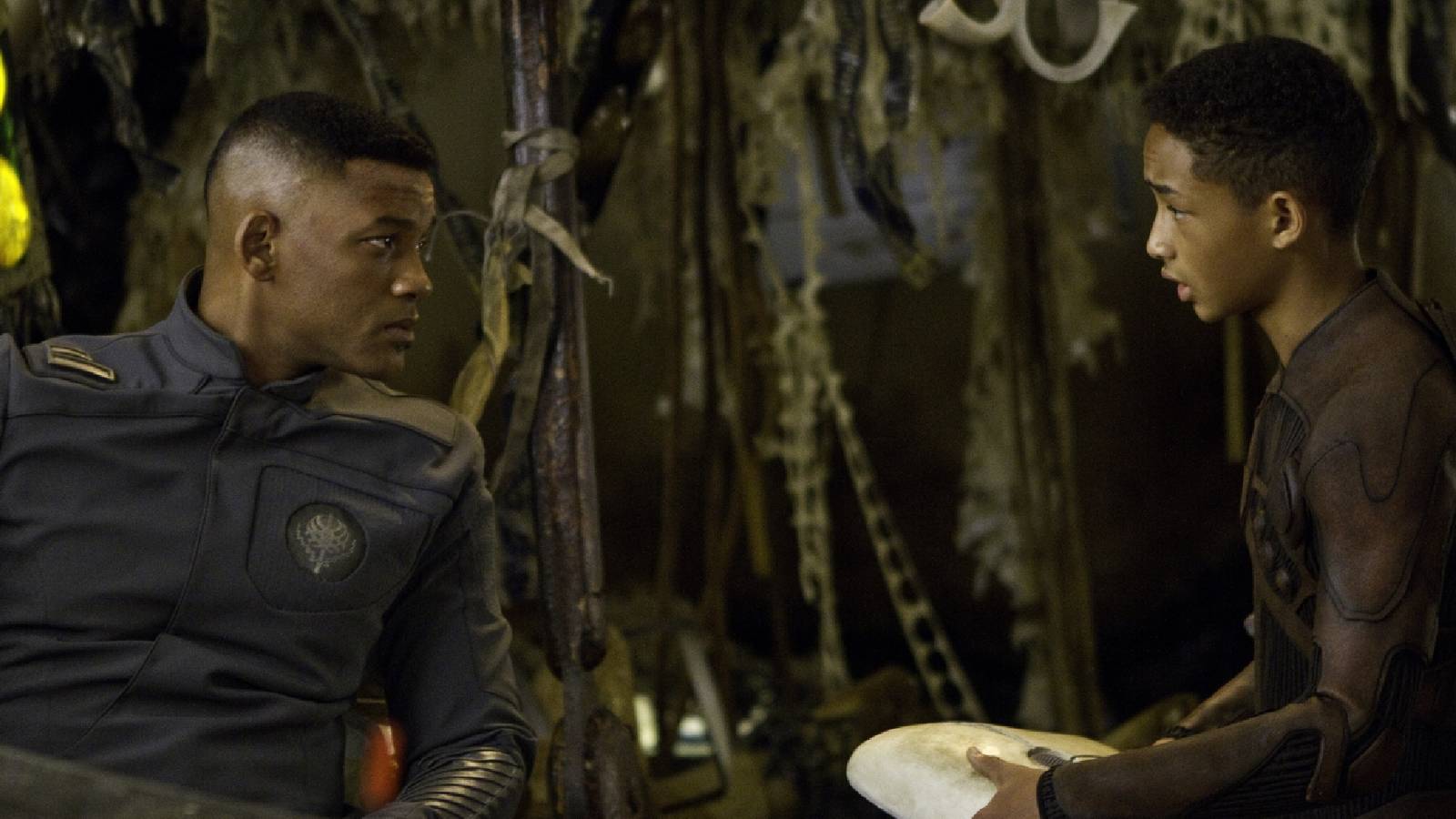
Published Sep 29, 2026, 12:05 AM EDT Anthony Crislip has always loved movies and television, and has been published in outlets such as SlashFilm and Ultimate Classic Rock. While working as a film programmer or judge at a film festival, he has striven to develop interest in underseen films. He is a particular fan of digging deep into forgotten corners of film history. With his 2013 film After Earth, M. Night Shyamalan was a director working miles outside of his strengths. Shyamalan’s best work up to that point (and even after) tended to be small-scale and intimate, with light supernatural touches deepening and complicating the characters’ journeys, as well as thrilling camerawork that evoked the best of Alfred Hitchcock and Steven Spielberg. The more fantastical his movies got, the more his storytelling weaknesses and crutches became insurmountable, and no amount of inventive filmmaking could get viewers to overlook it. By 2013, he had made so many movies in that mode that his reputation — kickstarted by the world-shifting success of 1999’s The Sixth Sense — had suffered, leaving him with one option: a junky, post-apocalyptic sci-fi movie with Will Smith. The movie was a bizarre vehicle for Smith and his son Jaden Smith, playing a father and son duo once again following the schmaltzy rags-to-riches classic The Pursuit of Happyness. Focused on two humans millennia in the future who have crash-landed on an abandoned planet Earth, After Earth is an ironic inversion on Smith’s breakthrough roles in Men in Black and Independence Day — this time, he’s the alien, and Earth is deeply unwelcoming. Smith famously conceived the story himself, according to The Wrap, developing the conceit of a father and son on a camping trip gone awry, with the son having to push himself to the limit to save both himself and his distant, dying father. The sci-fi angle came soon after, and Shyamalan was hired by Smith shortly after the release of his 2010 film The Last Airbender. Despite Its Blockbuster Trappings, 'After Earth' Is Still a Shyamalan Movie Image via Columbia Pictures After Earth opens with rapid-fire (and inexplicably accented) narration from Kitai (Jaden Smith), explaining the basic details: humanity destroyed Earth through a variety of climate disasters, fled to a colony called Nova Prime, and are under constant attack by alien creatures called Ursas, who can smell humans by their fear. Cypher (Will Smith) has no fear, which has given him an intimidating reputation. While Shyamalan has been critically knocked for his awkward, monotone direction of actors before, the collaboration with Will Smith here is especially galling, taking one of the most charismatic movie stars of the 1990s (as well as the co-lead of one of its most fun movies) and turning him into an unfeeling military man. And yet, After Earth carries on a Shyamalan tradition, following the tense relationship between estranged fathers and children, with unspoken pain slowly revealed over the course of the movie. In that way, at least, After Earth feels like it’s of a piece with other Shyamalan movies like Signs and Unbreakable. Those movies had a sense of tonal mastery, where Shyamalan’s filmmaking sensibilities helped to tell the story. The uncomfortable compositions, deep focus, and minimal coverage created unnerving impressions that ultimately led to a cathartic moment of connection between the characters. Shyamalan’s emotional gambit doesn’t always work, but when it does, the payoff is incredible. After Earth attempts to strike a similar note, slowly weaving in the earlier death of Kitai’s sister Senshi (Zoe Kravitz) to develop his present-day story of self-actualization. Convinced his legendary father sees him as a failure, he’s tested again and again after the two have crashed on Earth. 'After Earth' Suffered From Shyamalan's Flailing Reputation Following the crash, Cypher and Kitai are the lone survivors of their voyage (along with a live Ursa brought along for training purposes that will inevitably show up in the climax). With Cypher injured and the ship’s distress beacon broken, Kitai must leave the ship on his own, traversing a post-human Earth in an adventure story that is not exactly the most thrilling or emotional of Shyamalan’s career. But his skill at creating unnerving moments is still unparalleled, even operating on a bigger studio template. The ship crash itself focuses largely on Kitai’s experience, which means it’s more about a child’s brush with death than overwhelming CGI spectacle. Because of Shyamalan’s focus on Kitai’s perspective, the movie is ultimately much more effective than something like 2023’s 65. While that doesn’t make it one of Shyamalan’s greatest films, it is still better than its 12% Rotten Tomatoes score would suggest. The movie’s biggest problem is the timing of its release. Coming after three fairly high-profile flops in a row — Lady in the Water, The Happening, and The Last Airbender — After Earth suggested a filmmaker who had totally lost his sense of his own skill set. The Last Airbender especially showed Shyamalan working on the biggest canvas of his career, making a fantasy epic based on the classic Nickelodeon show that had none of the charm or adventure of its source material. But because After Earth works comfortably within Shyamalan’s thematic concerns, it holds up much better. He would rebound shortly after this film’s failure with a run of independently produced thrillers that marked a new renaissance, from The Visit onward.
M. Night Shyamalan’s Major Sci-Fi Action Flop Deserves a Second Look on Streaming
Full Article
Original Source
Read the full article at Collider →KhanList aggregates and links to publicly available news content. We do not host full articles from third-party sources. Always verify important information with original sources.