
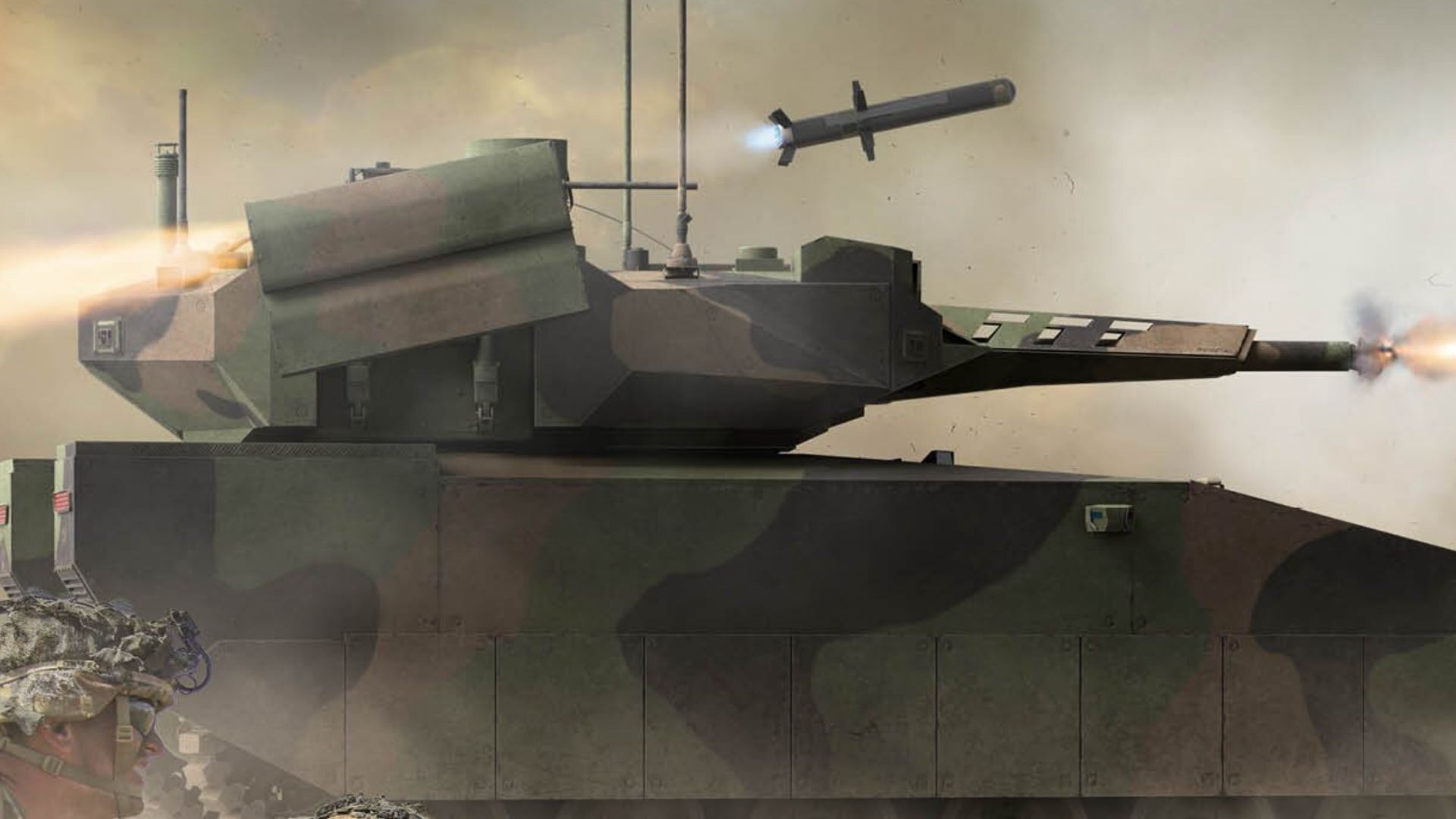
American Rheinmetall has delivered the first of eight Lynx XM30 combat vehicle prototypes to the U.S. Army, marking a major step in the service’s effort to replace the aging M2 Bradley Fighting Vehicle with a more digitally connected and adaptable platform. The prototype will now enter government-led developmental and performance testing under the program’s Phase 3/4 Engineering and Manufacturing Development contract, valued at approximately $764 million. The contract covers digital design, physical prototyping, and full-system validation, while the remaining seven vehicles are expected to be delivered later this year for operational training and field exercises. The initial prototype will be evaluated as part of the Army’s broader XM30 program, which is focused on developing a modern infantry fighting vehicle capable of operating in increasingly complex battlefield environments. “Delivering our first prototype to the Army is an important step as the XM30 Combat Vehicle program enters a more visible phase,” said Matt Warnick, CEO of American Rheinmetall. “Team Lynx now has the opportunity to show the Army that we can deliver on the promise of a modern replacement for the Bradley,” he added. The remaining seven prototypes will support operational unit training under the Army’s Transformation in Contact 2.0 initiative. It is designed to accelerate the testing and fielding of emerging military technologies by placing them directly with operational and training units. Once the vehicles complete initial military safety checks, soldiers are expected to begin field maneuvers and training exercises. That phase will eventually culminate in larger combat simulations intended to assess how the prototypes perform under more realistic battlefield conditions. Multi-state production supports prototype rollout American Rheinmetall is using a multi-state manufacturing process to build and prepare the vehicles for Army evaluation. Turret fabrication begins in Plymouth, Michigan, before subsystems move to Slidell, Louisiana, where the hull and chassis are integrated. The completed vehicles then undergo automotive shakeout testing to check mechanical readiness before returning to Louisiana for final paint and detailing. Before official government acceptance, the vehicles also undergo joint inspections with the Defense Contract Management Agency. The production model allows separate facilities to handle different stages of the build process while maintaining a coordinated flow from fabrication to final inspection. Hybrid-electric platform targets future battlefields The Lynx XM30 has been designed for combat environments increasingly shaped by drones, precision weapons, electronic warfare, and networked systems. One of its key features is a hybrid-electric powertrain, which is intended to improve power generation and battlefield mobility while supporting the electrical demands of modern onboard systems. The vehicle also incorporates a modular design and adaptive open architecture, allowing new sensors, weapons, software, and other technologies to be integrated over time without requiring a complete redesign of the platform. American Rheinmetall leads Team Lynx as the prime contractor, with Textron Systems, Raytheon, L3Harris Technologies, Allison Transmission, and Anduril Industries contributing specialized capabilities to the program. The Army’s testing of the eight prototypes will now help determine how well the Lynx XM30 can meet operational requirements as the service moves closer to selecting a successor to the Bradley.Get the latest in engineering, tech, space & science - delivered daily to your inbox.Atharva is a full-time content writer with a post-graduate degree in media & amp; entertainment and a graduate degree in electronics & telecommunications. He has written in the sports and technology domains respectively. In his leisure time, Atharva loves learning about digital marketing and watching soccer matches. His main goal behind joining Interesting Engineering is to learn more about how the recent technological advancements are helping human beings on both societal and individual levels in their daily lives.
Lynx XM30: US Army tests hybrid-electric combat vehicle to replace aging Bradley vehicle
Full Article
Original Source
Read the full article at Interestingengineering →KhanList aggregates and links to publicly available news content. We do not host full articles from third-party sources. Always verify important information with original sources.