
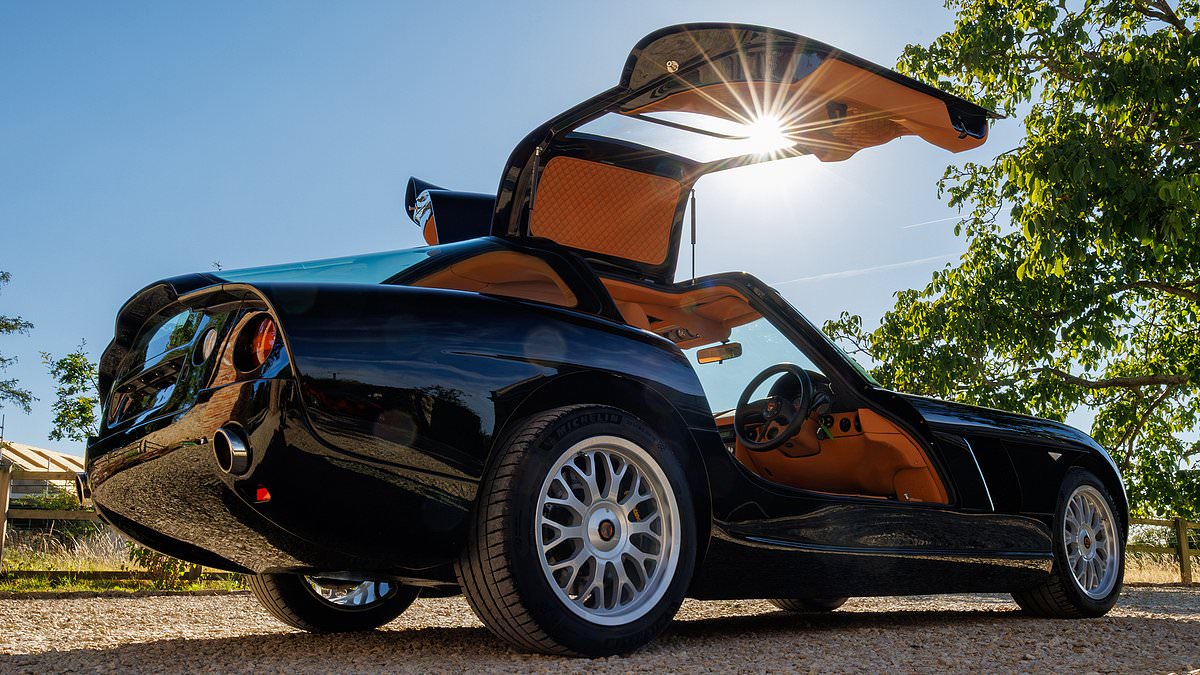
Luxury coachbuilder Bristol Cars is plotting a dramatic return to the market, marking its comeback by completing a sports car project that was abandoned when the company went into administration more than a decade ago.The post-war British manufacturer will return in time for its 80th anniversary year by producing five Fighter models, the gullwing-doored luxury GT powered by a mighty V10 engine.Originally launched in 2004, the two-seater used a naturally aspirated Dodge Viper-sourced V10 producing a staggering 600bhp.However, after Bristol ran into financial difficulties, only 13 examples of the 210mph supercar were delivered before the company entered administration in 2011.Now under new ownership and with the support of an unnamed UK manufacturer, Bristol Cars will increase that total to 18 by completing five original chassis left over from the initial production run.Each car will be built to its original specification using drawings dating back more than 20 years.And this is just the beginning of Bristol's revival, with the coachbuilder promising to once again create 'exceptional cars in small numbers for people who appreciated their individuality, engineering and character'. Bristol is back! The post-war coachbuilder is making its long-awaited return. But first, it's completing an unfinished supercar project from 20 years ago Five new examples of the 2000s Bristol Fighter are being produced using original chassis and built to the same specification, linking the brand's past to its future The marque is being 'brought back to life' by Bristol Cars owner and director Paul King, who says the 'first manifestation' of its rejuvenation is the completion of the Fighter programme.One of the cars has already been completed and made its debut at the prestigious Salon Privé event at Blenheim Palace today.The first 'new-era' Fighter is finished in bold black paintwork with a tan leather interior, while four chassis remain available to be built to customers' preferred specifications.Originally conceived in the early 2000s, the Fighter was Bristol's final production model before manufacturing ceased in 2011.An uncompromising two-seat supercar with dramatic aerodynamic bodywork, its design was heavily influenced by Bristol's aviation roots, with every element engineered with obsessive attention to detail and function rather than mere showmanship.The five cars will not be sold as traditional continuation models bearing new '76' registrations.Instead, they will be approved through the Individual Vehicle Approval process and wear period-correct 2008 registration plates, reflecting the year they were originally intended to be produced. The Bristol Fighter is a gullwing-doored luxury GT conceived in the early 2000s, though very few examples were built A Bristol Fighter T pictured in 2006 before the company plunged into administration. This is one of just 13 registered examples The original, launched in 2004, combined a naturally aspirated V10 engine with a sleek, lightweight body and a claimed 210mph top speed The powerplant is a ten-cylinder unit sourced from the Dodge Viper and tuned to produce a staggering 600bhp The brand's new owners said completing the unfinished programme will 'reconnect Bristol Cars with a tangible part of its history and establish the first chapter in the marque's return'.The four remaining Fighters will be offered for sale in the coming months, each hand-built around an original unused chassis.Described as 'unmistakably English', the cars are said to remain true to Bristol's traditions of luxury, individuality and exclusivity, ranking among the rarest modern British performance cars available.While pricing is strictly available on application, the Fighter carried a price tag of around £230,000 when it was first offered two decades ago. Higher-performance Fighter S versions were priced between £250,000 and £300,000 depending on specification.King has also recruited Richard Hackett, who advised former Bristol boss Tony Crook during the 2000s, to serve as chairman and help create a direct link between Bristol's past and future. The brand is being 'brought back to life' by Bristol Cars owner and director Paul King, who says the 'first manifestation' of its rejuvenation is completing the Fighter programme The four remaining Fighters will be offered for sale in the coming months, each artisan-built around an original unused chassis This is just the beginning of Bristol's comeback story, according to its new owner The first 'new-era' Fighter is finished in bold black paintwork with a tan interior and debuted at the prestigious Salon Privé event at Blenheim Palace on Wednesday 'Bringing Bristol Cars back is about far more than reviving a name; it is about restoring the spirit of a marque that has always stood apart,' King said on Wednesday.'Bristol has a remarkable story, from its roots in aviation and engineering to the extraordinary and exclusive cars it crafted.'We want to honour that heritage while giving Bristol a future that is every bit as distinctive.'By bringing Bristol back to building cars in Britain, and with Richard Hackett returning to the company, we have assembled an exceptional combination of heritage, knowledge, engineering and craftsmanship.'He added: 'This is the beginning of Bristol's return, and there is much more to come.'Hackett said his return to the business represents an 'opportunity to respect everything that made Bristol special' while helping drive the brand into the future.'Bristol has always been about doing things differently. It was never a mass-market manufacturer. It built exceptional cars in small numbers for people who appreciated their individuality, engineering and character.' Bristol's roots are in aviation, though the car maker itself was founded in 1945 at the end of the Second World War The Bristol 400 of 1946 (pictured), alongside the Jaguar XK120, became one of the defining British sports cars of its era Bristol Cars: A brief history lessonFounded in 1945 as a spin-off from the Bristol Aeroplane Company, Bristol completed its first model, the Bristol 400, in 1946.From the outset, the company forged its own path, drawing on its aviation heritage to create cars that combined advanced engineering with British luxury, performance and individuality.Over subsequent decades, Bristol became renowned for producing highly distinctive cars in very limited numbers for a loyal clientele. Former Bristol Cars boss Tony Crook pictured in 1999 alongside a model of the Fighter Bristol Cars entered administration in 2011. Dozens of the manufacturer's styling bucks, large models used to develop bodywork, are pictured at its factory Kamkorp Autokraft Ltd acquired the company's intellectual property and goodwill in 2011 and subsequently licensed them to Bristol Cars Bristol's previous era came to an end in 2011 when the company entered administration.Kamkorp Autokraft Ltd subsequently acquired the marque's intellectual property and goodwill before licensing them to Bristol Cars.The firm unveiled the Bristol Bullet in 2016, although the project never progressed into series production.Kamkorp Autokraft continued until 2022, and it is against this backdrop that Bristol's latest revival begins, not by overlooking the gaps in its history, but by returning to an authentic unfinished chapter and completing what was left behind. CARS & MOTORING: ON TEST
Luxury post-war British coachbuilder Bristol Cars is back - and its first job is completing an unfinished supercar project
Full Article
Original Source
Read the full article at Dailymail →KhanList aggregates and links to publicly available news content. We do not host full articles from third-party sources. Always verify important information with original sources.