
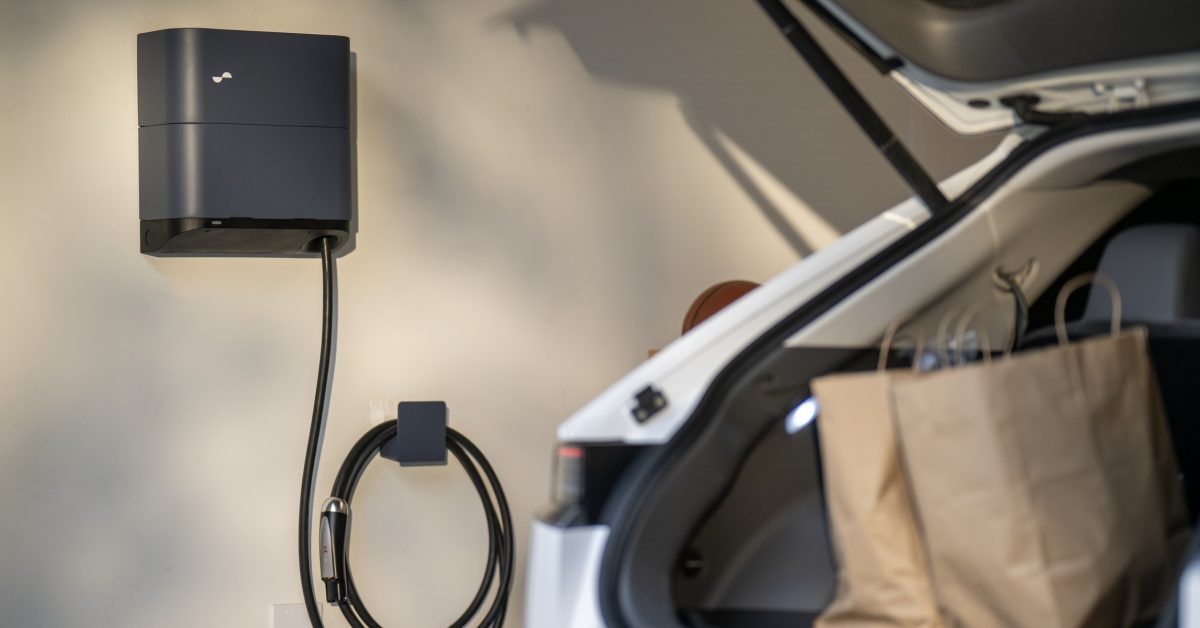
Photo: Lunar Energy Lunar Energy has unveiled a 25-kW home DC fast charger that will do more than just power up your car really fast. Paired with its next-generation home battery system, the Lunar Fast Charger will also let a compatible EV help keep the house running during an outage and potentially earn money by sending electricity back to the grid. The new battery system will be available to customers in early 2027, with the charger rollout expected in mid-2027. Faster home bidirectional charging Lunar says its home DC fast charger can add roughly 100 miles of range in an hour at up to 25 kW. Actual results will depend on the vehicle and charging conditions. This is a DC charger, according to Lunar’s product specifications. It connects directly to the DC side of the Lunar Battery, and Lunar says that setup avoids an electrical panel upgrade for the charger. The product page lists CCS and NACS connector support but doesn’t specify which cars will support bidirectional charging. That distinction matters. Charging an EV and sending power back are separate capabilities, so buyers will need to check vehicle compatibility before relying on home backup. With a compatible EV, Lunar says vehicle-to-home (V2H) charging could extend backup power through a multi-day outage. How long it lasts will depend on the car’s available battery capacity and what’s running in the house. Vehicle-to-grid (V2G) payments will also depend on the availability of programs. They aren’t an automatic benefit of installing the charger. A bigger home battery with room for businesses Image: Lunar Energy The updated Lunar System has a 13.4 kW inverter and uses 5 kWh battery modules. A single tower holds 10–30 kWh, while towers installed side by side can provide up to 300 kWh. Lunar is also expanding into small businesses, with pad-mounted configurations reaching 1 MWh. Businesses could use the batteries for backup and to reduce demand charges, or fees tied to their highest power draw. The system can work with new solar using Lunar Maximizer panel optimizers, existing solar, or no solar at all. Lunar says assembly takes place in California, Georgia, Idaho, and Washington, with engineering and R&D in Mountain View, California. Software handles the electricity rates Lunar AI uses electricity prices, weather forecasts, and a property’s energy use to decide when to charge batteries or supply power. Adding the EV gives it another battery to coordinate with rooftop solar and household battery storage. The company reports that its California customers using Lunar AI saved an additional $338 on average last year compared with a standard battery operating mode. Lunar’s Gridshare platform already manages more than 150,000 distributed energy devices worldwide. It groups those resources into virtual power plants (VPPs), allowing utilities and other energy providers to call on stored electricity when demand rises and offer customers incentives for participating. It currently operates VPPs in California, Hawaii, and Texas and is expanding in Utah, Nevada, and New Jersey. It also operates in Europe, the UK, and Japan. Lunar hasn’t yet disclosed pricing or named compatible bidirectional EV models. Those are two important details homeowners will need before deciding whether this setup makes sense for their driveway. Read more: Europe’s electric car sales jump 49% as global EV sales grow If you’ve ever considered going solar, make it easy by finding a trusted, reliable solar installer near you that offers competitive pricing by checking out EnergySage. It has hundreds of pre-vetted solar installers competing for your business, ensuring you get high-quality solutions and save 20-30% compared to going it alone. Plus, it’s free to use, and you won’t get sales calls until you select an installer and share your phone number with them. Your personalized solar quotes are easy to compare online, and you’ll get access to unbiased Energy Advisors to help you every step of the way. Get started here. FTC: We use income earning auto affiliate links. More.
Lunar’s new home DC fast charger puts your EV battery to work
Full Article
Original Source
Read the full article at Electrek →KhanList aggregates and links to publicly available news content. We do not host full articles from third-party sources. Always verify important information with original sources.