
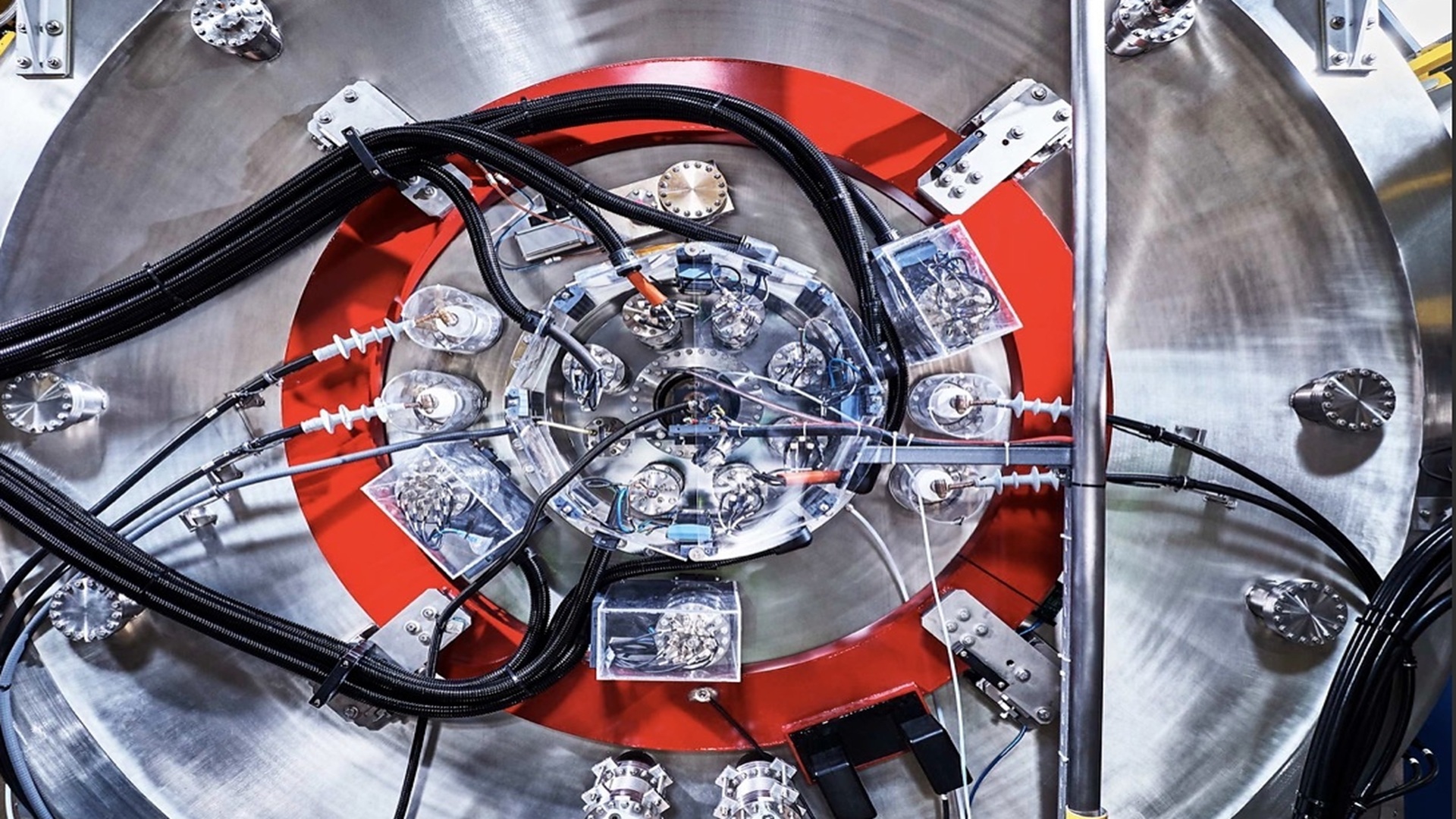
Fusion energy company TAE Technologies has signed an agreement with privately funded natural-resource and lunar-development firm Black Moon Energy Corporation (BMEC) to secure a potential helium-3 fuel supply as it advances toward its first commercial fusion power plant. Under the agreement, BMEC would supply helium-3 to TAE and work with the company on commercial development. The deal is aimed at building a future fuel supply chain for fusion, an area that could become increasingly important as more fusion companies move from experimental machines toward power generation. TAE says the agreement gives it greater flexibility in choosing its fuel cycle. Many fusion machines are designed around deuterium and tritium, but TAE’s technology is intended to operate with different fuel options. “This agreement can facilitate our path to power by providing an alternative fuel supply option,” said TAE CEO Michl Binderbauer. “TAE has a high degree of flexibility to select from the most cost-competitive fuel cycle, whereas many other fusion machines are able to operate only on the deuterium-tritium cycle; this provides TAE’s technology with future flexibility, depending on how fuel markets change over the long-run.” A new fuel option Helium-3 is a light isotope of helium that TAE sees as one possible fuel for its fusion technology. Securing a potential supplier now could help the company address one of the challenges of commercial fusion: developing a reliable fuel supply alongside the reactors themselves. Black Moon Energy is pursuing helium-3 resources through lunar development. The company plans to conduct a robotic lunar mission within five years to gather data and test the feasibility of a commercial-scale helium-3 production operation. “Developing a future supply chain for fusion fuels is a critical component of bringing fusion power to market,” said David Warden, CEO of Black Moon Energy Corporation. “By working with TAE, we are helping establish the commercial framework needed to support next-generation energy systems.” TAE has spent nearly three decades developing its fusion technology and has built five fusion machines. Its current-generation machine, Norm, is being used to advance the technology toward a commercial plant. The next major step is Da Vinci, TAE’s planned first fusion power plant. The company expects the facility to generate 50 megawatts of electricity, with a site expected to be selected later this year. From supply to power TAE expects Da Vinci to begin operations in 2031. The company says future plants could scale to between 350 and 500 megawatts, potentially allowing the technology to move from a demonstration facility to larger commercial power generation. The helium-3 agreement does not mean TAE has secured a current commercial fuel supply. Instead, it establishes a prospective supply option and a framework for future collaboration as both companies develop their respective technologies. That distinction is important because commercial fusion will require more than a working reactor. Companies will also need fuel, equipment, manufacturing capacity, and supply chains capable of supporting repeated plant deployments. For TAE, the agreement adds another piece to that commercial roadmap while giving the company flexibility to evaluate fuel options as it moves toward Da Vinci and future fusion power plants.Recommended ArticlesGet the latest in engineering, tech, space & science - delivered daily to your inbox.With over a decade-long career in journalism, Neetika Walter has worked with The Economic Times, ANI, and Hindustan Times, covering politics, business, technology, and the clean energy sector. Passionate about contemporary culture, books, poetry, and storytelling, she brings depth and insight to her writing. When she isn’t chasing stories, she’s likely lost in a book or enjoying the company of her dogs.
Lunar helium-3 eyed as fuel for 50-MWe next-gen US fusion plant planned for 2031
Full Article
Original Source
Read the full article at Interestingengineering →KhanList aggregates and links to publicly available news content. We do not host full articles from third-party sources. Always verify important information with original sources.