
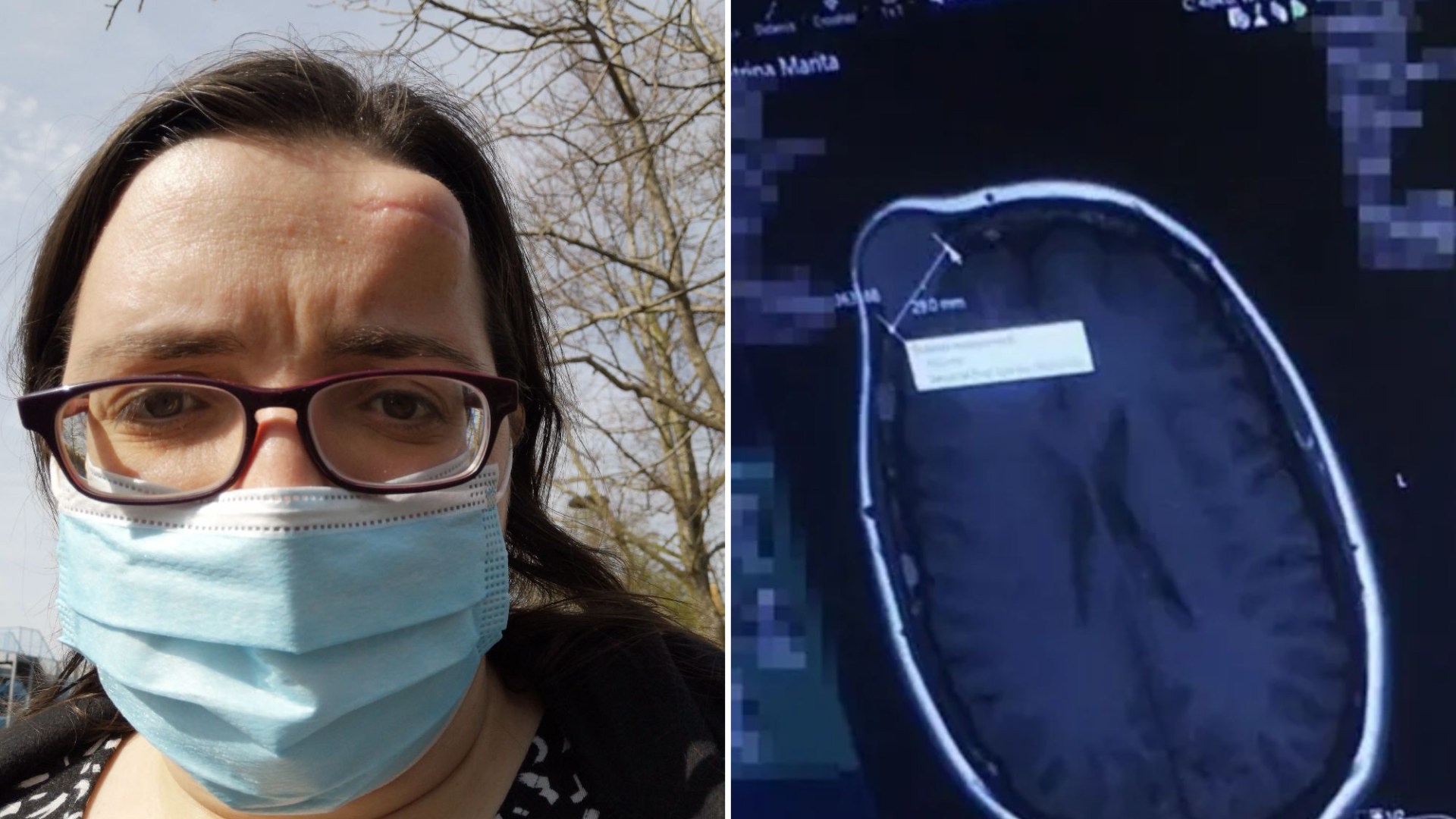
A WOMAN who developed such a large lump on her forehead that punters at work nicknamed it for a joke was shocked to discover it was cancer eating a hole in her skull. Katrina Fox, now 38, heard stunned medics say they could see her brain when they tried to remove what they thought was a harmless cyst. The lump on Katrina’s head became so large that regulars at work made jokes about it Credit: Katrina Fox A scan revealed the tumour had eaten away at her skull Credit: Katrina Fox The golf ball-sized lump turned out to be a tumour and she was diagnosed with incurable myeloma blood cancer. Katrina, a pub worker and tutor from Medway in Kent, said: “I couldn’t believe a lump we had joked about and named Bert was something so deadly.” Sign up for the Health newsletter Thank you! She first noticed the growth at age 33 in September 2021, when it was about the size of a pea. It grew rapidly over the following months but her GP diagnosed it as a cyst and referred Katrina to a dermatologist. Family and co-workers were alarmed by the size of the lump but she felt reassured the doctor was not worried and she had an appointment to remove it in February 2022. Katrina said: “In the appointment we were chatting while waiting for the local anaesthetic to work but as they cut into it there was a shocked silence. “You could have heard a pin drop. “The dermatologist opened it up and said ‘I shouldn’t have done this’. Most read in Health “The nurse said ‘is that her brain?’ and he said yes. “They had found a mass and part of my skull bone was missing. Katrina had surgery and chemotherapy to treat her myeloma blood cancer Credit: Katrina Fox Katrina (centre) at Disney World with her mum and sister Credit: Katrina Fox “They sewed it up and warned me not to bump my head, and I was referred for an MRI.” After months of tests and delays, Katrina was told she had incurable myeloma blood cancer. The lump, first discovered in 2021, had been a tumour called a solitary plasmacytoma. This is a cancerous mass that can develop in bone or soft tissue and then progress to myeloma that spreads through the body. Myeloma is a blood cancer that affects more than 35,000 people in the UK with 6,200 new patients diagnosed each year. It does not form tumours but grows in plasma cells that are constantly being made in bone marrow. Because it typically does not grow in one place or form a mass that can be felt, symptoms tend to be vague and easily mistaken for other illnesses. Katrina’s diagnosis finally made sense of other symptoms that she had been experiencing for years. The extreme tiredness, joint pain and regular bruising she had battled since her late 20s were all also signs of myeloma that had been missed by doctors. She said: “Hindsight is a great thing. “I was having B12 injections for years because they thought my tiredness was caused by a deficiency. “I had nosebleeds, a new bruise every week and was going back and forth to my GP. “I got a new mattress and office chair because of my back pain, and had experienced terrible rib pain that was dismissed as a sprain. “I think they could have identified the cancer when I was 28 or 29. “Because it wasn’t picked up it progressed so much that it literally ate my bones. “There were lesions on my spine, hips and ankles and it was in 95 per cent of my bone marrow. “I want to raise awareness so that others can get an early diagnosis. “If you feel fatigued, have unexplained bruising or lumps, bad back or rib pain and recurring infections, please get help early and push with your medical team as it could save your life.” Katrina had surgery to remove the tumour from her skull and had a titanium mesh implanted to cover the gap where the bone was destroyed. She also had seven months of weekly chemotherapy sessions and a stem cell transplant to beat back the cancer. Myeloma is incurable so she must stay on medication to keep it at bay, but still lives with intense tiredness and bone pain. Gemma Trout, senior nurse at Blood Cancer UK, said: “It must have been a huge shock for Katrina to discover that a lump she had initially thought was harmless was cancer. “There can be many reasons why someone develops a lump or swelling and most won’t be cancer, but it’s important to speak to your GP about any unexplained changes to your body. “Myeloma can be difficult to diagnose because the symptoms can be hard to spot, develop gradually over time or may be happening in different parts of the body. “Nearly one in three people with blood cancer have to visit their GP three or more times before being diagnosed. “Blood cancer is the UK’s fifth most common cancer and the UK’s third biggest cancer killer, but awareness is low, which is why we want everyone, including GPs, to understand the symptoms so people can be diagnosed early.” Katrina is supporting Blood Cancer UK and its latest Omaze prize draw, which is giving away a home in Yorkshire worth over £4million – plus £250,000 in cash – and helping fund groundbreaking clinical trials into blood cancer. Visit omaze.co.uk. The subtle signs of myeloma THERE are over 33,000 people with myeloma in the UK. Despite being the third most common type of blood cancer, myeloma is frequently missed, as its symptoms are vague and often linked to general ageing or minor conditions. Symptoms of myeloma may include: Back pain Other bone pain (often in your hips, shoulders or ribs) Easily broken bones (fractures) Feeling very tired for no reason Recurring infection Muscle weakness Shortness of breath Headaches Feeling very thirsty and needing to pee more often than usual Losing weight without trying Confusion or drowsiness Sometimes myeloma does not cause symptoms at first. You may find out you have it after a blood test for another reason. Comment now
Lump on my forehead grew so large my colleagues named it Bert – it was cancer that had eaten a 3cm HOLE in my skull
Full Article
Original Source
Read the full article at Thesun →KhanList aggregates and links to publicly available news content. We do not host full articles from third-party sources. Always verify important information with original sources.